Search by product name, CAS, target or catalog number. Press Down Arrow to reach product suggestions, Tab to move between links, and Escape to close suggestions.
USD – US Dollar✓Current currency
Account
Enzyme Activity Probes & Substrates
Browse substrates and optical reporter reagents for enzyme-activity assays. Enzyme-activated fluorogenic probes can convert a chemical transformation into a fluorescence readout.[1] Choose the exact reagent for your enzyme, sample and detection method, and distinguish fluorescent from color-based readouts. This collection does not imply that every substrate is selective for one enzyme or suitable for use in living cells.
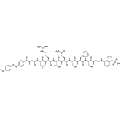
Dabcyl-GLRTQSFS-EDANS is a fluorogenic peptide substrate designed to assess the enzymatic activity of Hepatitis A Virus 3C proteinase. This substrate provides a means to study proteolytic processes and the dynamics of viral infections. Its fluorescent characteristics enable the sensitive detection of enzymatic cleavage, making it a valuable tool in virology research and drug development studies.
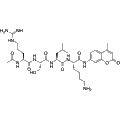
Ac-RSLK-AMC is a fluorogenic peptide substrate designed to target site-1 protease (S1P). It serves as a powerful tool for quantifying the enzymatic activity of S1P in biochemical assays. This reagent is instrumental in studies related to proteolytic processing, providing insights into cellular mechanisms and regulatory pathways influenced by S1P activity.
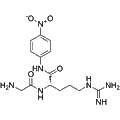
Gly-Arg-pNA is a fluorogenic substrate utilized for the assessment of protease activity. Upon hydrolysis, it releases p-nitroaniline, a compound that exhibits fluorescence under ultraviolet light. This property enables the quantification of protease activity through the measurement of emitted fluorescent signals, making it a valuable tool in biochemical and molecular research applications.
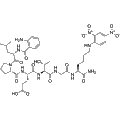
Bacterial Sortase Substrate III, Abz/DNP is a fluorescent peptide substrate designed for the study of Sortase A activity. This substrate undergoes cleavage by Staphylococcus aureus Sortase A (SrtAΔN24) and Streptococcus pyogenes Sortase A (SrtAΔN81), facilitating the formation of an amide bond between the carboxyl group of threonine and the amino group of the cell wall cross-bridge. The cleavage event can be monitored by fluorescence with excitation and emission wavelengths at 320 nm and 420 nm, respectively, making it a valuable tool in investigating sortase-mediated processes.
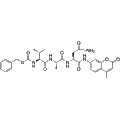
Z-VAN-AMC is a fluorogenic substrate designed for the detection of proteolytic enzymes, particularly those exhibiting legumain-like activity. Upon hydrolysis, Z-VAN-AMC releases a fluorescent signal, making it valuable for studying enzyme activity in various biological systems. Its applications include investigating protease functions in plant-mite interactions and assessing legumains in other biological contexts.
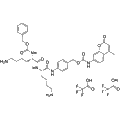
Cbz-Lys-Lys-PABA-AMC diTFA is a fluorogenic peptide designed to function as a substrate for proteases. It exhibits high specificity for certain enzymes, enabling the detection and quantification of proteolytic activity in biological samples. This compound is valuable in studies requiring the measurement of enzyme kinetics, protease activity, and related metabolic processes.
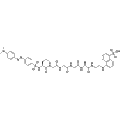
Dabsyl-Leu-Gly-Gly-Gly-Ala-Edans is a Dabsyl-labeled peptide designed as a fluorophore substrate for studying peptidase activity. It serves as a specific probe for evaluating the enzymatic activity of the LasA protease from Pseudomonas aeruginosa. This reagent is valuable in research focused on protease function and substrate specificity, facilitating insights into microbial proteolytic mechanisms.
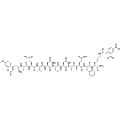
M-2420 is a fluorogenic substrate designed to target the β-secretase site of the Swedish mutation of amyloid precursor protein (APP). This compound exhibits key biological activity by facilitating the detection and quantification of β-secretase activity, which is crucial for understanding amyloidogenic processes in Alzheimer’s disease. M-2420 is suitable for research applications focused on neurodegenerative diseases and protein cleavage mechanisms.
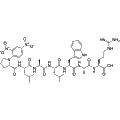
DNP-Pro-Leu-Ala-Leu-Trp-Ala-Arg-OH is a synthetic peptide substrate targeting matrix metalloproteinase MMP-1, exhibiting a Km of 26.61 μM. This compound serves as a fluorescence probe to detect and monitor protein activity, making it valuable for research applications in enzyme kinetics and protease activity studies. Its effective use in fluorescence assays facilitates the exploration of biological processes involving metalloproteinases.
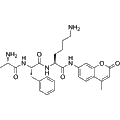
Ala-Phe-Lys-AMC is a fluorogenic substrate designed for the assessment of residual plasmin activity. This compound releases a fluorescent signal upon cleavage, allowing for sensitive detection and quantification of plasmin activity in various biological samples. It is widely utilized in research applications focusing on fibrinolysis and related proteolytic processes.
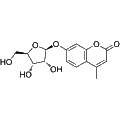
4-Methylumbelliferyl β-D-ribofuranoside serves as a fluorogenic substrate for β-ribosidase, a critical enzyme involved in the hydrolysis of ribonucleosides. Its cleavage generates a fluorescent signal, allowing for sensitive detection and quantification of β-ribosidase activity. This compound is widely utilized in biochemical assays and enzyme activity studies, facilitating research in enzymology and cellular metabolism.
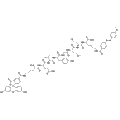
Calpain-1 substrate, fluorogenic is a sensitive and specific substrate designed for detecting calpain-1 activity. This substrate is cleaved at the Tyr-Gly bond, resulting in enhanced fluorescence detectable at excitation/emission wavelengths of 490 nm/518 nm. It is valuable in studying calpain-related processes and evaluating the role of calpain-1 in various biological contexts.
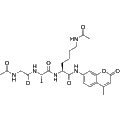
Ac-Gly-Ala-Lys(Ac)-AMC is a fluorogenic substrate designed for the precise measurement of protease activity. Upon hydrolysis, it liberates the fluorescent compound 7-amino-4-methylcoumarin (AMC), which emits a fluorescent signal when exposed to UV light. This reagent is particularly valuable for studies in protease function and activity assays in various biological research applications.
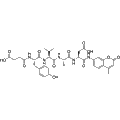
Suc-YVAD-AMC is a fluorogenic substrate designed for the quantification of cysteine protease activity within the proteasome. Upon cleavage by these enzymes, the compound releases the fluorescent product AMC, enabling sensitive measurement of enzymatic activity. This reagent is widely utilized in research applications focused on proteasomal function and the mechanisms of protein degradation.
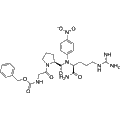
Z-Gly-Pro-Arg-pNA is a photometric substrate designed for the assessment of Prostate-Specific Antigen (PSA) activation in protease assays. This compound serves as an effective tool for evaluating trypsin activity, facilitating research in enzymology and cancer biomarkers. Its reliable performance makes it suitable for various applications requiring precise protease measurements.
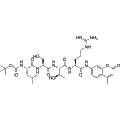
Boc-Leu-Ser-Thr-Arg-AMC is a fluorogenic substrate designed for the detection of protease activity. Its amino acid sequence is optimized for specificity, enabling enhanced fluorescence upon cleavage by various proteases. This compound serves as a valuable tool for studying proteolytic processes in biochemical research and assays.