Search by product name, CAS, target or catalog number. Press Down Arrow to reach product suggestions, Tab to move between links, and Escape to close suggestions.
USD – US Dollar✓Current currency
Account
Enzyme Activity Probes & Substrates
Browse substrates and optical reporter reagents for enzyme-activity assays. Enzyme-activated fluorogenic probes can convert a chemical transformation into a fluorescence readout.[1] Choose the exact reagent for your enzyme, sample and detection method, and distinguish fluorescent from color-based readouts. This collection does not imply that every substrate is selective for one enzyme or suitable for use in living cells.
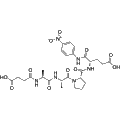
Suc-AAPE-pNA is a chromogenic substrate specifically designed for the assessment of glutamyl endopeptidase activity. Upon cleavage by the enzyme, it releases a detectable chromophore, enabling quantitative analysis of enzymatic function. This substrate is valuable in research applications focused on enzymology and protein processing, facilitating studies of glutamyl endopeptidase in various biological contexts.
HIV Protease Substrate 1 is a fluorogenic substrate specifically designed for the study of HIV protease activity. This reagent allows for the quantitative assessment of enzymatic function, facilitating investigations into HIV protease inhibitors and their effects on viral replication. It is particularly useful in the development of antiviral therapies and for studying the proteolytic processing of HIV proteins.
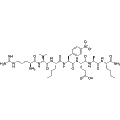
Arg-Val-(Nle-p-nitro)-Phe-Glu-Ala-Nle-NH2 is a fluorogenic substrate specifically designed for assessing the activity of HIV-1 protease. This compound exhibits a strong interaction with the enzyme, facilitating the measurement of protease activity in research applications related to HIV-1 pathogenesis and antiviral drug development. Its utility in protease assays makes it a valuable tool for studying HIV-1 enzymatic function and evaluating potential therapeutic interventions.
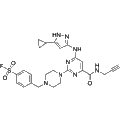
XO44 is a broad-spectrum covalent kinase probe that primarily targets cyclin-dependent kinases, including CDK1, CDK2, and CDK4. This compound is instrumental in the study of cell cycle regulation and kinase signaling pathways, providing valuable insights into cancer research and therapeutics. Its ability to label CDK proteins in cellular contexts enhances its utility in probing kinase activity and interactions.
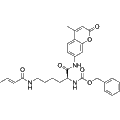
CrBKA is a fluorogenic small-molecule substrate specifically designed for SIRT6, a member of the sirtuin family of NAD+-dependent deacetylases. This compound exhibits weak activity, making it suitable for probing SIRT6 enzymatic function in various biological contexts. Its application in research includes the study of cellular metabolism, aging, and the modulation of gene expression through deacetylation processes.
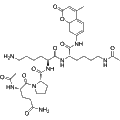
Ac-QPKK(Ac)-AMC is a fluorogenic substrate specifically designed for sirtuin enzymes, facilitating the study of sirtuin-mediated deacetylation processes. This reagent enables the quantitative analysis of sirtuin activity, making it a valuable tool for investigating the role of sirtuins in various biological processes and disease states, including aging and metabolic disorders. Researchers can leverage Ac-QPKK(Ac)-AMC to explore sirtuin function in high-throughput screening assays and in-depth mechanistic studies.
Myosin Light Chain Kinase Substrate (smooth muscle) is a synthetic peptide designed to specifically target and serve as a substrate for smooth muscle myosin light chain kinase (MLCK). This substrate facilitates the study of MLCK activity and its role in smooth muscle contraction mechanisms. It is essential for assays related to muscle physiology, cellular signaling pathways, and the development of therapeutic strategies targeting smooth muscle disorders.
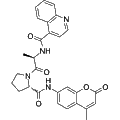
ARI-3144 is a specific substrate for fibroblast activation protein (FAP), designed for effective detection and quantification. When coupled with the fluorophore 7-Amino-4-methylcoumarin (AMC), this substrate facilitates sensitive analysis of FAP activity in various biological samples. ARI-3144 is valuable in research applications related to cancer biology and tissue remodeling, enabling deeper insights into FAP functions and its role in disease progression.
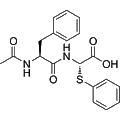
Ac-Phe-Thiaphe-OH is a modified peptide designed as a substrate for carboxypeptidase A (CPA). This compound serves as a valuable tool in enzymatic assays, allowing for the study of CPA activity and substrate specificity. Its incorporation of thiaphenyl enhances interactions, providing insights into peptide cleavage mechanisms and enzyme kinetics. Suitable for biochemical research applications focused on proteolytic enzymes.
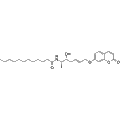
RBM1-151 is a fluorogenic substrate specifically designed for amidases, including acid ceramidase (AC), N-acylethanolamine-hydrolyzing acid amidase (NAAA), and fatty acid amide hydrolase (FAAH). It exhibits hydrolysis rates characterized by appKm values of 7.0 μM, 0.73 μM, and 3.6 μM, respectively. This substrate is essential for studying lipid amidase functions in fundamental biological research and holds potential for diagnostic and prognostic applications in diseases such as Farber disease and various cancers linked to dysregulation of these enzymes.
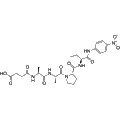
Suc-AAP-Abu-pNA is a specific substrate for pancreatic elastase, displaying a Km of 100 μM and a Kcat/Km of 35,300 s-1 M-1 for rat pancreatic elastase, and a Km of 30 μM with a Kcat/Km of 351,000 s-1 M-1 for porcine pancreatic elastase. This colorimetric substrate enables precise measurement of elastase activity in various biological samples. In addition to its enzymatic applications, Suc-AAP-Abu-pNA has been shown to promote oligodendrocyte precursor cell (OPC) migration, making it valuable in research focused on neurobiology and tissue repair.
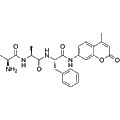
Ala-Ala-Phe-AMC is a fluorogenic substrate primarily used for the detection of proteolytic activity. Its positively charged characteristics enhance its suitability for various biochemical assays, enabling researchers to investigate protease function in biological samples. This compound is valuable in studies related to protein turnover, cellular signaling, and disease mechanisms involving proteolysis.
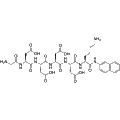
Gly-Asp-Asp-Asp-Asp-Lys-β-naphthylamide (GD4K-na) serves as a substrate for human enteropeptidase, exhibiting a Km value of 0.16 mM. This peptide substrate is utilized in studies of protein digestion and enzymatic activity, crucial for understanding the role of enteropeptidase in digestive processes. Its specificity makes GD4K-na valuable in biochemical assays and research applications focused on proteolytic enzymes.
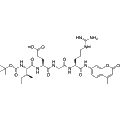
Boc-Ile-Glu-Gly-Arg-AMC is a fluorogenic peptide substrate specifically designed for the activated factor X (FXa). This compound exhibits key biological activity by enabling the quantification of FXa in various biological assays. It is particularly useful in research applications focused on coagulation, thrombin generation, and related hemostatic studies.
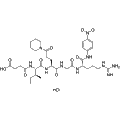
Suc-Ile-Glu(γ-pip)-Gly-Arg-pNA hydrochloride is a chromogenic substrate specifically designed for the detection and quantification of factor Xa activity. This substrate undergoes cleavage by factor Xa, resulting in a color change that can be measured spectrophotometrically. It is widely used in coagulation research, pharmacological studies of anticoagulants, and for evaluating the efficacy of hemostatic therapies.
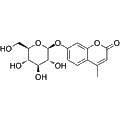
4-Methylumbelliferyl β-D-Glucopyranoside serves as a fluorogenic substrate specifically for β-glucosidase, facilitating the measurement of β-glucosidase activity in various biological assays. Upon enzymatic cleavage, it releases 4-methylumbelliferone, a highly fluorescent compound with an emission maximum between 445-454 nm. The excitation wavelength of 4-methylumbelliferone is influenced by pH, showing peaks at 330, 370, and 385 nm at pH 4.6, 7.4, and 10.4, respectively, making it a valuable tool for studying enzyme kinetics and related research applications.
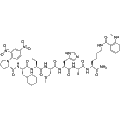
MMP-1 Substrate is a selective substrate for matrix metalloproteinase-1 (MMP-1) designed for the fluorometric detection of MMP-1 enzymatic activity. This reagent facilitates the assessment of MMP-1 function in various biological samples, enabling studies related to tissue remodeling, inflammation, and cancer research. The substrate's specificity makes it a valuable tool for investigating MMP-1 activity in diverse experimental settings.
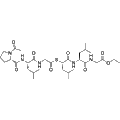
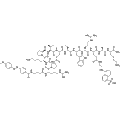
MMP-2/MMP-9 Substrate is a synthetic chromogenic polypeptide designed to mimic the cleavage sites of matrix metalloproteinases 2 and 9, also known as gelatinases A and B, within collagen. Upon hydrolysis by collagenase, this substrate interacts with 4,4'-dithiodipyridine or Ellman's Reagent through its thiol group, resulting in a detectable product with distinct ultraviolet absorption characteristics. It is a valuable tool for studying MMP activity and has applications in research related to tissue remodeling, cancer metastasis, and inflammatory processes.
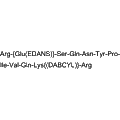
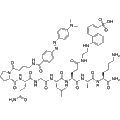
TNO211 is a fluorogenic substrate designed for the specific detection of matrix metalloproteinase (MMP) activity. It contains a cleavable Gly-Leu bond, allowing for the precise identification of MMPs, and features a fluorophore/quencher pair consisting of EDANS and Dabcyl. This reagent operates optimally at excitation/emission wavelengths of 340/485 nm, making it suitable for various applications in biochemical and molecular biology research focused on MMP functions.
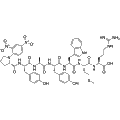
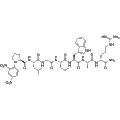
Dnp-PYAYWMR is a peptide substrate specifically designed to target matrix metalloproteinase 3 (MMP3). Upon cleavage by MMP3, it produces Dnp-PYA, which is nonfluorescent, and YWMR, a fluorophore detectable at 360 nm. This reagent is ideal for assessing MMP3 activity in biochemical assays, with fluorescence intensity measured at excitation/emission wavelengths of 328/350 nm following a 2-hour incubation period.
MMP-13 Substrate serves as a specific substrate for matrix metalloproteinase-13 (MMP-13), facilitating the study of this enzyme's role in various biological processes. Its primary application lies in the investigation of osteoarthritis (OA), allowing researchers to explore MMP-13 activity in cartilage degradation and remodeling. This substrate is essential for understanding the molecular mechanisms underlying OA progression and potential therapeutic targets.
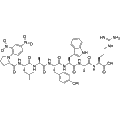
MMP-8/MMP-26 Fluorogenic Substrate (DNP-Pro-Leu-Ala-Tyr-Trp-Ala-Arg) is a substrate specifically designed for the detection of matrix metalloproteinase-8 (MMP-8) activity. This substrate exhibits key biological activity by releasing a fluorophore upon enzymatic cleavage, making it suitable for quantitative measurements in various biological assays. Research applications include investigating the role of MMP-8 in conditions such as atherosclerosis, pulmonary fibrosis, and sepsis, thereby aiding in the understanding of these pathologies.
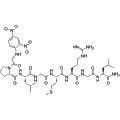
Dnp-PLGLWAr-NH2 is a synthetic substrate designed specifically for collagenase and gelatinase activity. This reagent can be utilized to quantify total matrix metalloproteinase (MMP) activity in samples treated with APMA. Its effective targeting of collagenolytic enzymes makes it a valuable tool for research into extracellular matrix remodeling and related biological processes.
TNO003 is a selective fluorogenic substrate that specifically targets stromelysin-1 (MMP-3). This reagent exhibits superior selectivity for MMP-3 over other matrix metalloproteinases, including MMP-1, MMP-2, MMP-7, MMP-8, MMP-9, and MMP-13. TNO003 is suitable for quantitative determination of stromelysin activity and can be utilized in fluorescence-based assays at an excitation/emission wavelength of 360/490 nm.
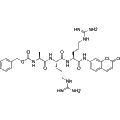
Z-Ala-Arg-Arg-AMC is a fluorogenic proteasome substrate designed to specifically assay the trypsin-like activity of the proteasome. Its unique structure allows for sensitive detection of proteolytic activity, making it a valuable tool for studying protein degradation and turnover in cellular processes. This substrate is widely utilized in research applications focused on proteasome function and its implications in various diseases.