ROS & Oxidative Stress Probes

Select an oxidative-stress probe by the reaction and cellular compartment you need to investigate, not by the label “ROS” alone. DCF-based fluorescence, mitochondria-associated probe oxidation and membrane-associated oxidation provide different kinds of information. [1] [2] The selected reagents illustrate these choices. Interpret signal changes alongside method-specific controls; fluorescence intensity alone may not identify a particular oxidant or quantify oxidative damage. [1] [3]

Compare selected reagents

1 Item

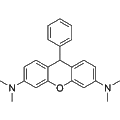
  • Dihydrotetramethylrosamine
    Cat. No.
    A45348

    Dihydrotetramethylrosamine

    Synonyms: DHTM Ros

    Dihydrotetramethylrosamine (DHTM Ros) is a fluorochrome that serves as a fluorogenic substrate for peroxidase enzymes. Upon oxidation, it converts to the fluorescent compound tetramethylrosamine chloride, which can be utilized for sensitive detection in various biological assays. This reagent is suitable for applications in cellular imaging, monitoring enzyme activity, and studying oxidative processes in biological systems.

    25 mg
    $1,275.00
    50 mg
    $1,625.00
    All 3 sizes

1 Item

Selection Guide

Which process is the target?

H2DCFDA supports oxidation-dependent DCF measurements; it is not a direct hydrogen-peroxide concentration assay. MitoSOX is used in mitochondrial oxidation studies, but different oxidation products contribute overlapping fluorescence. [1]

Does the readout identify the species?

A red MitoSOX signal alone does not establish superoxide production. Product separation and identification are needed for that attribution. DCF chemistry can also be affected by heme proteins, metals and signal amplification reactions; use a method that can address these confounders. [1]

Is membrane oxidation the question?

C11-BODIPY has documented use as an oxidation-sensitive membrane probe. Its response should not be equated with the absolute amount of endogenous lipid oxidation: a comparison with mass spectrometry found overreporting and perturbation of oxidation in the tested system. Treat it as an indicator within a validated assay. [2] [3]

Representative Reagent Comparison

Selected examples for this topic; independent of the current product page or filters.

Representative reagents and selection considerations
Reagent / SKUDocumented readoutSelection useKey interpretation limit
H2DCFDAA24745 Oxidation-dependent DCF fluorescence after cellular processing.Broad redox-related changes.Does not react directly with H2O2 to produce DCF; signal is not a specific oxidant concentration. [1]
MitoSOX RedA24559 Mitochondria-associated oxidation products.Investigating mitochondrial oxidant-related processes.Total red fluorescence mixes products; identify the diagnostic hydroxylated product before attributing the signal to superoxide. [1]
BODIPY 581/591 C11A24539 Oxidation-sensitive C11-BODIPY response in membrane systems and cells.Membrane-associated oxidation / lipid-peroxidation studies.Not an absolute lipid-oxidation measurement. The dye overreported and inhibited oxidative damage in a model-membrane comparison. [2] [3]

H2DCFDA

A24745
Documented readout
Oxidation-dependent DCF fluorescence after cellular processing.
Selection use
Broad redox-related changes.
Key interpretation limit
Does not react directly with H2O2 to produce DCF; signal is not a specific oxidant concentration. [1]

MitoSOX Red

A24559
Documented readout
Mitochondria-associated oxidation products.
Selection use
Investigating mitochondrial oxidant-related processes.
Key interpretation limit
Total red fluorescence mixes products; identify the diagnostic hydroxylated product before attributing the signal to superoxide. [1]

BODIPY 581/591 C11

A24539
Documented readout
Oxidation-sensitive C11-BODIPY response in membrane systems and cells.
Selection use
Membrane-associated oxidation / lipid-peroxidation studies.
Key interpretation limit
Not an absolute lipid-oxidation measurement. The dye overreported and inhibited oxidative damage in a model-membrane comparison. [2] [3]

These probes have useful, conditional research roles. A signal change is not automatically a specific ROS concentration or proof of a particular cell-death pathway.

References

  1. Kalyanaraman B, Darley-Usmar V, Davies KJ, Dennery PA, Forman HJ, Grisham MB, Mann GE, Moore K, Roberts LJ, Ischiropoulos H. Measuring reactive oxygen and nitrogen species with fluorescent probes: challenges and limitations.

    Free radical biology & medicine. 2012. DOI: 10.1016/j.freeradbiomed.2011.09.030. PMID: 22027063. PMCID: PMC3911769.

  2. Drummen GP, van Liebergen LC, Op den Kamp JA, Post JA. C11-BODIPY(581/591), an oxidation-sensitive fluorescent lipid peroxidation probe: (micro)spectroscopic characterization and validation of methodology.

    Free radical biology & medicine. 2002. DOI: 10.1016/s0891-5849(02)00848-1. PMID: 12160930.

  3. MacDonald ML, Murray IV, Axelsen PH. Mass spectrometric analysis demonstrates that BODIPY 581/591 C11 overestimates and inhibits oxidative lipid damage.

    Free radical biology & medicine. 2007. DOI: 10.1016/j.freeradbiomed.2007.01.038. PMID: 17395012.

Added to your cart

View Cart Checkout

    Loading...