Search by product name, CAS, target or catalog number. Press Down Arrow to reach product suggestions, Tab to move between links, and Escape to close suggestions.
USD – US Dollar✓Current currency
Account
Enzyme Activity Probes & Substrates
Browse substrates and optical reporter reagents for enzyme-activity assays. Enzyme-activated fluorogenic probes can convert a chemical transformation into a fluorescence readout.[1] Choose the exact reagent for your enzyme, sample and detection method, and distinguish fluorescent from color-based readouts. This collection does not imply that every substrate is selective for one enzyme or suitable for use in living cells.
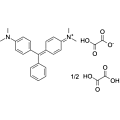
Malachite green oxalate is a triphenylmethane dye which can be used to detect the release of phosphate in enzymatic reactions. Malachite green oxalate is also a potent and selective inhibitor of IKBKE, and inhibits its downstream targets such as IκBα, p65 and IRF3. Malachite green oxalate exhibits antitumor activity in vitro and in vivo.
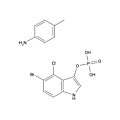
Synonyms: BCIP p-toluidine salt; X-phosphate p-toluidine salt
BCIP(BCIP p-toluidine salt; X-phosphate p-toluidine salt) is an artificial chromogenic substrate used for the sensitive colorimetric detection of alkaline phosphatase activity.
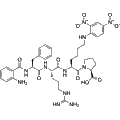
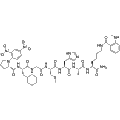
Abz-FR-K(Dnp)-P-OH is an angiotensin I-converting enzyme (ACE) substrate and an internally quenched fluorogenic substrate for real time fluorescent assay.
Mca-(ala7,lys(dnp)9)-bradykinin is a sensitive fluorogenic substrate for ECE-1 (endothelin-converting enzyme-1). The incorporation of a (7-methoxycoumarin-4-yl)acetyl (Mca) fluorescent group and a 2,4-dinitrophenyl (Dnp) quenching group has resulted in a large fluorescence increase upon substrate cleavage.
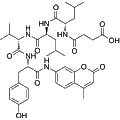
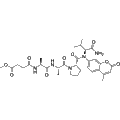
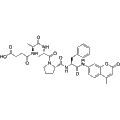
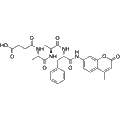
Suc-Ala-Ala-Phe-AMC is a fluorogenic chymotrypsin substrate, can be hydrolyzed by endopeptidase. Suc-Ala-Ala-Phe-AMC has been used in both in vivo assays of the acrosome reaction and in vitro enzyme assays.
MMP-1/MMP-9 Substrate, Fluorogenic is a highly sensitive substrate specifically designed for the detection of matrix metalloproteinases MMP-1 and MMP-9. Upon cleavage by these enzymes, it emits fluorescence with excitation and emission wavelengths at 340 nm and 440 nm, respectively. This substrate is ideal for research applications involving extracellular matrix remodeling, cancer metastasis studies, and the assessment of tissue remodeling processes.
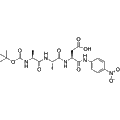
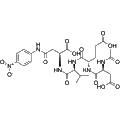
Boc-Ala-Ala-Asp-pNA is a chromogenic substrate specifically designed for granzyme B. This reagent enables the assessment of granzyme B's enzymatic activity, facilitating studies on immune cell function and apoptosis. Its application in biochemical assays allows researchers to investigate the role of granzyme B in immune responses and cytotoxicity.
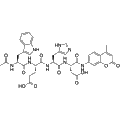
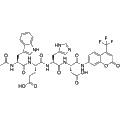
Ac-Trp-Glu-His-Asp-AMC is a specific fluorogenic substrate designed for caspase-1 detection and activity measurement. This compound exhibits high sensitivity and selectivity for caspase-1, enabling the quantitative assessment of apoptotic processes and inflammatory pathways. Its application in fluorescence assays facilitates the study of caspase-1's role in various biological contexts, including immune responses and cell death mechanisms.
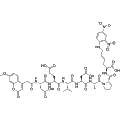
Mca-DEVDAP-K(Dnp)-OH is a fluorogenic substrate specifically designed for the quantification of caspase-3 activity. Utilizing the caspase-3 recognition sequence DEVD, this substrate facilitates the detection of caspase-3-mediated apoptosis in various biological samples. It is widely applied in research focused on programmed cell death and can be utilized in high-throughput screening assays to evaluate the efficacy of anti-apoptotic and pro-apoptotic compounds.
Ac-WEHD-AFC is a fluorogenic substrate specifically designed for the detection of caspase-1 activity. This compound enables the quantitative measurement of caspase-1 enzymatic function, making it a valuable tool in studies related to tumorigenesis and inflammatory processes. Its sensitive fluorescence readout facilitates the assessment of caspase-1 involvement in various biological systems.
Ac-DEVD-pNA is a colorimetric substrate specifically designed for the detection of caspase-3 and caspase-7 activity, serving as a critical tool in apoptosis research. This substrate is cleaved by these cysteine proteases, leading to the release of a chromogenic product that can be quantitatively measured. It is widely used in studies investigating programmed cell death and in drug discovery efforts targeting apoptotic pathways.
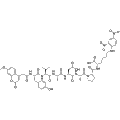
Mca-YVADAP-Lys(Dnp)-OH is a fluorogenic substrate designed for the characterization of caspase-1 and angiotensin-converting enzyme 2 (ACE2) activity. This compound enables the detection of enzymatic activity through fluorescence, making it valuable for studies focused on apoptosis and cardiovascular signaling pathways. It is suitable for use in various assays aimed at exploring the roles of these enzymes in cellular processes and disease states.
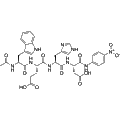
Ac-WEHD-pNA is a colorimetric substrate specifically designed for the measurement of caspase activity, targeting caspases 1, 4, 5, and 14. Upon cleavage by these caspases, Ac-WEHD-pNA produces a detectable signal, making it an essential tool for studying apoptosis and inflammation. This substrate is suitable for various research applications, including cell death assays and investigations into cytokine processing.
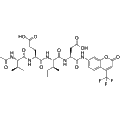
Ac-VEID-AFC is a fluorogenic substrate specifically designed for the detection of caspase-6 activity. Its cleavage by caspase-6 produces a fluorescent signal, making it a valuable tool for assessing apoptotic processes and related signaling pathways in various biological systems. This substrate is widely utilized in research applications focused on cell death, inflammation, and neurodegenerative diseases.
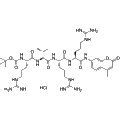
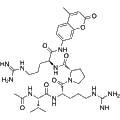
Ac-VRPR-AMC is a fluorogenic substrate specifically designed for the detection of metacaspase activity. This compound is utilized in biochemical assays to measure metacaspase activity, making it a valuable tool for research in apoptosis and programmed cell death. Its fluorescence properties enable sensitive detection, facilitating studies on metacaspase function in various biological systems.
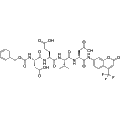
Z-DEVD-AFC is a fluorogenic substrate specifically designed for the detection of caspase-3 activity. Upon cleavage by caspase-3, the AFC fluorophore undergoes a significant shift in fluorescence, enabling precise measurement of enzyme activity. This reagent is highly useful in research applications focused on apoptosis and caspase-related pathways, providing a reliable tool for studying cell death mechanisms.
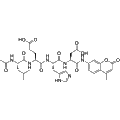
Ac-LEHD-AMC is a fluorogenic substrate specifically designed for the detection of caspase-9 activity. Upon hydrolysis by caspase-9, Ac-LEHD-AMC releases the AMC fluorophore, which emits fluorescence detectable at an excitation wavelength of 341 nm and an emission wavelength of 441 nm. This substrate is ideal for quantifying caspase-9 activity in various biological samples, facilitating research in apoptosis and related signaling pathways.