HDAC

Histone deacetylase (HDAC) inhibitors block enzymes that remove acetyl groups from histones and other proteins. Deacetylation compacts chromatin and generally represses transcription, so HDAC inhibitors are widely used to study gene regulation. Trichostatin A was characterized in 1990 as a specific inhibitor of mammalian histone deacetylase. The first mammalian HDAC was cloned in 1996 and found to be related to the yeast transcriptional regulator Rpd3p. Isoform-selective tools include entinostat for HDAC1 and HDAC3, and Tubastatin A HCl for HDAC6, a microtubule-associated deacetylase. Broad-spectrum hydroxamates such as vorinostat and panobinostat, together with the cyclic depsipeptide romidepsin, complete the range.

Items 476-495 of 495

  • 1-Alaninechlamydocin
    Cat. No.
    A32841

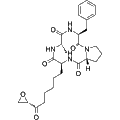
    1-Alaninechlamydocin

    1-Alaninechlamydocin is a cyclic tetrapeptide that functions as a potent histone deacetylase (HDAC) inhibitor with an IC50 of 6.4 nM. This compound effectively induces G2/M cell cycle arrest and promotes apoptosis in MIA PaCa-2 cells, making it a valuable tool for cancer research. Its activity in modulating epigenetic regulation highlights its potential applications in therapeutic development and studies of cellular differentiation and survival.

    0.5 mg
    $340.00
    2.5 mg
    $1,570.00
    All 3 sizes
  • HDAC-IN-27
    Cat. No.
    A32846

    HDAC-IN-27

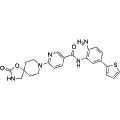
    HDAC-IN-27 is a selective inhibitor of Class I histone deacetylases (HDAC1-3) with an IC50 range of 0.43 to 3.01 nM. It demonstrates significant anti-proliferative and pro-apoptotic effects against acute myeloid leukemia (AML) cell lines by promoting histone acetylation, specifically AcHH3 and AcHH4. This compound is valuable for research into the mechanisms of AML and potential therapeutic applications in histone modification regulation.

    5 mg
    $110.00
    10 mg
    $180.00
    All 5 sizes
  • Daphnegiravone D
    Cat. No.
    A32858

    Daphnegiravone D

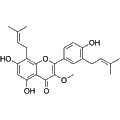
    Daphnegiravone D is an inhibitor of HDAC6, targeting histone deacetylation to modulate gene expression. This compound demonstrates significant anti-hepatocellular carcinoma activity by inducing apoptosis and selectively inhibiting the proliferation of liver cancer cells. Its mechanism involves the p38 and JNK MAPK signaling pathways, making it a valuable tool for research in cancer therapeutics and cellular signaling.

    Out of stock

    All 3 sizes
  • HDAC1/6-IN-1
    Cat. No.
    A32868

    HDAC1/6-IN-1

    HDAC1/6-IN-1 is a potent inhibitor targeting HDAC1 and HDAC6, exhibiting IC50 values of 1.3 nM and 13 nM, respectively. This compound effectively inhibits the methylation and deacetylation of H3K9, leading to significant biological activity, including the induction of apoptosis in cancer cells, G0/G1 cell cycle arrest, and the inhibition of cell migration and invasion. It serves as a valuable tool in cancer research and the study of epigenetic regulation.

    25 mg
    $1,275.00
    50 mg
    $1,625.00
    All 3 sizes
  • MRLB-223
    Cat. No.
    A37617

    MRLB-223

    MRLB-223 is a selective inhibitor of HDAC1 and HDAC2, demonstrating potent activity against tumor cells. It induces histone hyperacetylation and activates the intrinsic apoptotic pathway, leading to tumor cell apoptosis and degradation of Bcr-Abl in a caspase-dependent manner. Notably, MRLB-223 mediates p53-independent cell death in Bcr-Abl-expressing myeloid cells and shows efficacy in animal models of Eμ-myc lymphoma. This compound is valuable for research focusing on the mechanisms of lymphomagenesis and therapeutic strategies for Eμ-myc lymphoma.

    25 mg
    $1,275.00
    50 mg
    $1,625.00
    All 3 sizes
  • HDAC-IN-101
    Cat. No.
    A43762

    HDAC-IN-101

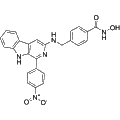
    HDAC-IN-101 is a selective inhibitor of HDAC1, exhibiting an IC50 of 65 nM against human HDAC1. This compound effectively inhibits cancer cell proliferation by targeting HDAC1 activity. In addition, HDAC-IN-101 is metabolically activated by overexpressed nitroreductase to produce H6AQ, which displays fluorescence under low pH conditions. Its unique properties make it valuable for applications in cancer research and cellular imaging studies.

    Out of stock

    All 3 sizes
  • Nicoxamat
    Cat. No.
    A51199

    Nicoxamat

    Synonyms: N-Hydroxynicotinamide

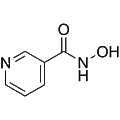
    Nicoxamat, also known as N-Hydroxynicotinamide, functions as an inhibitor of hepatitis C virus (HCV) and selectively targets HDAC6. This compound exhibits antiviral activity against HCV, making it a useful tool in research on hepatitis C infection. Its role as an HDAC6 inhibitor further supports investigations into epigenetic regulation and potential therapeutic strategies.

    Out of stock

    All 3 sizes
  • HDAC-IN-54
    Cat. No.
    A55007

    HDAC-IN-54

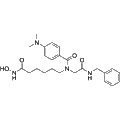
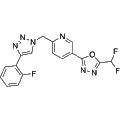
    HDAC-IN-54 is a potent histone deacetylase (HDAC) inhibitor, exhibiting IC50 values of 25 nM for human HDAC1, 66 nM for HDAC2, 6.5 nM for HDAC3, and 281 nM for HDAC6. This compound effectively induces acetylation of α-tubulin and histone H3, promoting cancer cell apoptosis, particularly in synergy with cisplatin. HDAC-IN-54 is relevant for research applications in head and neck cancer, ovarian cancer, and tongue squamous cell carcinoma.

    Out of stock

    All 3 sizes
  • CM-444
    Cat. No.
    A57720

    CM-444

    CM-444 is a potent inhibitor of histone deacetylases (HDACs) with an IC50 range of 6 nM to 0.6 μM, and demonstrates inhibition of DNA methyltransferases (DNMT) with IC50 values between 1.8 and 2.3 μM. This compound facilitates the differentiation of acute myeloid leukemia cells and exhibits significant anti-leukemic activity, enhancing survival rates in mouse models. CM-444 serves as a valuable tool for research into cancer epigenetics and the development of targeted therapies for leukemia.

    Out of stock

    All 3 sizes
  • CARM1/HDAC2-IN-1
    Cat. No.
    A57752

    CARM1/HDAC2-IN-1

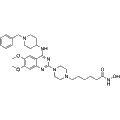
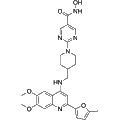
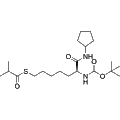
    CARM1/HDAC2-IN-1 is a dual inhibitor targeting both CARM1 and HDAC2, exhibiting IC50 values of 3.71 nM and 4.07 nM, respectively. This compound demonstrates significant antitumor activity, making it a valuable tool for cancer research. CARM1/HDAC2-IN-1 is suitable for studies investigating the role of these epigenetic regulators in tumor biology and therapeutic strategies.

    5 mg
    $500.00
    10 mg
    $825.00
    All 4 sizes
  • HDAC6 degrader-5
    Cat. No.
    A64893

    HDAC6 degrader-5

    HDAC6 degrader-5 functions as an HDAC6 degrader, demonstrating potent inhibitory and degradation capabilities with an IC50 of 4.95 nM and a DC50 of 0.96 nM. This compound effectively inhibits the release of pro-inflammatory cytokines, including TNF-α, IL-1β, and IL-6, while also preventing hepatocyte apoptosis. Additionally, HDAC6 degrader-5 shows anti-inflammatory effects in mouse models of acetaminophen-induced liver injury, making it a valuable tool for research on inflammatory diseases and liver pathologies.

    5 mg
    $305.00
    10 mg
    $540.00
    All 5 sizes
  • HDAC3 degrader-2
    Cat. No.
    A64899

    HDAC3 degrader-2

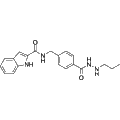
    HDAC3 Degrader-2 is a selective degrader of histone deacetylase 3 (HDAC3), functioning through targeted degradation to inhibit the activation of the NLRP3 inflammasome. By facilitating the reduction of IL-1β maturation and caspase-1 activity, HDAC3 Degrader-2 demonstrates significant anti-inflammatory effects. This reagent is applicable in researching conditions such as endotoxin shock, colitis, and gouty arthritis, providing valuable insights into mechanisms of inflammation and therapeutic interventions.

    Out of stock

    All 3 sizes
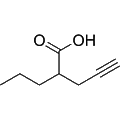
  • 2-Propylpent-4-ynoic acid
    Cat. No.
    A67820

    2-Propylpent-4-ynoic acid

    Synonyms: 4-yn-VPA

    2-Propylpent-4-ynoic acid, a histone deacetylase (HDAC) inhibitor, exhibits an IC50 of 0.5 mM against human HDAC. This compound induces P-glycoprotein function and has been associated with teratogenicity, fetal growth inhibition, and neurotoxicity. Notably, the S-enantiomer demonstrates more significant teratogenic effects compared to its R-enantiomer and other analogs. 2-Propylpent-4-ynoic acid is relevant in research focused on the mechanisms underlying colon cancer and neural tube defects, including exencephaly.

    Out of stock

    All 3 sizes
  • LG190119
    Cat. No.
    A85545

    LG190119

    LG190119 is a selective modulator of HDAC8, primarily targeting Schistosoma mansoni with reduced affinity for human HDAC8. This compound has been shown to induce apoptosis in schistosome cells, making it a valuable tool for research in anti-parasitic agents. Its ability to selectively affect parasitic cells underscores its potential in developing effective treatments against schistosomiasis.

    25 mg
    $1,275.00
    50 mg
    $1,625.00
    All 3 sizes
  • A 80556
    Cat. No.
    A97005

    A 80556

    A 80556 is a selective inhibitor of histone deacetylases (HDACs), specifically targeting HDAC class I and II enzymes. This compound demonstrates potent anti-inflammatory and anti-cancer activities by promoting acetylation of histone and non-histone proteins. A 80556 is valuable for research into epigenetic regulation, cancer therapy, and the modulation of cellular signaling pathways.

    Out of stock

    All 3 sizes
  • HDAC2-IN-3
    Cat. No.
    B21935

    HDAC2-IN-3

    HDAC2-IN-3 is a selective HDAC2 inhibitor with an IC50 of 14 nM, capable of crossing the blood-brain barrier. This compound effectively upregulates histone acetylation levels both in cultured cells and in vivo, and has been shown to enhance long-term potentiation (LTP) in the hippocampus. HDAC2-IN-3 is valuable for research applications focused on neurodegenerative disorders, particularly Alzheimer's disease.

    Out of stock

    All 3 sizes
  • HDAC8-IN-16
    Cat. No.
    B21977

    HDAC8-IN-16

    HDAC8-IN-16 is a selective inhibitor of histone deacetylase 8 (HDAC8), exhibiting an IC50 of 0.16 μM. It has been shown to induce apoptosis in various cell lines, trigger G2/M phase cell cycle arrest, and moderately inhibit cancer cell proliferation. This compound is particularly relevant for research applications related to colorectal cancer, providing valuable insights into the therapeutic potential of HDAC8 modulation.

    Out of stock

    All 3 sizes
  • HDAC6-IN-78
    Cat. No.
    B21989

    HDAC6-IN-78

    HDAC6-IN-78 is a highly selective inhibitor of histone deacetylase 6 (HDAC6), exhibiting an IC50 of 24 nM. This compound demonstrates specificity by showing no significant activity against other HDAC isoforms. HDAC6-IN-78 is valuable for research applications focused on studying the role of HDAC6 in cellular processes, including neurodegenerative diseases and cancer.

    Out of stock

    All 3 sizes
  • NCT-10b
    Cat. No.
    B22017

    NCT-10b

    NCT-10b is a selective inhibitor of HDAC6, primarily targeting this enzyme to influence cellular processes. It facilitates α-tubulin acetylation while having minimal effect on histone H4 acetylation. NCT-10b is applicable in research focused on multiple myeloma, providing insights into the mechanisms of this hematological malignancy and potential therapeutic strategies.

    25 mg
    $1,780.00
    50 mg
    $2,280.00
    All 3 sizes
  • 4-Phenylcinnamic acid
    Cat. No.
    B22022

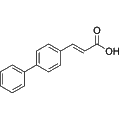
    4-Phenylcinnamic acid

    4-Phenylcinnamic acid is a weak inhibitor of HDAC2, exhibiting an IC50 value greater than 5 μM. This compound has demonstrated moderate activity in inhibiting cell growth in various tumor cell lines. Its role as an HDAC2 inhibitor makes it a useful tool for exploring the effects of histone deacetylation in cancer research and related fields.

    250 mg
    $20.00
    500 mg
    $25.00
    All 8 sizes

Items 476-495 of 495

Added to your cart

View Cart Checkout

    Loading...