- Cat. No.
- A21880
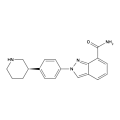
Niraparib R-enantiomer
Synonyms: MK 4827 (R-enantiomer); MK4827
Niraparib R-enantiomer (MK-4827 R-enantiomer) is an excellent PARP1 inhibitor with IC50 of 2.4 nM.
Search by product name, CAS, target or catalog number. Press Down Arrow to reach product suggestions, Tab to move between links, and Escape to close suggestions.
PARP inhibitors block poly(ADP-ribose) polymerases (PARPs), enzymes that mark DNA damage and recruit repair proteins. PARP1 and PARP2 bind DNA single-strand breaks and attach poly(ADP-ribose) chains to themselves and to nearby chromatin proteins. Cells lacking breast cancer susceptibility proteins 1 or 2 (BRCA1, BRCA2), and therefore defective in homologous recombination, are highly sensitive to PARP inhibition. This synthetic lethal relationship, reported in 2005, has shaped much of the research on DNA repair inhibitors. Olaparib, niraparib, veliparib and talazoparib target the catalytic domains of PARP1 and PARP2, and 3-aminobenzamide is an early benzamide inhibitor. XAV 939 instead inhibits tankyrases 1 and 2 (TNKS1, TNKS2), which stabilizes axin in Wnt signaling studies.
Synonyms: MK 4827 (R-enantiomer); MK4827
Niraparib R-enantiomer (MK-4827 R-enantiomer) is an excellent PARP1 inhibitor with IC50 of 2.4 nM.
G244-LM is a potent and specific tankyrase 1/2 inhibitor that inhibits Wnt signaling.
Synonyms: RBN-2397
RBN-2397 is a potent, accross species and orally active NAD+ competitive inhibitor of PARP7 (IC50
5,7,4'-Trimethoxyflavone is isolated from Kaempferia parviflora (KP) that is a famous medicinal plant from Thailand. 5,7,4'-Trimethoxyflavone induces apoptosis, as evidenced by increments of sub-G1 phase, DNA fragmentation, annexin-V/PI staining, the Bax/Bcl-xL ratio, proteolytic activation of caspase-3, and degradation of poly (ADP-ribose) polymerase (PARP) protein.5,7,4'-Trimethoxyflavone is significantly effective at inhibiting proliferation of SNU-16 human gastric cancer cells in a concentration dependent manner.
Synonyms: NSC39047
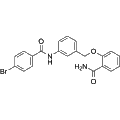
OUL35, also known as NSC39047, is a selective PARP-10 inhibitor, and small-molecule ARTD10 inhibitor.
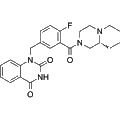
SK-575 is a highly potent and selective PROTAC degrader of PARP1, with an IC₅₀ of 2.30 nM. It effectively inhibits the proliferation of cancer cells harboring BRCA1/2 mutations, making it a valuable agent for targeted cancer research.
Out of stock
All 4 sizes
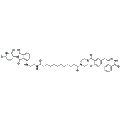
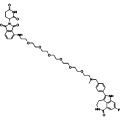
iRucaparib-AP6 is a potent PROTAC compound that selectively targets PARP1 for degradation. This non-trapping degrader inhibits both the catalytic activity and scaffolding functions of PARP1, effectively disrupting its role in DNA repair pathways. iRucaparib-AP6 is useful in studying the biology of PARP1 and its implications in cancer research, particularly in understanding resistance mechanisms to PARP inhibitors.
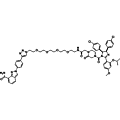
PROTAC PARP1 Degrader functions as a targeted protein degradation agent that specifically targets PARP1 through the MDM2 E3 ligase. This compound effectively induces PARP1 cleavage and promotes apoptosis in cancer cells, making it valuable for research in cancer therapies. The structure includes the MDM2 ligand, the PARP1 ligand, and a PEG-based linker, facilitating efficient delivery and degradation of the target protein.
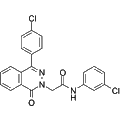
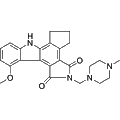
PARP-1-IN-2 is a potent inhibitor of PARP1, exhibiting an IC50 value of 149 nM. This compound demonstrates significant anti-proliferative effects on the A549 human lung adenocarcinoma epithelial cell line and induces apoptosis in these cells. Its favorable ADME profile suggests high permeability across the blood-brain barrier, making it a valuable tool for research in cancer biology and therapeutic applications targeting PARP1-related pathways.
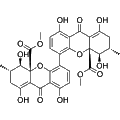
4,4′-Secalonic acid D is a potent inhibitor of PARP1, a key enzyme in the DNA repair pathway. This compound promotes the accumulation of reactive oxygen species (ROS) and DNA damage, leading to the activation of the caspase-3/GSDME pathway, which triggers apoptosis and pyroptosis in tumor cells. 4,4′-Secalonic acid D exhibits significant anti-tumor activity, making it a valuable tool for cancer research and therapeutic investigations.
Out of stock
All 3 sizes
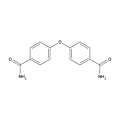
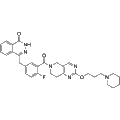
PARP-1-IN-3 is a potent inhibitor of PARP-1, with IC50 values of 0.25 nM for PARP-1 and 2.34 nM for PARP-2. This benzamide derivative effectively induces apoptosis and leads to G2/M phase cell cycle arrest. PARP-1-IN-3 is valuable for research applications focused on cancer mechanisms and therapeutic strategies.
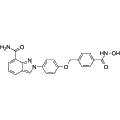
PARP-1/HDAC-IN-1 is a dual inhibitor targeting PARP-1 and HDAC6, exhibiting IC50 values of 68.90 nM and 510 nM, respectively. This compound demonstrates significant anticancer properties, as well as anti-migration and anti-angiogenesis activities. Its applications are relevant in cancer research, particularly in studies exploring the modulation of DNA repair mechanisms and cellular signaling pathways.
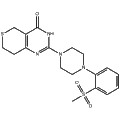
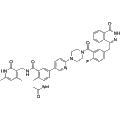
PARP/EZH2-IN-1 is a potent dual inhibitor targeting PARP and EZH2, with respective IC50 values of 6.87 nM and 36.51 nM. This reagent demonstrates significant biological activity in the treatment of triple-negative breast cancer, particularly in cells with wild-type BRCA. Its unique mechanism of action makes it a valuable tool for research into cancer biology and therapeutic development.
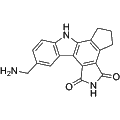
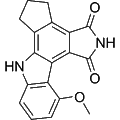
CEP-6800 is a potent inhibitor of PARP-1, known for its ability to enhance the efficacy of chemotherapeutic agents. It effectively reduces poly(ADP-ribose) accumulation induced by irinotecan and temozolomide in LoVo and HT29 xenograft models. Additionally, CEP-6800 demonstrates potential in suppressing tumor growth in Calu-6. This compound is valuable for research in cancer biology and therapy development.
PARP-1/2-IN-1 is a highly effective inhibitor of the poly(ADP-ribose) polymerases PARP-1 and PARP-2, exhibiting IC50 values of 0.51 nM and 23.11 nM, respectively. This compound plays a critical role in cancer research by targeting DNA repair mechanisms, enhancing the efficacy of chemotherapeutic agents, and potentially improving cancer treatment outcomes. It is a valuable tool for studying PARP-related cellular processes and investigating therapeutic strategies in oncology.
CEP-9722 is a selective, orally active inhibitor of PARP-1 and PARP-2, exhibiting IC50 values of 20 nM and 6 nM, respectively. This compound demonstrates significant anticancer activity, making it a valuable tool for research in cancer therapy and DNA repair mechanisms. Its ability to inhibit these critical enzymes positions CEP-9722 as an important reagent for studying cellular responses to DNA damage and tumor susceptibility to therapeutic agents.
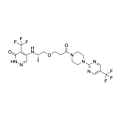
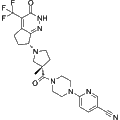
PARP7-IN-21 is a potent inhibitor of PARP7, demonstrating an IC50 of less than 10 nM. This compound effectively interferes with the activity of PARP7, which is involved in the regulation of cellular processes such as DNA repair and signaling pathways related to stress response. PARP7-IN-21 is valuable for research applications focused on cancer biology, neurodegenerative diseases, and other conditions associated with PARP7 dysregulation.
Out of stock
All 3 sizes
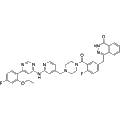
CDK9/PARP-IN-1 is a potent inhibitor of CDK9 and PARP1, demonstrating IC50 values of 118 nM and 107 nM, respectively. This dual inhibition results in significant antiproliferative effects across various cancer cell lines, making it a valuable tool for cancer research. CDK9/PARP-IN-1 is particularly relevant for studies investigating the therapeutic potential of targeting these pathways in oncology.
Out of stock
All 3 sizes
Antitumor agent-104 is a potent inhibitor of PARP1 and CDK12, targeting critical pathways in DNA damage repair in tumors. By inhibiting PARP1 enzymatic activity, it effectively reduces PAR protein levels, thus impairing the cellular mechanisms that protect tumor cells. This compound serves as a valuable tool in cancer research, especially in studies focused on understanding tumor biology and exploring novel therapeutic strategies.
Out of stock
All 3 sizes
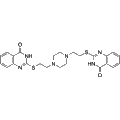
PARP1-IN-53 is a potent PARP1 inhibitor with an IC50 of 0.1 nM, demonstrating high selectivity over PARP2, which has an IC50 of 23 nM. This quinazolinone derivative effectively interferes with the poly(ADP-ribose) polymerase 1 enzyme, making it a valuable compound for cancer research. Its specific action on PARP1 enables detailed studies into the mechanisms of DNA repair and cell survival in oncology.
Out of stock
All 3 sizes
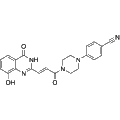
TNKS-2-IN-3 is a selective competitive inhibitor of tankyrase 2 (TNKS2), demonstrating an IC50 value of 0.3 nM and exhibiting over 20-fold selectivity against TNKS1, along with more than 100-fold selectivity over PARP1/2. By inhibiting TNKS2-mediated ADP-ribosylation, TNKS-2-IN-3 stabilizes axin and effectively suppresses the Wnt/β-catenin signaling pathway. This compound shows promising antiproliferative activity in colorectal cancer cells and is relevant for research focused on solid tumors characterized by dysregulated Wnt pathway activation, particularly in colorectal cancer.
Out of stock
All 3 sizes
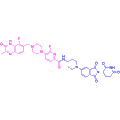
PROTAC PARP1 degrader-2 is a targeted protein degradation compound designed to specifically degrade PARP1. With a DC50 of less than 10 nM in MDA-MB-231 cells, it demonstrates potent efficacy in inducing degradation. Additionally, this compound inhibits cell viability in MDA-MB-436 cells with an IC50 of less than 100 nM, making it a valuable tool for research in cancer therapeutics and the mechanistic study of PARP1 function.
Out of stock
All 3 sizes
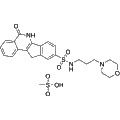
INO-1001 mesylate is a selective inhibitor of poly (ADP-ribose) polymerase (PARP), a critical enzyme involved in DNA repair processes. It enhances the sensitivity of cancer cells to radiation therapy by disrupting DNA repair mechanisms, leading to increased necrotic cell death. This compound is of interest in cancer research, particularly in studies aimed at overcoming resistance to radiation and improving therapeutic outcomes in tumorigenesis.
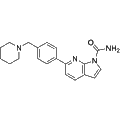
CEP-8983 is a potent inhibitor of PARP-1 and PARP-2, with IC50 values of 20 nM and 6 nM, respectively. This compound effectively enhances the sensitivity of chemotherapy-resistant cell lines and subcutaneous xenograft models to the anticancer agents Temozolomide and Camptothecin. Its ability to disrupt DNA repair mechanisms makes CEP-8983 a valuable tool for cancer research, particularly in studies focusing on therapeutic resistance and combination therapies.
ST7710AA1 is a potent inhibitor of PARP-1, exhibiting an IC50 value of 0.07 µM. This compound demonstrates significant antiproliferative and anticancer activity, making it a valuable tool for research in oncology and cellular biology. Its ability to inhibit PARP-1 can be leveraged to explore mechanisms of cancer cell survival and the effects of DNA damage repair pathways.