Bacterial

Bacterial lists antibacterial compounds that act on bacterial cell walls, protein synthesis and DNA replication. The range covers the main structural classes of antibacterial agents and their molecular targets. Fluoroquinolones such as enoxacin and fleroxacin inhibit DNA gyrase and topoisomerase IV, while aminoglycosides such as tobramycin bind the 30S ribosomal subunit. Cell-wall inhibitors include the cephalosporin cefdinir and the glycopeptide teicoplanin, and the macrolide roxithromycin binds the 50S subunit. Isoniazid and ethionamide, which inhibit mycolic acid synthesis, are used in mycobacterial research.

12 Items

  • Enoxacin
    Cat. No.
    A10354

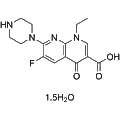
    Enoxacin

    Synonyms: AT 2266; CI 919

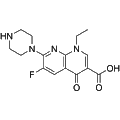
    Enoxacin is a fluoroquinolone antibacterial that primarily targets bacterial DNA gyrase and topoisomerase IV, with reported IC50 values of 126 µg/ml and 26.5 µg/ml, respectively. It exhibits strong inhibitory activity against both gram-positive and gram-negative bacteria. Additionally, Enoxacin acts as a miRNA processing activator, facilitating siRNA-mediated mRNA degradation and promoting the biogenesis of endogenous miRNAs. Notably, Enoxacin serves as a cancer-specific growth inhibitor through the enhancement of TAR RNA-binding protein 2 (TRBP)-mediated microRNA processing, making it valuable for research in bacterial inhibition and cancer biology.

    50 mg
    $30.00
    100 mg
    $40.00
    All 4 sizes
  • Enoxacin hydrate
    Cat. No.
    A17556

    Enoxacin hydrate

    Synonyms: Enoxacin sesquihydrate; AT-2266 hydrate; CI-919 hydrate

    Enoxacin hydrate, a fluoroquinolone antibiotic, targets bacterial DNA gyrase and topoisomerase IV, disrupting DNA replication with IC50 values of 126 µg/ml and 26.5 µg/ml, respectively. This compound exhibits significant antibacterial activity against both gram-positive and gram-negative bacteria. Additionally, Enoxacin hydrate functions as an activator of miRNA processing, facilitating siRNA-mediated mRNA degradation and enhancing the biogenesis of endogenous miRNAs. Its unique mode of action also includes the inhibition of cancer cell growth through the enhancement of TAR RNA-binding protein 2 (TRBP)-mediated microRNA processing.

    100 mg
    $40.00
    200 mg
    $45.00
    All 3 sizes
  • (S)-ZG197
    Cat. No.
    A48650

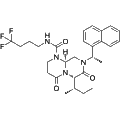
    (S)-ZG197

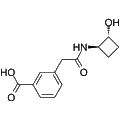
    (S)-ZG197 is a selective activator of Staphylococcus aureus Caseinolytic protease P (SaClpP), exhibiting an EC50 value of 1.4 μM. This compound enhances proteolytic activity, facilitating the study of protein degradation pathways in bacterial systems. It is valuable for research applications focused on bacterial physiology and could contribute to the development of novel antimicrobial strategies.

    Out of stock

    All 3 sizes
  • (R)-ZG197
    Cat. No.
    A48652

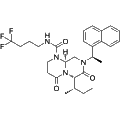
    (R)-ZG197

    (R)-ZG197 is a selective activator of Staphylococcus aureus caseinolytic protease P (SaClpP), demonstrating an EC50 of 1.5 μM. Additionally, it activates Homo sapiens ClpP (HsClpP) with an EC50 of 31.4 μM. This compound is valuable for studying protease regulation and has potential applications in understanding bacterial protein degradation pathways.

    Out of stock

    All 3 sizes
  • Antibacterial agent 199
    Cat. No.
    A49130

    Antibacterial agent 199

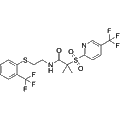
    Antibacterial agent 199 is an activator of caseinolytic protease (ClpP) with a dissociation constant (Kd) of 0.7 μM. This compound demonstrates significant antibacterial activity against Gram-positive bacteria, such as Staphylococcus aureus and Streptococcus pneumoniae, as well as the Gram-negative bacterium Neisseria meningitidis, with minimum inhibitory concentrations (MICs) of 16 μg/mL, 0.5 μg/mL, and 0.5 μg/mL, respectively. Antibacterial agent 199 is suitable for studies focused on bacterial resistance and the development of novel antimicrobial therapies.

    0.5 mg
    $510.00
    2.5 mg
    $3,740.00
    All 2 sizes
  • Antibacterial agent 254
    Cat. No.
    A49997

    Antibacterial agent 254

    Antibacterial Agent 254 is an activator of the dispersion sensor DspS, effectively dispersing biofilms formed by Pseudomonas aeruginosa. At a concentration of 50 μM, this compound can successfully dislodge mature, 7-day-old biofilms. Additionally, Antibacterial Agent 254 enhances the antibacterial activity of Ciprofloxacin against P. aeruginosa and upregulates the expression of key matrix-degrading enzyme genes, including pelA, pslG, and eddA. These properties make it a valuable tool for research into biofilm inhibition and bacterial resistance mechanisms.

    Out of stock

    All 3 sizes
  • ACP1-01
    Cat. No.
    A50488

    ACP1-01

    ACP1-01 is a selective activator of the ClpP protease, targeting bacterial ClpP enzymes. It demonstrates EC50 values of 3.4 μM for Neisseria meningitidis ClpP (NmClpP) and 2.6 μM for Escherichia coli ClpP (EcClpP), facilitating non-covalent binding to ClpP C sites and subsequently enhancing proteolytic activity. This compound exhibits significant antibacterial properties and is suitable for research focused on bacterial infections and the modulation of proteolytic pathways.

    Out of stock

    All 3 sizes
  • CLPP-2068
    Cat. No.
    A54483

    CLPP-2068

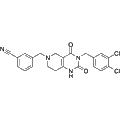
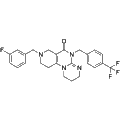
    CLPP-2068 is a potent activator of human caseinolytic protease P (HsClpP) with an EC50 of 50.4 nM. This compound demonstrates significant anti-proliferative effects on OCI-LY10 cancer cells, achieving an IC50 of 5.2 nM. CLPP-2068 disrupts mitochondrial function by decreasing membrane potential and increasing reactive oxygen species (ROS) levels, leading to G1 phase cell cycle arrest and subsequent apoptosis. Additionally, it exhibits notable antitumor activity in mouse xenograft models, making it valuable for cancer research applications.

    5 mg
    $255.00
    10 mg
    $420.00
    All 2 sizes
  • THX6
    Cat. No.
    A54484

    THX6

    THX6 is a selective activator of the human ClpP protease, exhibiting an EC50 of 1.18 μM. This compound demonstrates significant cytotoxicity, particularly in ONC201-resistant cell lines with an IC50 of 0.13 μM. THX6 alters fatty acid levels, including polyunsaturated, monounsaturated, and saturated fatty acids, in diffuse intrinsic pontine glioma (DIPG) cells. Additionally, it reduces the expression of proteins associated with oxidative phosphorylation, biogenesis, and mitophagy, leading to compromised mitochondrial integrity and function, making it a valuable tool for research on DIPG.

    5 mg
    $245.00
    10 mg
    $410.00
    All 5 sizes
  • ZYZ-17
    Cat. No.
    A54487

    ZYZ-17

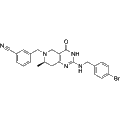
    ZYZ-17 is a potent activator of human caseinolytic peptidase P (hClpP), exhibiting an EC50 value of 0.24 μM. This compound is instrumental in studies focused on cancer biology, as it enhances proteolytic activity linked to hClpP, potentially contributing to apoptosis in cancer cells. ZYZ-17 serves as a valuable tool for investigating the therapeutic implications of hClpP activation in cancer treatment.

    Out of stock

    All 3 sizes
  • ADEP-14
    Cat. No.
    A54489

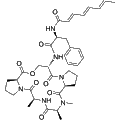
    ADEP-14

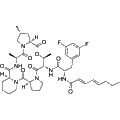
    ADEP-14 is an activator of the ClpP protease, exhibiting EC50 values of 0.46 μM for Neisseria meningitidis ClpP and 3.67 μM for Escherichia coli ClpP. By binding to the H sites of ClpP, ADEP-14 enhances proteolytic activity, contributing to its antibacterial properties. This compound is valuable for research focused on bacterial infections and the mechanistic studies of protease activation.

    Out of stock

    All 3 sizes
  • 4-Ethoxyquinazoline
    Cat. No.
    A74438

    4-Ethoxyquinazoline

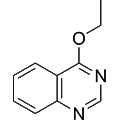
    4-Ethoxyquinazoline is a selective activator of bacterial glycoside hydrolases, demonstrating an AC50 of 3.5 mM. This compound enhances the enzymatic activity of glycoside hydrolases, supporting research focused on bacterial metabolism and cell wall remodeling. Its role in modulating enzyme activity makes it a valuable tool for studies on bacterial physiology and potential therapeutic applications.

    25 mg
    $1,275.00
    All 1 sizes

12 Items

Added to your cart

View Cart Checkout

    Loading...