

- Cat. No.
- A18731
EC0489
EC0489, a conjugate of folic acid and desacetyl vinblastine hydrazide, is a high-affinity ligand for the folate receptor (FR). Refractory or metastatic Tumor.Small molecule-drug conjugate (SMDC).
Out of stock
All 4 sizesSearch by product name, CAS, target or catalog number. Press Down Arrow to reach product suggestions, Tab to move between links, and Escape to close suggestions.
Anti-infectives brings together compounds that act on bacteria, fungi and viruses in microbiology research. They are used to study microbial growth, drug resistance and host-pathogen interactions. Its seven subcategories are Antibiotic, Bacterial, Fungal, Mycobacterium tuberculosis, HIV (human immunodeficiency virus), Dengue Virus and Flavivirus. Antibacterial examples include the oxazolidinone linezolid, the carbapenems imipenem and meropenem, and the glycylcycline tigecycline. Bedaquiline, a diarylquinoline, and pretomanid, a nitroimidazole, are used in Mycobacterium tuberculosis research. Among the antivirals, nelfinavir inhibits HIV-1 protease, an enzyme required for viral maturation. Compounds for a single viral enzyme or virus, such as reverse transcriptase or influenza virus, also have their own Microbiology categories.
EC0489, a conjugate of folic acid and desacetyl vinblastine hydrazide, is a high-affinity ligand for the folate receptor (FR). Refractory or metastatic Tumor.Small molecule-drug conjugate (SMDC).
Out of stock
All 4 sizes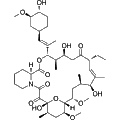
L685818 is a specific immunophilin ligand that exhibits antifungal activity against Cryptococcus neoformans. In addition to its antifungal properties, L685818 demonstrates neuroregenerative effects by safeguarding dopaminergic neurons from toxicity associated with MPP+ and 6-OHDA. The compound effectively reduces the loss of tyrosine hydroxylase (TH) and promotes neuronal process regeneration, making it a valuable tool for research in neurodegenerative disease models and fungal infections.
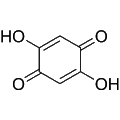
Synonyms: DHBQ
2,5-Dihydroxy-1,4-benzoquinone (DHBQ) is a redox-active organic ligand known for its antibacterial properties. This compound is derived from fungal metabolites and plays a significant role in enhancing the performance of Li+-ion battery cathodes through a two-electron redox process when incorporated into Fe (dhbq) metal-organic frameworks. Additionally, 2,5-Dihydroxy-1,4-benzoquinone is utilized in the construction of conductive metal-organic frameworks, making it valuable for research in energy storage and related applications.
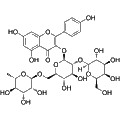
Camelliaside A is a phytochemical that functions as a HER2 ligand. It plays a significant role in breast cancer-related research, contributing to the understanding of HER2 signaling pathways. Notably, Camelliaside A does not exhibit antifungal activity against the pathogen Rhizoctonia solani, demonstrating its specificity in targeting HER2 without adversely affecting mycelial growth.
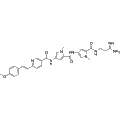
S-MGB-234 is an antibacterial agent that functions as a minor groove binder, specifically targeting the causative agents of Animal African Trypanosomiasis (AAT). This compound demonstrates potent in vitro activity against Trypanosoma congolense and Trypanosoma vivax, the primary pathogens responsible for AAT. Notably, S-MGB-234 exhibits a unique resistance profile, lacking cross-resistance with existing diamidine agents and not utilizing the transporters commonly associated with diamidines.
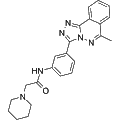
Antibacterial Agent 281 specifically targets the growth of Streptococcus pyogenes (GAS) through bacteriostatic inhibition. This compound binds to the ligand binding pocket of SPs0871, effectively competing with the native ligand. Antibacterial Agent 281 demonstrates concentration-dependent inhibition of S. pyogenes growth, making it a valuable tool for research into antibacterial mechanisms and therapeutic development.
Out of stock
All 3 sizes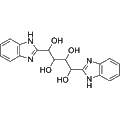
Antibacterial Agent 310 is a bis-benzimidazole-derived chelating ligand primarily targeting bacterial infections. This compound exhibits significant antibacterial activity and demonstrates the ability to inhibit intracellular viruses. It is suitable for use in antibacterial research and related studies.
Out of stock
All 3 sizes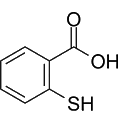
Synonyms: 2-Mercaptobenzoic acid
Thiosalicylic acid, an organosulfur compound featuring both sulfhydryl and carboxyl functional groups, primarily functions as a desulfurizing agent. This compound is utilized as a ligand in the synthesis of azosulfonamide derivatives, which exhibit antibacterial and antifungal properties. Additionally, thiosalicylic acid facilitates the formation of metal chelates, specifically with Fe3+, Cu2+, and Hg2+, enhancing its versatility in various biochemical applications.