- Cat. No.
- A10165
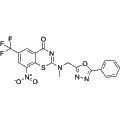
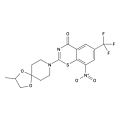
BTZ043 (BTZ038, BTZ044) Racemate
BTZ043 (BTZ038, BTZ044) inhibits decaprenylphosphoryl-β-d-ribose 2?-epimerase, which is an enzyme which produces the cell wall of the pathogenic bacterium Mycobacterium tuberculosis.
Search by product name, CAS, target or catalog number. Press Down Arrow to reach product suggestions, Tab to move between links, and Escape to close suggestions.
Mycobacterium tuberculosis research compounds act on enzymes and proteins that the tuberculosis bacterium depends on. The genome of the laboratory strain H37Rv, sequenced in 1998, encodes an unusually large set of enzymes for lipid metabolism. Several entries inhibit decaprenylphosphoryl-β-D-ribose 2′-epimerase (DprE1), an enzyme required for arabinan synthesis in the cell wall. Benzothiazinones, represented here by BTZ043 (BTZ038, BTZ044) Racemate, were shown in 2009 to kill the bacterium by blocking this step. AZ7371 and DprE1-IN-8 are listed as further inhibitors of the same enzyme. PXYC1 and PXYC2 are antagonists of ribosomal protein S1 (RpsA), and MtTMPK-IN-8 inhibits mycobacterial thymidylate kinase. Cefsulodin sodium hydrate is listed as an inhibitor of mycobacterial protein tyrosine phosphatase B (mPTPB), a secreted virulence factor.
BTZ043 (BTZ038, BTZ044) inhibits decaprenylphosphoryl-β-d-ribose 2?-epimerase, which is an enzyme which produces the cell wall of the pathogenic bacterium Mycobacterium tuberculosis.
BDM31343 is an effective synergist for Ethionamide, targeting the transcriptional repressor EthR in Mycobacterium tuberculosis. By inhibiting EthR, BDM31343 enhances the activity of Ethionamide by relieving its suppression of the EthA activator, ultimately improving its efficacy against the pathogen. With an IC₅₀ of 3.3 μM, BDM31343 effectively disrupts EthR binding to DNA, making it a valuable tool for research focused on anti-Mycobacterium tuberculosis strategies.
MtTMPK-IN-8 is an inhibitor of Mycobacterium tuberculosis thymidylate kinase (MtbTMPK). This compound exhibits sub-micromolar activity against mycobacterial strains, demonstrating minimum inhibitory concentrations (MICs) ranging from 0.78 to 9.4 μM, while maintaining low cytotoxicity. MtTMPK-IN-8 is suitable for use in tuberculosis research, particularly in studies aimed at understanding the role of thymidylate kinase in mycobacterial metabolism and potential therapeutic strategies.
Out of stock
All 3 sizes
PXYC1 is an antagonist of ribosomal protein S1 (RpsA), exhibiting dissociation constants (Kd) of 0.81 and 0.31 μM for RpsA-CTD and RpsA-CTD Δ438A, respectively. RpsA is critical in the trans-translation process of Mycobacterium tuberculosis, making PXYC1 a valuable tool for research focused on bacterial protein synthesis and potential therapeutic strategies against tuberculosis. This compound supports investigations into the molecular mechanisms of antibiotic action and resistance.
DprE1-IN-8 is a potent inhibitor of DprE1, demonstrating an IC50 value of less than 0.75 μM. This compound shows remarkable efficacy against Mycobacterium tuberculosis H37Rv with an IC50 of 6 nM. DprE1-IN-8 is suitable for research applications focused on tuberculosis and can contribute to the exploration of new therapeutic strategies targeting this pathogen.
Out of stock
All 3 sizes
PXYC12 is an antagonist of ribosomal protein S1 (RpsA) with dissociation constants (Kd) of 2.67 and 4.67 μM for RpsA-CTD and RpsA-CTD Δ438A, respectively. RpsA is crucial in the trans-translation mechanism of Mycobacterium tuberculosis, making PXYC12 a valuable tool for studying bacterial protein synthesis and exploring potential therapeutic strategies against tuberculosis. This compound is ideal for research applications focusing on antimicrobial drug discovery and the modulation of ribosomal function.
PXYC2 is a potent antagonist of ribosomal protein S1 (RpsA), demonstrating Kds of 6.35 and 5.11 μM for RpsA-CTD and RpsA-CTD Δ438A, respectively. RpsA is crucial for the trans-translation process in Mycobacterium tuberculosis, making it an important target for research into antibiotic resistance and bacterial pathogenicity. PXYC2 serves as a valuable tool for investigating the molecular mechanisms underlying Mycobacterial infections and for the development of new therapeutic strategies.
PXYC13 is an antagonist of ribosomal protein S1 (RpsA), exhibiting dissociation constants (Kd) of 7.61 μM and 8.50 μM for RpsA-CTD and RpsA-CTD Δ438A, respectively. This compound is a valuable tool for investigations into the trans-translation mechanism in Mycobacterium tuberculosis. Its ability to inhibit RpsA makes it relevant for research into the pathogen’s protein synthesis processes and potential therapeutic strategies.
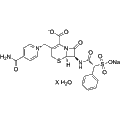
Synonyms: SCE-129 sodium hydrate
Cefsulodin sodium hydrate is a third-generation β-lactam antibiotic that primarily targets penicillin-binding proteins (PBPs) to inhibit cell wall synthesis through competitive inhibition of cross-linking and transpeptidation of peptidoglycan. Additionally, it serves as a potent mPTPB inhibitor, effectively targeting the virulent tyrosine phosphatase from Mycobacterium tuberculosis, with an IC50 value of 16 μM. This compound is valuable for research involving antibiotic resistance mechanisms and the study of mycobacterial infections.
PXYD4 is an antagonist of ribosomal protein S1 (RpsA), exhibiting dissociation constants (Kd) of 3.24 μM and 1.64 μM for RpsA-CTD and RpsA-CTD Δ438A, respectively. It is relevant for studies involving the trans-translation mechanism in Mycobacterium tuberculosis (Mtb), making it a valuable tool for exploring potential therapeutic strategies against this pathogen. PXYD4's ability to inhibit RpsA may contribute to our understanding of bacterial protein synthesis and its implications in antibiotic resistance.
MptpB-IN-1 is a potent, orally active inhibitor of Mycobacterium tuberculosis protein-tyrosine-phosphatase B (MptpB), a secreted virulence factor that undermines the host's antimicrobial defense mechanisms. By inhibiting MptpB, MptpB-IN-1 effectively reduces the survival and infection burden of multidrug-resistant Mycobacterium tuberculosis. This compound is valuable for research in tuberculosis treatment and host-pathogen interactions.
MptpB-IN-2 is a selective inhibitor of mycobacterium tuberculosis protein tyrosine phosphatase B (MptpB), demonstrating IC50 values of 0.64 μM for MptpB, along with 4.06 μM and 4.14 μM for MptpA and PTP1B, respectively. While displaying weak antituberculosis activity with a minimal inhibitory concentration (MIC) of 64.9 μM against Mtb H37Rv, this compound serves as a valuable tool for research into tuberculosis treatment mechanisms and protein phosphatase regulation within mycobacterial pathogens.
Out of stock
All 3 sizes
Synonyms: Q203 ditosylate; IAP6 ditosylate
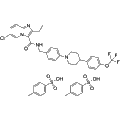
Telacebec ditosylate is a midazopyridine amide compound that functions as an antituberculosis agent targeting Mycobacterium tuberculosis. It exhibits significant activity with an MIC50 of 2.7 nM in culture broth medium, making it a valuable tool for research focused on tuberculosis and related infections. This compound is useful for investigating the mechanisms of action against mycobacterial pathogens and for developing novel therapeutic strategies.
Synonyms: GSK286
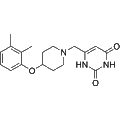
GSK2556286 is a cholesterol-dependent inhibitor of Mycobacterium tuberculosis, targeting the membrane-bound adenylyl cyclase Rv1625c. It exhibits potent activity against M. tuberculosis in infected macrophages, with an IC50 of 0.07 μM in THP-1 cells. By acting as an Rv1625 agonist, GSK2556286 promotes increased cAMP levels and modulates cholesterol metabolism. This compound is suitable for research applications centered on antitubercular drug development.
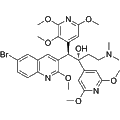
TBAJ-876 is an orally bioavailable diarylquinoline that inhibits Mycobacterium tuberculosis by targeting the c and ε subunits of its F-ATP synthase. It demonstrates bactericidal activity against replicating Mycobacterium tuberculosis, including strains with the Rv0678 mutation, and is metabolized in vivo to form the active metabolite TBAJ-876-M3, which has reduced lipophilicity. TBAJ-876 is well tolerated in animal models, significantly decreasing colony-forming units of Mycobacterium tuberculosis in the lungs and demonstrating efficacy against Mycobacterium abscessus. Its compatibility with common antibiotics makes it valuable for research on tuberculosis and related pulmonary infections.
Out of stock
All 3 sizes
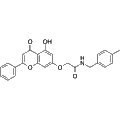
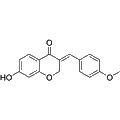
Bonducellin is a homoisoflavonoid derived from the roots of Caesalpinia digyna, acting primarily as an efflux pump inhibitor. It effectively diminishes the minimum inhibitory concentration (MIC) of ethidium bromide by eightfold against Mycobacterium smegmatis, demonstrating its potential as a valuable agent in combating mycobacterial resistance in tuberculosis. The compound's ability to target efflux pumps makes it a significant tool in the development of novel anti-TB therapies.
Ftaxilide is a novel antituberculosis agent that inhibits the growth of Mycobacterium tuberculosis. It demonstrates potent bactericidal activity, making it a valuable compound for research into tuberculosis treatment. Its mechanism of action involves targeting specific pathways essential for the survival and replication of the bacterium, providing insights for the development of new therapies against tuberculosis.
DprE1-IN-1 is a highly effective inhibitor of DprE1, showing robust biological activity against both drug-susceptible and resistant strains of Mycobacterium tuberculosis. This compound demonstrates favorable hepatocyte stability and low cytotoxicity, making it suitable for further research applications in tuberculosis treatment. Notably, DprE1-IN-1 achieves significant reductions in colony-forming units (CFU) in macrophage assays, underscoring its potential as a therapeutic agent in combating tuberculosis infections.
MtTMPK-IN-5 is a selective inhibitor of M. tuberculosis thymidylate kinase (MtbTMPK), exhibiting an IC50 value of 34 μM. This compound demonstrates significant antimicrobial activity against M. tuberculosis, with a minimum inhibitory concentration (MIC) of 12.5 μM. MtTMPK-IN-5 is a valuable tool for researchers investigating therapeutic strategies for tuberculosis.
Out of stock
All 3 sizes
DprE1-IN-4 is a potent, orally active noncovalent inhibitor of DprE1, exhibiting an IC50 of 0.90 μg/mL. This compound demonstrates remarkable in vitro efficacy against Mycobacterium tuberculosis H37Rv, with minimal inhibitory concentration (MIC) values of 0.12 μg/mL for the wild-type and 0.24 μg/mL for drug-resistant strains. DprE1-IN-4 is characterized by favorable pharmacokinetic properties and has shown significant bactericidal activity in an acute mouse model of tuberculosis, making it a valuable tool for tuberculosis research and drug development.
Mtb-IN-8 is a potent inhibitor of Mycobacterium tuberculosis (Mtb) that exhibits minimal inhibitory concentrations (MIC) of 0.03 μg/mL against the H37Rv strain and 0.125-0.06 μg/mL for multidrug-resistant Mtb. This compound is orally active and demonstrates significant efficacy in combating tuberculosis, making it a valuable tool for research on novel anti-tubercular therapies. Its properties facilitate studies on the mechanisms of drug resistance and the development of effective treatment strategies against Mtb infections.
Out of stock
All 3 sizes
PknB-IN-1 is a selective inhibitor of protein kinase B (PknB), exhibiting an IC50 of 14.4 μM. This compound demonstrates significant anti-mycobacterial activity, effectively inhibiting the growth of M. tuberculosis H37Rv strain with a minimum inhibitory concentration (MIC) of 6.2 μg/mL. PknB-IN-1 is a valuable tool for research focused on mycobacterial infections and the development of novel anti-tuberculosis therapeutics.
MSU-43085 is an orally active inhibitor targeting MmpL3 of Mycobacterium tuberculosis (Mtb). This compound demonstrates effective inhibition of Mtb in acute murine tuberculosis infection models, making it a valuable tool for tuberculosis research. Its role in studying the mechanisms of Mtb pathogenesis and potential therapeutic strategies highlights MSU-43085’s significance in the field of infectious disease research.
Out of stock
All 3 sizes
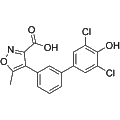
Mtb-IN-5 is an isoxazole compound that primarily targets Mycobacterium tuberculosis (Mtb). This inhibitor effectively disrupts Mtb respiration and biofilm formation in macrophage environments, while also enhancing the efficacy of the antibiotic isoniazid against isoniazid-resistant Mtb mutants. Mtb-IN-5 is a valuable tool for research focused on combating tuberculosis and understanding Mtb resistance mechanisms.
Out of stock
All 3 sizes