HBV

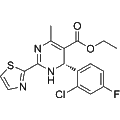
Hepatitis B virus (HBV) research compounds act on viral replication and on host steps of infection. HBV is a small enveloped DNA virus that copies its genome by reverse transcription of a pregenomic RNA inside the viral nucleocapsid. Nucleoside analogs such as telbivudine are phosphorylated in cells and then interfere with this reverse transcription step. Capsid assembly modulators work elsewhere in the cycle, and heteroaryldihydropyrimidines of the BAY41-4109 racemic type were shown to deplete nucleocapsids, while morphothiadin is a later capsid-directed compound. Virus entry depends on the bile acid transporter sodium taurocholate cotransporting polypeptide (NTCP), identified as the receptor for HBV. Catalpol is an iridoid glycoside listed here for reported activity in HBV cell models.

Items 151-162 of 162

  • HBV-IN-10
    Cat. No.
    A51053

    HBV-IN-10

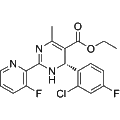
    HBV-IN-10 is an enantiomer of compound 6, functioning as a hepatitis B surface antigen (HBsAg) inhibitor with an EC50 range of 0.001 μM to 0.05 μM. This compound demonstrates significant antiviral activity, making it a valuable tool for research focused on hepatitis B virus (HBV) eradication. Its ability to inhibit HBsAg can aid in understanding HBV pathogenesis and developing therapeutic strategies.

    25 mg
    $1,800.00
    50 mg
    $2,285.00
    All 3 sizes
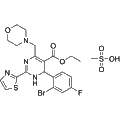
  • Morphothiadin mesylate
    Cat. No.
    A51054

    Morphothiadin mesylate

    Synonyms: GLS4 mesylate

    Morphothiadin mesylate is a potent inhibitor of Hepatitis B Virus (HBV) replication, targeting both wild-type and Adefovir-resistant strains. With an IC50 value of 12 nM, it demonstrates significant antiviral activity. This compound is useful for research applications focused on HBV pathogenesis and the development of antiviral therapeutic strategies.

    Out of stock

    All 3 sizes
  • HBV-IN-49
    Cat. No.
    A51055

    HBV-IN-49

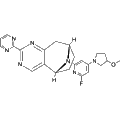
    HBV-IN-49 is an anti-hepatitis B virus (HBV) agent that specifically inhibits HBV replication. It is valuable for studying HBV infection dynamics and evaluating therapeutic strategies against hepatitis B virus-related diseases. This compound serves as an essential tool for researchers investigating antiviral mechanisms and potential treatments.

    1 mg
    $95.00
    5 mg
    $220.00
    All 7 sizes
  • HBV-IN-56
    Cat. No.
    A51056

    HBV-IN-56

    HBV-IN-56 is an orally active inhibitor of HBsAg production, targeting the hepatitis B virus. It effectively suppresses HBsAg production in both in vitro and in vivo models. This compound is suitable for studies focusing on chronic hepatitis B virus infection and the development of therapeutic strategies against HBV.

    Out of stock

    All 3 sizes
  • Coclauril
    Cat. No.
    A51058

    Coclauril

    Coclauril is a potent inhibitor of Hepatitis B virus (HBV) replication, acting primarily on hepatocytes. It demonstrates antiviral activity in human hepatoblastoma cell lines, with an EC50 value of 7.6 μg/mL. Coclauril is utilized in research to explore therapeutic strategies against HBV and to study the mechanisms of viral replication inhibition.

    5 mg
    $450.00
    All 1 sizes
  • BAY39-5493
    Cat. No.
    A51060

    BAY39-5493

    BAY39-5493 is a non-nucleoside inhibitor targeting hepatitis B virus (HBV) replication. It exerts its biological activity by blocking the formation of viral core particles, thereby inhibiting viral DNA replication. With an IC50 value of 0.03 μM against HBV in stably transfected HepG2.2.15 cells, BAY39-5493 serves as a valuable tool for research in the field of antiviral therapeutics and HBV biology.

    25 mg
    $1,275.00
    50 mg
    $1,625.00
    All 3 sizes
  • BAY38-7690
    Cat. No.
    A51061

    BAY38-7690

    BAY38-7690 is a non-nucleoside inhibitor that specifically targets hepatitis B virus (HBV) replication. It functions by obstructing the assembly of viral core particles, thereby inhibiting viral DNA replication. With an IC50 value of 0.15 μM in stably transfected HepG2.2.15 cells, BAY38-7690 is an important tool for investigating HBV biology and evaluating potential therapeutic strategies against hepatitis B virus infections.

    Out of stock

    All 3 sizes
  • KR-26556
    Cat. No.
    A51062

    KR-26556

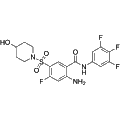
    KR-26556 is a sulfonamide compound that acts as a hepatitis B virus (HBV) capsid assembly regulator. It demonstrates potent anti-HBV activity with an EC50 value of 0.04 μM and exhibits favorable safety profiles. This reagent is suitable for investigating chronic hepatitis B and its associated therapeutic mechanisms.

    Out of stock

    All 3 sizes
  • Personalised postprandial-targeting
    Cat. No.
    A51063

    Personalised postprandial-targeting

    Personalised postprandial-targeting is an HBV inhibitor that modulates water-heme interactions, specifically targeting low-spin cytochrome P450 complexes. This reagent effectively preserves the axial water ligands of CYP2C9, even when inhibitors are present, enabling advanced studies of enzyme dynamics. Additionally, it facilitates the observation of hydrogen atoms in the axial water ligands through EPR spectroscopy, offering valuable insights into the active site of the enzyme, making it a critical tool for research in enzymology and drug development.

    2 mg
    $50.00
    All 1 sizes
  • GS-8873 TFA
    Cat. No.
    A51064

    GS-8873 TFA

    Synonyms: HBV-IN-19 TFA

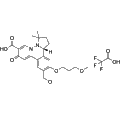
    GS-8873 TFA is a potent inhibitor of hepatitis B virus (HBV) surface antigen (HBsAg) production, exhibiting an EC50 value of 4 nM. This orally bioavailable compound demonstrates favorable pharmacokinetic properties in rodent models and metabolic stability in human hepatocytes. Notably, GS-8873 TFA has been associated with neurofunctional deficits in both rats and cynomolgus monkeys, making it a valuable tool for research in HBV therapies and associated neurological effects.

    25 mg
    $1,800.00
    50 mg
    $2,285.00
    All 3 sizes
  • FMAU
    Cat. No.
    A55307

    FMAU

    Synonyms: D-FMAU

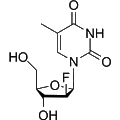
    FMAU is a nucleoside analog that primarily inhibits the replication of hepatitis B virus (HBV) and Epstein-Barr virus (EBV). Once phosphorylated by human thymidine kinase, FMAU is incorporated into DNA, serving as a valuable marker for cell proliferation. Its research applications extend to studies on herpes simplex virus infection and various cancer types.

    100 mg
    $30.00
    200 mg
    $45.00
    All 5 sizes
  • (R)-RG7834
    Cat. No.
    B10889

    (R)-RG7834

    Synonyms: (R)-RO 7020322; RO0321

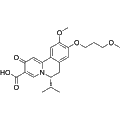
    (R)-RG7834 is the inactive enantiomer of RG7834, characterized by its “R” configuration. This compound lacks the biological activity associated with its active counterpart, making it useful for various research contexts, including studies focused on stereochemistry and the evaluation of pharmacological effects of enantiomers. Its role as a control substance aids in elucidating the specific activity of RG7834 in biochemical assays.

    Out of stock

    All 3 sizes

Items 151-162 of 162

Added to your cart

View Cart Checkout

    Loading...