- Cat. No.
- A19149
HSV-TK substrate
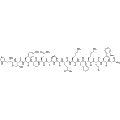
HSV-TK substrate is a substrate for HSV-TK, and induces multi-log cytotoxicity in HSV-TK-expressing and bystander cells. HSV-TK substrate shows antitumor activity.
Search by product name, CAS, target or catalog number. Press Down Arrow to reach product suggestions, Tab to move between links, and Escape to close suggestions.
Herpes simplex virus (HSV) inhibitors act on the replication machinery of HSV-1 and HSV-2. Aciclovir is a guanosine analog phosphorylated by the viral thymidine kinase, a step shown in 1977 to account for its selectivity in infected cells. Its triphosphate form inhibits the viral DNA polymerase and terminates chain elongation. Penciclovir, valacyclovir hydrochloride, idoxuridine and vidarabine are further nucleoside analogs listed here. Amenamevir and BAY57-1293 act instead on the helicase-primase complex, an approach reported for herpes simplex virus replication in 2002. The compounds support studies of viral DNA synthesis, enzyme selectivity and resistance mutations in cell culture. Other virus families appear in sibling categories such as HBV and RSV.
HSV-TK substrate is a substrate for HSV-TK, and induces multi-log cytotoxicity in HSV-TK-expressing and bystander cells. HSV-TK substrate shows antitumor activity.
HSV-1 Protease Substrate is a peptide substrate specifically designed for the HSV-1 protease. It exhibits a specificity constant (kcat/Km) for cleavage of 5.2 M-1 s-1 at pH 7.5, making it an essential tool for studying HSV-1 protease activity. This substrate is valuable in research applications focused on herpesvirus biology, proteolytic processing, and the development of antiviral strategies.
Out of stock
All 3 sizes