Carbohydrates & Glycobiology

Carbohydrates for glycobiology research range from sugars and sugar alcohols to amino sugars and polysaccharides. Sugar alcohols such as D-Sorbitol and maltitol are used as osmotic agents, stabilizers and enzyme substrates. Among the sugars, lactulose is a synthetic disaccharide built from galactose and fructose. Glucosamine and its salts represent the amino sugars, which are building blocks of glycosaminoglycans and chitin. Polysaccharides include hyaluronic acid, a glycosaminoglycan of the extracellular matrix, and chitosan, the deacetylated form of chitin. Protected sugars such as D-Xylofuranose, 1,2,3,5-tetraacetate serve as starting materials for nucleoside synthesis. The category belongs to Biochemical Assay Reagents, next to Acyl-CoA & Cofactors and Chelators & Bifunctional Chelators.

Items 1001-1025 of 1090

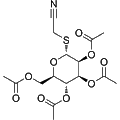
  • Cyanomethyl-2,3,4,6-tetra-O-acetyl-α-D-thiomannopyranoside
    Cat. No.
    A92918

    Cyanomethyl-2,3,4,6-tetra-O-acetyl-α-D-thiomannopyranoside

    Cyanomethyl-2,3,4,6-tetra-O-acetyl-α-D-thiomannopyranoside is a biochemical reagent that targets the study of glycosylation processes within glycobiology. This compound is pivotal for investigating the structure and function of glycans, facilitating research into carbohydrate chemistry, enzymatic activities related to glycan formation and degradation, as well as protein-glycan interactions. Its applications span basic research and advancements in biomedicine and biotechnology.

    5 mg
    $40.00
    10 mg
    $60.00
    All 6 sizes
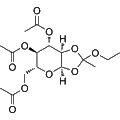
  • α-D-Glucopyranose,1,2-O-(1-ethoxyethylidene)-,3,4,6-triacetate
    Cat. No.
    A92920

    α-D-Glucopyranose,1,2-O-(1-ethoxyethylidene)-,3,4,6-triacetate

    α-D-Glucopyranose, 1,2-O-(1-ethoxyethylidene)-, 3,4,6-triacetate is a specialized biochemical reagent utilized in glycobiology research. This compound is integral for studying the structure and synthesis of carbohydrates, as well as the enzymatic processes involved in glycan formation and degradation. Its applications extend to investigating protein-glycan interactions and the biological roles of glycans, making it a valuable tool for research in basic biology, biomedicine, and biotechnology.

    Out of stock

    All 3 sizes
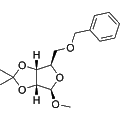
  • Methyl 2,3-O-(1-methylethylidene)-5-O-(phenylmethyl)-β-D-ribofuranoside
    Cat. No.
    A92927

    Methyl 2,3-O-(1-methylethylidene)-5-O-(phenylmethyl)-β-D-ribofuranoside

    Methyl 2,3-O-(1-methylethylidene)-5-O-(phenylmethyl)-β-D-ribofuranoside serves as a biochemical assay reagent designed for the evaluation of ribofuranoside derivatives. This compound allows researchers to investigate enzyme-substrate interactions and facilitate the study of glycosylation processes. Its structural properties make it particularly useful in the field of carbohydrate chemistry and biochemistry.

    100 mg
    $110.00
    1 g
    $330.00
    All 4 sizes
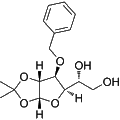
  • 3-O-Benzyl-1,2-O-isopropylidene-α-D-glucofuranose
    Cat. No.
    A92935

    3-O-Benzyl-1,2-O-isopropylidene-α-D-glucofuranose

    3-O-Benzyl-1,2-O-isopropylidene-α-D-glucofuranose is an important reagent in glycobiology that acts as a glycosyl donor. It plays a critical role in studies related to carbohydrate synthesis, enzymatic processes involved in glycan formation and degradation, and protein-glycan interactions. This compound is essential for advancing research in the structure and function of carbohydrates within biological systems, as well as in applications related to basic research, biomedicine, and biotechnology.

    Out of stock

    All 3 sizes
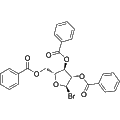
  • 2,3,5-Tri-O-benzoyl-α-D-arabinofuranosyl bromide
    Cat. No.
    A92937

    2,3,5-Tri-O-benzoyl-α-D-arabinofuranosyl bromide

    2,3,5-Tri-O-benzoyl-α-D-arabinofuranosyl bromide serves as a key reagent targeting carbohydrate structures in glycobiology. It facilitates studies on the structure and synthesis of glycan molecules, enabling research into enzyme-mediated glycan formation and degradation, as well as protein-glycan interactions. This compound is essential for elucidating the biological roles of glycans in various systems, contributing to advancements in basic research, biomedicine, and biotechnology.

    25 mg
    $115.00
    50 mg
    $165.00
    All 5 sizes
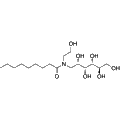
  • Nonanoyl-N-hydroxyethylglucamide
    Cat. No.
    A92940

    Nonanoyl-N-hydroxyethylglucamide

    Synonyms: HEGA-9

    Nonanoyl-N-hydroxyethylglucamide (HEGA-9) targets glycobiology, serving as an important biochemical reagent in the study of glycan structure and function. This compound is utilized in carbohydrate chemistry, enzymatic processes related to glycan formation and degradation, as well as protein-glycan interactions. Its applications extend to fundamental research, biomedicine, and biotechnology, contributing to advancements in understanding the role of carbohydrates in various biological systems.

    Out of stock

    All 3 sizes
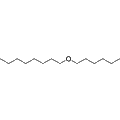
  • D-Glucoside, octyl
    Cat. No.
    A92941

    D-Glucoside, octyl

    D-Glucoside, octyl is a biochemical assay reagent targeting glycosidic bonds in various substrates. It is utilized primarily in enzymatic assays to study carbohydrate metabolism and interactions. This compound aids in the detection and quantification of glycoproteins and other glycoconjugates, making it valuable for research in biochemistry and molecular biology.

    Out of stock

    All 3 sizes
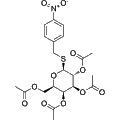
  • 4-Nitrobenzyl 2,3,4,6-tetra-O-acetyl-1-thio-β-D-galactopryranoside
    Cat. No.
    A92947

    4-Nitrobenzyl 2,3,4,6-tetra-O-acetyl-1-thio-β-D-galactopryranoside

    4-Nitrobenzyl 2,3,4,6-tetra-O-acetyl-1-thio-β-D-galactopyranoside is a biochemical reagent with significant utility in glycobiology research. It serves as a substrate in studies focused on glycan synthesis, enzymatic activity, and glycan-protein interactions. Its structure enables examination of carbohydrate chemistry and its implications in biological systems, making it a valuable tool for investigations in basic research, biomedicine, and biotechnology applications.

    Out of stock

    All 3 sizes
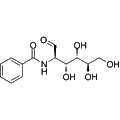
  • N-Benzoyl-D-glucosamine
    Cat. No.
    A92950

    N-Benzoyl-D-glucosamine

    N-Benzoyl-D-glucosamine is a biochemical assay reagent that serves as a substrate for glycosylation-related studies. It is utilized in research to investigate the role of glycosaminoglycans in various biological processes. This compound aids in understanding cellular interactions and enzymatic activities in the context of biochemical pathways. Suitable for various life science applications, it contributes to advancing knowledge in cellular biology and medicinal chemistry.

    1 g
    $25.00
    5 g
    $110.00
    All 2 sizes
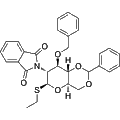
  • Ethyl 3-O-benzyl-4,6-O-benzylidene-2-phthalimido-2-deoxy-1-thio-β-D-glucopyranoside
    Cat. No.
    A92969

    Ethyl 3-O-benzyl-4,6-O-benzylidene-2-phthalimido-2-deoxy-1-thio-β-D-glucopyranoside

    Ethyl 3-O-benzyl-4,6-O-benzylidene-2-phthalimido-2-deoxy-1-thio-β-D-glucopyranoside serves as a biochemical assay reagent with applications in glycobiology research. This compound acts as a glycosyl donor, facilitating the study of glycosylation processes. Its unique structure enables detailed investigations into carbohydrate interactions and modifications, making it valuable for studies targeting glycoproteins and glycosaminoglycans. Researchers can utilize this reagent to advance their understanding of carbohydrate-mediated biological functions.

    25 mg
    $470.00
    50 mg
    $690.00
    All 3 sizes
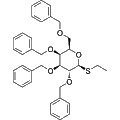
  • Ethyl 2,3,4,6-tetra-O-benzyl-β-D-thiogalactopyranoside
    Cat. No.
    A92972

    Ethyl 2,3,4,6-tetra-O-benzyl-β-D-thiogalactopyranoside

    Synonyms: 1-S-Ethyl 2,3,4,6-tetra-O-benzyl-b-D-thiogalactopyranoside

    Ethyl 2,3,4,6-tetra-O-benzyl-β-D-thiogalactopyranoside serves as a biochemical assay reagent with a focus on glycobiology. This compound is critical for the study of galactosylation processes and can facilitate the investigation of carbohydrate-protein interactions. Its unique structure provides a valuable tool for researchers exploring glycosyl transfer mechanisms and related biological activities.

    25 mg
    $30.00
    50 mg
    $40.00
    All 5 sizes
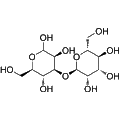
  • 3α-Mannobiose
    Cat. No.
    A92975

    3α-Mannobiose

    3α-Mannobiose is a biochemical reagent utilized in glycobiology research, focusing on the structure and function of carbohydrates. It plays a critical role in the study of glycan synthesis, degradation, and protein-glycan interactions, facilitating insights into the biological significance of glycans. This compound is valuable in basic research and has potential applications in biomedicine and biotechnology.

    1 mg
    $155.00
    5 mg
    $630.00
    All 3 sizes
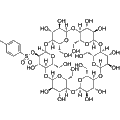
  • Mono-2-O-(p-toluenesulfonyl)-α-cyclodextrin
    Cat. No.
    A92978

    Mono-2-O-(p-toluenesulfonyl)-α-cyclodextrin

    Synonyms: Mono-2-o-(p-toluenesulfonyl)-alpha-cyclodextrin

    Mono-2-O-(p-toluenesulfonyl)-α-cyclodextrin serves as a biochemical assay reagent and is primarily utilized for its ability to form inclusion complexes with a variety of organic compounds. This reagent is valuable in life sciences research for enhancing solubility and stability of substances, thereby facilitating various biochemical assays. Its applications include drug delivery studies and the investigation of molecular interactions, making it an essential tool for researchers in the fields of pharmacology and biochemistry.

    Out of stock

    All 3 sizes
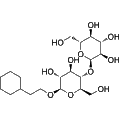
  • 2-Cyclohexylethyl-4-O-(α-D-glucopyranosyl)-β-D-glucopyranoside, 98%
    Cat. No.
    A92984

    2-Cyclohexylethyl-4-O-(α-D-glucopyranosyl)-β-D-glucopyranoside, 98%

    Synonyms: 2-Cyclohexylethyl-4-O-(alpha-D-glucopyranosyl)-beta-D-glucopyranoside; 98%

    2-Cyclohexylethyl-4-O-(α-D-glucopyranosyl)-β-D-glucopyranoside is a metal chelator primarily utilized in the purification and crystallization of membrane-bound proteins while preserving their native conformation. This compound can self-assemble into micelles and vesicles in aqueous environments, making it valuable for the investigation of biomembrane models. Its detergent-like properties enable enhanced solubilization and stabilization of membrane proteins, facilitating a variety of biochemical studies.

    Out of stock

    All 3 sizes
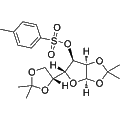
  • 1,2:5,6-Di-O-isopropylidene-3-O-p-toluenesulfonyl-α-D-allofuranose
    Cat. No.
    A92988

    1,2:5,6-Di-O-isopropylidene-3-O-p-toluenesulfonyl-α-D-allofuranose

    1,2:5,6-Di-O-isopropylidene-3-O-p-toluenesulfonyl-α-D-allofuranose is a specialized reagent utilized in glycobiology studies. It serves as a key intermediate in the synthesis of glycosyl donors, facilitating the exploration of carbohydrate chemistry and enzymatic interactions involved in glycan biosynthesis. This compound aids in the investigation of protein-glycan recognition and the biological roles of carbohydrates, advancing research in basic science, biomedicine, and biotechnology.

    Out of stock

    All 3 sizes
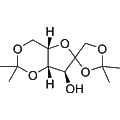
  • 1,2:4,6-Bis-O-(1-methylethylidene)-L-sorbofuranose
    Cat. No.
    A92996

    1,2:4,6-Bis-O-(1-methylethylidene)-L-sorbofuranose

    1,2:4,6-Bis-O-(1-methylethylidene)-L-sorbofuranose is a biochemical reagent targeting glycobiology, specifically engaging in the study of sugar structures and their biological roles. This compound facilitates investigations into carbohydrate chemistry, glycan synthesis and degradation, as well as protein-glycan interactions. It is essential for research in basic science, biomedicine, and biotechnology, aiding in understanding the evolutionary and functional significance of glycans in various biological systems.

    100 mg
    $75.00
    500 mg
    $200.00
    All 4 sizes
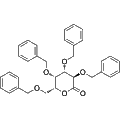
  • 2,3,4,6-Tetra-O-benzyl-D-galactono-1,5-lactone
    Cat. No.
    A92999

    2,3,4,6-Tetra-O-benzyl-D-galactono-1,5-lactone

    2,3,4,6-Tetra-O-benzyl-D-galactono-1,5-lactone is a biochemical reagent that serves as an important intermediate in glycobiology research. It facilitates the investigation of the structure, synthesis, and biological functions of glycans, contributing to the understanding of carbohydrate chemistry and the enzymatic processes involved in glycan metabolism. This compound is valuable for studies focused on protein-glycan interactions and their implications in various biological systems, advancing knowledge in disciplines such as biomedicine and biotechnology.

    Out of stock

    All 3 sizes
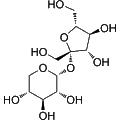
  • Xylosucrose
    Cat. No.
    A93001

    Xylosucrose

    Synonyms: β-D-Fructofuranosyl α-D-Xylopyranoside

    Xylosucrose is a biochemical assay reagent primarily utilized for its role in glycosylation studies. This compound serves as a substrate for various carbohydrate-active enzymes, facilitating the investigation of enzyme kinetics and substrate specificity. Its application is essential for research in glycomics and carbohydrate metabolism, aiding in the understanding of complex carbohydrate structures and their biological functions.

    25 mg
    $1,275.00
    All 1 sizes
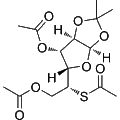
  • 3,6-Di-O-acetyl-5-S-acetyl-5-deoxy-1,2-O-isopropylidene-α-D-glucofuranose
    Cat. No.
    A93006

    3,6-Di-O-acetyl-5-S-acetyl-5-deoxy-1,2-O-isopropylidene-α-D-glucofuranose

    3,6-Di-O-acetyl-5-S-acetyl-5-deoxy-1,2-O-isopropylidene-α-D-glucofuranose serves as a valuable biochemical assay reagent. Its structural modifications allow for nuanced studies in glycobiology, specifically in the synthesis and analysis of glycosylated compounds. This compound facilitates research on carbohydrate-protein interactions and can aid in the development of glycan-based therapeutics.

    25 mg
    $90.00
    50 mg
    $130.00
    All 5 sizes
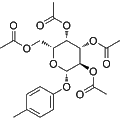
  • 4-Methylphenyl tetra-O-acetyl-α-D-galactopyranoside
    Cat. No.
    A93013

    4-Methylphenyl tetra-O-acetyl-α-D-galactopyranoside

    4-Methylphenyl tetra-O-acetyl-α-D-galactopyranoside serves as a glycosylation agent, acting primarily as a substrate for glycosidase enzymes. Its acetylated form enhances solubility and stability, making it a valuable tool in biochemical assays targeting carbohydrate metabolism. This compound is widely utilized in glycobiology research to study glycan structures and their interactions in biological systems.

    100 mg
    $25.00
    250 mg
    $40.00
    All 3 sizes
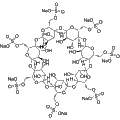
  • 6-O-Sulfo-β-cyclodextrin sodium
    Cat. No.
    A93027

    6-O-Sulfo-β-cyclodextrin sodium

    6-O-Sulfo-β-cyclodextrin sodium is a sulfated cyclodextrin that primarily targets various biological systems through its unique ability to form inclusion complexes. This compound exhibits significant potential as a solubilizing agent, enhancing the bioavailability of hydrophobic drugs in pharmaceutical applications. Its capability to facilitate drug delivery and improve formulation stability makes it an invaluable tool for research in drug development and delivery systems.

    5 mg
    $110.00
    10 mg
    $180.00
    All 6 sizes
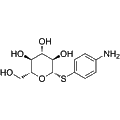
  • 4-Aminophenyl 1-thio-β-D-glucopyranoside
    Cat. No.
    A93064

    4-Aminophenyl 1-thio-β-D-glucopyranoside

    4-Aminophenyl 1-thio-β-D-glucopyranoside serves as a biochemical assay reagent that targets glycosylation processes. This compound is essential for glycobiology research, enabling the study of glycan interactions and enzymatic activities. Its utility in assays provides valuable insights into carbohydrate biochemistry and cellular signaling pathways.

    Out of stock

    All 3 sizes
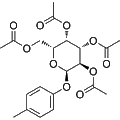
  • 4-Methylphenyl tetra-O-acetyl-β-D-galactopyranoside
    Cat. No.
    A93070

    4-Methylphenyl tetra-O-acetyl-β-D-galactopyranoside

    4-Methylphenyl tetra-O-acetyl-β-D-galactopyranoside serves as a substrate in biochemical assays targeting β-galactosidase enzymes. This compound is utilized in glycobiology research to study carbohydrate metabolism and galactose-containing glycan structures. Its acetylated form enhances solubility and stability, making it an effective tool for enzymatic analysis and screening applications.

    250 mg
    $25.00
    1 g
    $90.00
    All 2 sizes
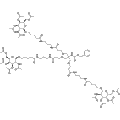
  • Tri-GalNAc(OAc)3-Cbz
    Cat. No.
    A93098

    Tri-GalNAc(OAc)3-Cbz

    Tri-GalNAc(OAc)3-Cbz is a biochemical assay reagent designed for the analysis of glycan interactions and modifications. This compound serves as a valuable tool in glycoscience research, enabling the study of glycan-mediated biological processes and interactions. Its structural specificity makes it suitable for applications such as glycan profiling, oligosaccharide synthesis studies, and the exploration of cell signaling pathways influenced by glycosylation.

    Out of stock

    All 3 sizes
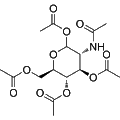
  • 2-Acetamido-1,3,4,6-tetra-O-acetyl-2-deoxy-alpha-D-glucopyranose
    Cat. No.
    A93103

    2-Acetamido-1,3,4,6-tetra-O-acetyl-2-deoxy-alpha-D-glucopyranose

    2-Acetamido-1,3,4,6-tetra-O-acetyl-2-deoxy-alpha-D-glucopyranose serves as a versatile biochemical assay reagent targeting glycoconjugates. Its structural similarity to natural glycosyl donors makes it particularly useful in glycobiology research for the synthesis and manipulation of glycan structures. This compound can facilitate the study of glycoproteins and glycolipids, contributing valuable insights into carbohydrate biology and related fields.

    100 mg
    $40.00
    250 mg
    $70.00
    All 5 sizes

Items 1001-1025 of 1090

Added to your cart

View Cart Checkout

    Loading...