- Cat. No.
- A11002
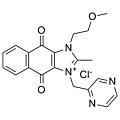
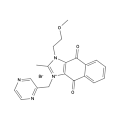
Sepantronium Bromide (YM155)
Synonyms: YM155
YM155 is a novel small molecule survivin suppressant with an IC50 of 0.54 nM for the inhibition of survivin promoter activity.
Search by product name, CAS, target or catalog number. Press Down Arrow to reach product suggestions, Tab to move between links, and Escape to close suggestions.
Survivin inhibitors and suppressants act on the smallest member of the inhibitor of apoptosis (IAP) protein family. Survivin, the product of the baculoviral IAP repeat-containing 5 (BIRC5) gene, was described in 1997 as an anti-apoptosis protein expressed in cancer and lymphoma. Survivin also belongs to the chromosomal passenger complex, which controls chromosome segregation and cytokinesis during mitosis. Sepantronium bromide (YM155) was reported in 2007 as a small-molecule suppressant of survivin expression. FL118 and its enantiomer (R)-FL118 are camptothecin analogs that also lower survivin expression. LQZ-7F interferes with survivin dimerization, and shepherdin (79-87) is a peptide that blocks survivin binding to heat shock protein 90 (HSP90). Compounds for other inhibitor of apoptosis proteins are listed under IAP.
Synonyms: YM155
YM155 is a novel small molecule survivin suppressant with an IC50 of 0.54 nM for the inhibition of survivin promoter activity.
Synonyms: YM155 hydrochloride
YM-155 is a potent survivin suppressant by inhibiting Survivin promoter activity with IC50 of 0.54 nM.
Synonyms: FL 118,FL-118
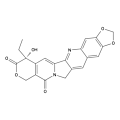
FL118 is an inhibitor of human survivin expression, activating tumor suppressor p53 as a novel MOA in p53 wild-type cancer cells.
Synonyms: 10,11-(Methylenedioxy)-20(S)-camptothecin
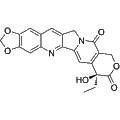
FL118, a potent survivin inhibitor, is a synthetic analogue of camptothecin (10,11-(Methylenedioxy)-20(S)-camptothecin). It functions by binding to the oncoprotein DDX5 (p68), leading to its dephosphorylation and degradation. FL118 is instrumental for cancer research, providing valuable insights into therapeutic strategies targeting survivin-related pathways.
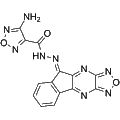
LQZ-7F is a potent survivin dimerization inhibitor that promotes spontaneous apoptosis in prostate cancer cells. It demonstrates dose-dependent cytotoxicity against PC-3 and C4-2 cell lines, with IC50 values of 2.99 µM and 2.47 µM, respectively. Additionally, LQZ-7F exhibits synergistic effects when combined with Docetaxel, making it valuable for research into therapeutic strategies targeting survivin in cancer treatment.
UC-112 is a selective modulator of survivin and XIAP, with notable anticancer properties. It induces the degradation of survivin through the ubiquitin-mediated proteasomal pathway, while also decreasing XIAP levels in in vivo tumor models. This compound activates caspase-3/7 and caspase-9, promoting apoptosis in cancer cells. UC-112 is relevant for research into melanoma, prostate cancer, and various cancer-related studies.
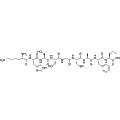
Shepherdin (79-87) is a peptidomimetic antagonist targeting the interaction between Heat Shock Protein 90 (Hsp90) and Survivin. This fragment, representing amino acids 79 to 87 of the full Shepherdin sequence, demonstrates significant anticancer activity by disrupting the chaperone function of Hsp90, leading to the destabilization of Survivin. It is primarily utilized in cancer research to explore mechanisms of apoptosis and investigate therapeutic strategies targeting cell survival pathways.
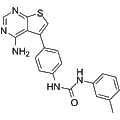
MX107 is a selective survivin inhibitor known for its potent efficacy in suppressing the proliferation of triple-negative breast cancer (TNBC) cells. By inducing the degradation of survivin and inhibitor-of-apoptosis proteins (IAPs), MX107 effectively inhibits nuclear factor κB (NF-κB) activation in response to DNA damage. This compound enhances the tumoricidal effects of genotoxic treatments when used in conjunction with chemotherapeutic agents, making it a valuable tool in cancer research and therapy development.
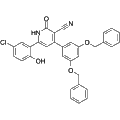
LQZ-7I is a potent inhibitor of survivin, specifically targeting its dimerization. By disrupting survivin interactions, LQZ-7I effectively induces cell death and decreases cancer cell viability. This compound demonstrates significant anti-tumor activity in xenograft models, contributing to reduced tumor growth and survivin depletion within tumor tissues, making it valuable for cancer research applications.
GDP366 is a dual inhibitor of survivin and Op18, effectively targeting these proteins to impede cancer cell proliferation. This compound demonstrates significant cell growth inhibition, promotes cellular senescence, and induces mitotic catastrophe in human cancer cells. Its mechanism of action makes GDP366 valuable for research related to cancer biology and therapeutic strategies.
LLP-3 is a potent inhibitor of Survivin, targeting the interaction between Survivin and Ran in cancer cells. This compound demonstrates significant potential in the study of Glioblastoma multiforme (GBM), aiding in the understanding of cancer cell viability and proliferation. LLP-3 provides valuable insights into therapeutic strategies aimed at disrupting key survival pathways in tumors.
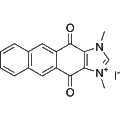
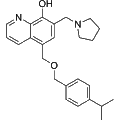
AQIM-I is a potent inhibitor of survivin, effectively reducing its expression and colony formation in cancer cells. This compound induces reactive oxygen species (ROS) production, leading to apoptosis, cell cycle arrest, DNA damage, and autophagy. AQIM-I demonstrates significant efficacy against non-small cell lung cancer cells A549, exhibiting an IC50 value of 9 nM, making it a valuable tool for investigating survivin-related pathways in cancer research.
Synonyms: LY 2181308
Gataparsen is an antisense oligonucleotide that specifically targets survivin mRNA, aiming to inhibit its expression. This intervention has shown potential antitumor activity, making it a valuable tool in cancer research. Gataparsen can be utilized to study the role of survivin in cell survival and proliferation, and to explore therapeutic strategies for tumor suppression.
Out of stock
All 3 sizes
MX106 is a potent inhibitor of survivin, a protein that plays a critical role in inhibiting apoptosis. This compound demonstrates significant anti-proliferative activity against human melanoma, epidermoid carcinoma, and colon cancer cell lines. Additionally, MX106 effectively targets multidrug-resistant cell lines that overexpress P-glycoprotein, making it a valuable tool for cancer research and the development of novel therapeutic strategies.
Synonyms: SF002-96-1
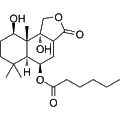
Isonanangenine B is a selective inhibitor of survivin, exhibiting an IC50 of 1.6 µM. It effectively obstructs the interaction of critical transcription factors, including Stat3 and NF-κB, with the survivin promoter. This compound holds potential for advancing cancer research, particularly in elucidating the mechanisms of survivin modulation in tumorigenesis.
Out of stock
All 3 sizes