- Cat. No.
- A12652
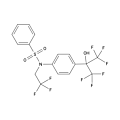
T0901317
T0901317 is a potent and selective agonist for LXR and FXR, with EC50s of 50 nM and 5 μM, respectively
Search by product name, CAS, target or catalog number. Press Down Arrow to reach product suggestions, Tab to move between links, and Escape to close suggestions.
Farnesoid X receptor (FXR) agonists and antagonists act on a nuclear receptor that senses bile acids. In 1999 three groups identified bile acids such as chenodeoxycholic acid as endogenous FXR ligands. FXR is expressed mainly in liver, intestine and kidney, where it controls bile acid synthesis, transport and enterohepatic circulation. Activated FXR induces small heterodimer partner, which represses cholesterol 7α-hydroxylase, the rate-limiting enzyme of bile acid synthesis. FXR ligands are used to study bile acid, lipid and glucose metabolism and liver fibrosis models. Steroidal agonists include obeticholic acid, a semisynthetic bile acid analog. GW4064, cilofexor and tropifexor are nonsteroidal agonists, while DY 268 serves as an FXR antagonist.
T0901317 is a potent and selective agonist for LXR and FXR, with EC50s of 50 nM and 5 μM, respectively
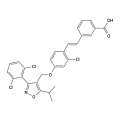
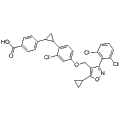
GW4064 is a selective, non-steroidal farnesoid X receptor (FXR) agonist (EC50 = 15 nM).
Synonyms: WAY362450; XL335
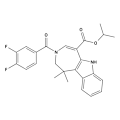
WAY-362450 is a highly potent, selective, and orally bioavailable farnesoid X receptor (FXR) agonist (EC50: 4 nM, eff=149%).
Synonyms: INT-747; 6-ECDCA
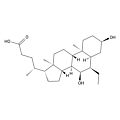
Obeticholic Acid is a potent and selective farnesoid X receptor (FXR) agonist with EC50 of 99 nM
Synonyms: GS-9674
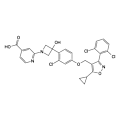
Cilofexor (GS-9674) is a farnesoid X receptor (FXR) agonist.
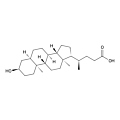
Lithocholic acid is a bile acid that acts as a detergent to solubilize fats for absorption.
Synonyms: LJN452
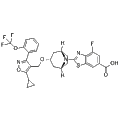
Tropifexor, also known as LJN452, is a farnesoid X receptor agonist for the Treatment of Cholestatic Liver Diseases and Nonalcoholic Steatohepatitis (NASH).
Synonyms: PX-20606; PX-102; PX10
PX20606, also known as PX-102, is a FXR agonist. It induces high-density lipoprotein-mediated transhepatic cholesterol efflux in mice and monkeys and prevent atherosclerosis in cholesteryl ester transfer protein transgenic low-density lipoprotein receptor (-/-) mice.
Synonyms: Px-102
Px-104, also known as Px-102, is a farnesoid X receptor (FXR) agonist potentially for the treatment of non-alcoholic fatty liver disease.
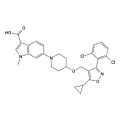
LY2562175 is a potent and selective FXR agonist in vitro and has robust lipid modulating properties, lowering LDL and triglycerides while raising HDL in preclinical species.
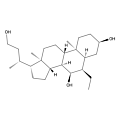
BAR502 is a dual FXR and GPBAR1 agonist with IC50 values of 2 μM and 0.4 μM, respectively.
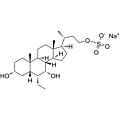
INT-767 is a dual farnesoid X receptor (FXR)/TGR5 agonist with mean EC50s of 30 and 630 nM, respectively.
Fexaramine is a small molecule farnesoid X receptor (FXR) agonist with 100-fold increased affinity relative to natural compounds.
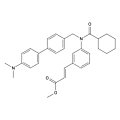
EDP-305 is a highly selective agonist of the farnesoid X receptor (FXR), exhibiting potent activity with EC50 values of 34 nM in chimeric FXR and 8 nM in full-length FXR. This compound demonstrates significant antifibrotic effects, making it a valuable tool for studying liver diseases. EDP-305 is relevant in research focused on primary biliary cholangitis (PBC) and non-alcoholic steatohepatitis (NASH).
Synonyms: GS-9674 tromethamine
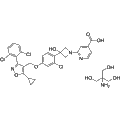
Cilofexor tromethamine is a nonsteroidal agonist of the farnesoid X receptor (FXR), primarily targeting liver diseases. It demonstrates significant potential in improving markers of cholestasis and liver injury, making it a valuable reagent in research for conditions such as primary sclerosing cholangitis. Cilofexor tromethamine has exhibited a favorable safety profile in clinical studies involving patients without cirrhosis, leading to notable enhancements in liver biochemical parameters and cholestatic markers.
Synonyms: EYP001
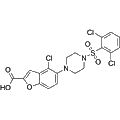
Vonafexor is a selective agonist of the farnesoid X receptor (FXR), offering an oral bioavailability profile. This compound has demonstrated substantial reductions in HBsAg levels when used in conjunction with Peg-IFNα. Vonafexor is primarily employed in anti-HBV research, making it a valuable reagent for studies focused on hepatitis B virus therapies.
FXR agonist 17 functions as a steroidal agonist of the farnesoid X receptor (FXR), exhibiting EC50 values of 42.2 nM in TR-FRET assays and 176.4 nM in luciferase reporter assays. This compound also activates TGR5 with an EC50 of 2.6 μM while showing no activation of hMRGPRX4. FXR agonist 17 demonstrates significant biological activity through its anti-inflammatory, hepatoprotective, and antifibrotic properties, contributing to the reduction of non-alcoholic steatohepatitis (NAFLD) activity scores and alleviating liver fibrosis severity. It serves as a valuable tool for research into NAFLD, cholestatic liver disease, and liver fibrosis.
Out of stock
All 3 sizes
Synonyms: Ursodeoxycholate sodium; Ursodiol sodium; UCDA sodium
Ursodeoxycholic acid sodium is a potent agonist of the G-protein coupled receptor 19 (GPCR19) and antagonist of the farnesoid X receptor (FXR). This secondary bile acid plays a crucial role in maintaining intestinal barrier integrity and regulating lipid metabolism. Its ability to modulate bile acid-activated receptors makes it valuable for investigating various hepatic and gastrointestinal diseases. Ursodeoxycholic acid sodium is also orally active, making it suitable for diverse in vitro and in vivo research applications.
HPG1860 is a highly selective and potent agonist of the farnesoid X receptor (FXR), demonstrating an EC50 of 18 nM in FXR-luciferase reporter assays. This compound exhibits minimal activity on TGR5 and 13 other related nuclear receptors, with EC50 values exceeding 30.0 μM. HPG1860 is primarily utilized in research investigating non-alcoholic steatohepatitis (NASH) and related metabolic disorders.
BMS-986339 is a potent agonist of the farnesoid X receptor (FXR), demonstrating oral bioactivity. This compound interacts with key residues, including His298 and Asn287, to exert its biological effects. BMS-986339 is utilized in research focusing on primary biliary cirrhosis (PBC), primary sclerosing cholangitis (PSC), and nonalcoholic steatohepatitis (NASH), making it valuable for studies related to anti-fibrotic pathways.
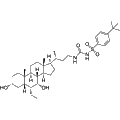
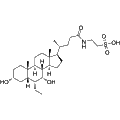
Tauro-obeticholic acid is an active metabolite of obeticholic acid, functioning as a potent farnesoid-X receptor (FXR) agonist. This compound exhibits significant biological activity in the regulation of bile acid homeostasis and lipid metabolism. It is primarily utilized in research exploring metabolic disorders, liver diseases, and potential therapeutic interventions targeting FXR pathways.
Synonyms: isoCDCA
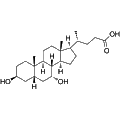
Isochenodeoxycholic acid (isoCDCA) is a potent farnesoid X receptor (FXR) agonist. It effectively activates FXR and enhances the mRNA expression of target genes such as Ostβ and Kng1. Isochenodeoxycholic acid is also a substrate for the liver class I ADH γγ isozyme, facilitating the 3β-dehydrogenation reaction. This compound is valuable for research in metabolic processes and FXR-related signaling pathways.
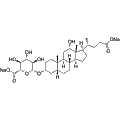
Deoxycholic acid 3-O-β-D-glucuronide disodium is a potent agonist of the farnesoid X receptor (FXR). This compound has been shown to play a significant role in regulating bile acid homeostasis, lipid metabolism, and glucose metabolism. Its applications include the study of metabolic disorders, liver diseases, and potential therapeutic strategies targeting FXR signaling pathways.
FXR Agonist 3 is a potent farnesoid X receptor (FXR) agonist, designed for the treatment of non-alcoholic steatohepatitis (NASH). This compound effectively inhibits the expression of COL1A1, TGF-β1, α-SMA, and TIMP1, showcasing significant anti-fibrogenic properties. Additionally, FXR Agonist 3 markedly reduces liver steatosis and inflammation while improving levels of liver fibrosis, making it a valuable tool in liver disease research.