- Cat. No.
- A16859
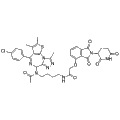
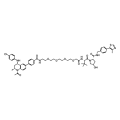
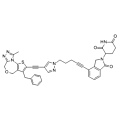
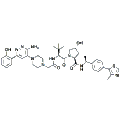
ARV-825
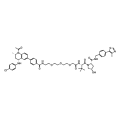
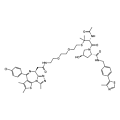
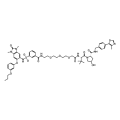
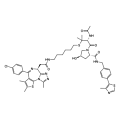
ARV-825 is a hetero-bifunctional molecule that is composed of a BRD4 binding moiety joined to an E3 ligase cereblon binding moiety using proteolysis targeting chimera (PROTAC) technology.
Search by product name, CAS, target or catalog number. Press Down Arrow to reach product suggestions, Tab to move between links, and Escape to close suggestions.
Epigenetic reader domain inhibitors, mostly bromodomain inhibitors, block recognition of acetylated histone lysines. Structural work on a histone acetyltransferase bromodomain first showed that this module binds acetylated lysine. Proteins of the bromodomain and extra-terminal (BET) family, such as bromodomain-containing protein 4 (BRD4), link histone acetylation to gene transcription. The thienodiazepine (+)-JQ1 was described in 2010 as a selective BET inhibitor that displaces BRD4 from chromatin. PFI-1, GSK1324726A and CPI-203 provide further BET inhibitor chemotypes for comparative studies. Other entries reach beyond BET binding, such as SGC-CBP30 for a non-BET bromodomain and the BRD4-degrading compound ARV-825.
ARV-825 is a hetero-bifunctional molecule that is composed of a BRD4 binding moiety joined to an E3 ligase cereblon binding moiety using proteolysis targeting chimera (PROTAC) technology.
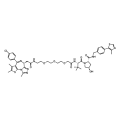
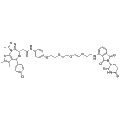
dBET1 is a potent BRD4 protein degrader based on PROTAC technology with an EC50 of 430 nM.
MZ1 is a potent inducer of reversible, long-lasting and selective removal of BRD4 over BRD2 and BRD3.
ZXH-3-26 is a selective PROTAC BRD4 degrader with a DC50/5h (DC50/5h referring to half-maximal degradation after 5 hours of treatment) of ~ 5 nM.
VZ185 is a potent, fast, and selective dual BRD7/9 PROTAC degrader with DC50s of 4.5 and 1.8 nM, respectively.
A1874 is a nutlin-based and BRD4-degrading PROTAC with a DC50 of 32 nM (induce BRD4 degradation in cells). Effective in inhibiting many cancer cell lines proliferation.
dBET57 is a potent and selective degrader of BRD4BD1 based on the PROTAC technology.
(+)-JQ1 PA is a clickable JQ1 for building PROTACs, which acts as a BET bromodomain inhibitor.
MZP-55 is a selective degrader of BRD3/4 based on PROTAC technology, with a Kd of 8 nM for Brd4BD2.
MZP-54 is a selective degrader of BRD3/4 based on PROTAC technology, with a Kd of 4 nM for Brd4BD2.
AT6 is a PROTAC AT1 analogue, which is a highly selective bromodomain (Brd4) degrader.
dTRIM24 is a selective bifunctional degrader of TRIM24 based on PROTAC.
BRD4 degrader AT1 is a highly selective Brd4 degrader based on PROTAC technology, with a Kd of 44 nM for Brd4BD2 in cells.
QCA570 is a potent BET degrader based on PROTAC, with an IC50 of 10 nM for BRD4 BD1 Protein.
PROTAC BET Degrader-1 is a potent BET degrader based on PROTAC, decreasing BRD2, BRD3, and BRD4 protein levels at low concentration.
PROTAC BRD9 Degrader-1 is a lead PROTAC BRD9 chemical degrader (IC50=13.5 nM), which can be used as a selective probe useful for the study of BAF complex biology.
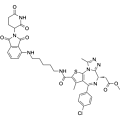
dBET6 is a highly potent, selective and cell-permeable degrader of BET based on PROTAC, with an IC50 of 14 nM, and has antitumor activity.
SMARCA-BD ligand 1 for Protac is a compound that binds to the BAF ATPase subunits SMARCA2, and used for degrading SMARCA2, based on PROTAC.
TTK21 is a CBP/p300 histone acetyltransferase activator.
AU-24118 is an orally bioavailable PROTAC degrader targeting the mSWI/SNF chromatin remodeling complex ATPases SMARCA2 and SMARCA4, as well as PBRM1. It offers a powerful approach for modulating epigenetic regulation and holds promise for the treatment of cancers driven by alterations in SWI/SNF complex components.
ACBI1 is a potent and cooperative PROTAC degrader targeting SMARCA2, SMARCA4, and PBRM1, with DC₅₀ values of 6 nM, 11 nM, and 32 nM, respectively. It exhibits strong anti-proliferative activity and induces apoptosis, making it a valuable tool for studying chromatin remodeling and cancer therapeutics.
AU-15330 is a PROTAC degrader targeting the SWI/SNF chromatin remodeling ATPase subunits SMARCA2 and SMARCA4. It effectively suppresses tumor growth in prostate cancer xenograft models and enhances the therapeutic efficacy of the AR antagonist enzalutamide. AU-15330 also induces remission in castration-resistant prostate cancer models, demonstrating strong antitumor activity with a favorable safety profile.
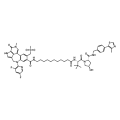
GNE-987 is a highly potent PROTAC degrader of BRD4, composed of a BET inhibitor, a von Hippel-Lindau (VHL) ligand, and a ten-methylene linker. It binds both BD1 and BD2 bromodomains of BRD4 with low nanomolar affinity (IC₅₀ = 4.7 and 4.4 nM) and induces BRD4 degradation with a DC₅₀ of 0.03 nM in EOL-1 AML cells. GNE-987 is also suitable for use in PROTAC–Antibody Conjugates (PAC), making it a valuable tool for targeted protein degradation and epigenetic cancer research.
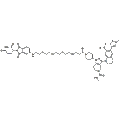
dCBP-1 is a potent and selective heterobifunctional PROTAC degrader of p300/CBP, utilizing a cereblon ligand for E3 ligase recruitment. It effectively eliminates oncogenic enhancer activity driving MYC expression and demonstrates strong cytotoxicity against multiple myeloma cells, making it a valuable tool for epigenetic and cancer research.