- Cat. No.
- A20939
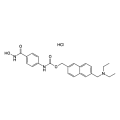
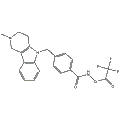
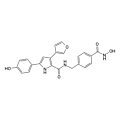
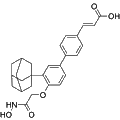
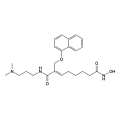
Ivaltinostat (CG-200745)
Synonyms: CG200745
CG-200745 is a potent HDAC inhibitor which has the hydroxamic acid moiety to bind zinc at the bottom of catalytic pocket.
Search by product name, CAS, target or catalog number. Press Down Arrow to reach product suggestions, Tab to move between links, and Escape to close suggestions.
Histone deacetylase (HDAC) inhibitors block enzymes that remove acetyl groups from histones and other proteins. Deacetylation compacts chromatin and generally represses transcription, so HDAC inhibitors are widely used to study gene regulation. Trichostatin A was characterized in 1990 as a specific inhibitor of mammalian histone deacetylase. The first mammalian HDAC was cloned in 1996 and found to be related to the yeast transcriptional regulator Rpd3p. Isoform-selective tools include entinostat for HDAC1 and HDAC3, and Tubastatin A HCl for HDAC6, a microtubule-associated deacetylase. Broad-spectrum hydroxamates such as vorinostat and panobinostat, together with the cyclic depsipeptide romidepsin, complete the range.
Synonyms: CG200745
CG-200745 is a potent HDAC inhibitor which has the hydroxamic acid moiety to bind zinc at the bottom of catalytic pocket.
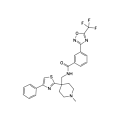
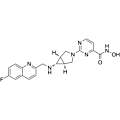
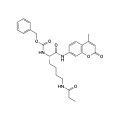
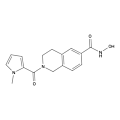
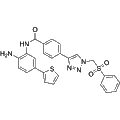
HDAC-IN-5 is a histone deacetylase (HDAC) inhibitor.
Synonyms: 4SC-202
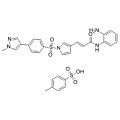
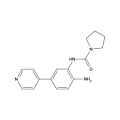
Domatinostat tosylate (4SC-202) is a selective class I HDAC inhibitor with IC50 of 1.20 μM, 1.12 μM, and 0.57 μM for HDAC1, HDAC2, and HDAC3, respectively. It also displays inhibitory activity against Lysine specific demethylase 1 (LSD1).
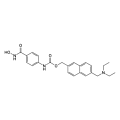
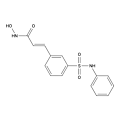
Givinostat (ITF-2357) is a HDAC inhibitor with an IC50 of 198 and 157 nM for HDAC1 and HDAC3, respectively.
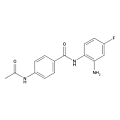
Synonyms: Chidamide impurity
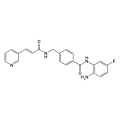
HDAC-IN-7 (Chidamide impurity) is an impurity of Chidamide. Chidamide is a potent and orally bioavailable HDAC enzymes class I (HDAC1/2/3) and class IIb (HDAC10) inhibitor.
Synonyms: ITF-2357 hydrochloride; ITF2357
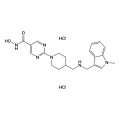
Givinostat hydrochloride (ITF-2357 hydrochloride) is a HDAC inhibitor with an IC50 of 198 and 157 nM for HDAC1 and HDAC3, respectively.
Synonyms: CHR-3996
Nanatinostat (CHR-3996) is a potent, class I selective and orally active histone deacetylase (HDAC) inhibitor with an IC50 of 8 nM.
Synonyms: PXD101; PX105684
Belinostat (PXD101; PX105684) is a potent HDAC inhibitor with an IC50 of 27 nM in HeLa cell extracts.
BRD6688 is a selective inhibitor of HDAC2 that acts by enhancing the learning and memory processes.
BRD3308 is a highly selective HDAC3 inhibitor with an IC50 of 54 nM.
Tubastatin A is a potent HDAC6 inhibitor with an IC50 value of 15 nM.
Synonyms: JNJ-26481585 dihydrochloride
Quisinostat dihydrochloride (JNJ-26481585 dihydrochloride) is an orally available, potent pan-HDAC inhibitor with IC50s of 0.11 nM, 0.33 nM, 0.64 nM, 0.46 nM, and 0.37 nM for HDAC1, HDAC2, HDAC4, HDAC10 and HDAC11, respectively. Quisinostat dihydrochloride has a broad spectrum antitumoral activity.
Synonyms: Suberohydroxamic acid; SBHA
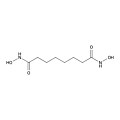
Suberoyl bis-hydroxamic acid (Suberohydroxamic acid; SBHA) is a competitive and cell-permeable HDAC1 and HDAC3 inhibitor with ID50 values of 0.25 μM and 0.30 μM, respectively.
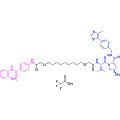
JPS016 is a benzamide-based PROTAC that recruits the Von Hippel-Lindau (VHL) E3 ligase to selectively degrade class I histone deacetylases (HDACs). It is a potent degrader of HDAC1/2, leading to broad transcriptional changes and enhanced apoptosis in HCT116 cells, supporting its application in epigenetic and cancer research.
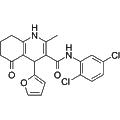
AR420626 is a selective agonist of free fatty acid receptor 3 (FFAR3, also known as GPR41), with an IC₅₀ of 117 nM. It demonstrates anti-inflammatory, antitumor, and antidiabetic activities. AR420626 improves neurogenic diarrhea by modulating neural pathways mediated by nicotinic acetylcholine receptors (nAChRs). In cancer models, it suppresses the growth of HepG2 xenografts and inhibits hepatoma cell proliferation through apoptosis induction. Additionally, AR420626 mitigates allergic asthma and eczema and enhances glucose uptake by activating FFAR3-mediated Ca²⁺ signaling, offering potential therapeutic benefits in metabolic disorders such as diabetes.
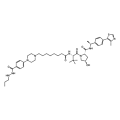
YX968 is a potent and selective PROTAC degrader targeting histone deacetylases HDAC3 and HDAC8, with DC₅₀ values of 1.7 nM and 6.8 nM, respectively. By inducing degradation of these epigenetic regulators, YX968 promotes apoptosis and exhibits significant antitumor activity, representing a promising therapeutic strategy for cancers driven by aberrant HDAC3/8 activity.
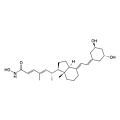
Triciferol is a multifunctional small molecule that acts as both a vitamin D receptor (VDR) agonist and a histone deacetylase (HDAC) antagonist. It binds directly to VDR with an IC₅₀ of 87 nM and exhibits 1,25-dihydroxyvitamin D₃ (1,25D)-like potency in activating multiple VDR target genes. In addition to its transcriptional effects, Triciferol induces significant tubulin hyperacetylation and enhances histone acetylation, contributing to its antiproliferative and cytotoxic activities. This dual mechanism highlights its potential as a therapeutic agent in cancer and epigenetic modulation.
QTX125 is a potent and highly selective inhibitor of histone deacetylase 6 (HDAC6), demonstrating excellent specificity over other HDAC isoforms. It exhibits significant antitumor activity through selective inhibition of HDAC6-mediated pathways. Both the salt and free base forms of QTX125 display comparable biological activity at equivalent molar concentrations, ensuring consistent pharmacological effects across different formulations.
MPI_5a is a potent and selective inhibitor of histone deacetylase 6 (HDAC6), with an IC₅₀ of 36 nM. It exhibits minimal activity against other HDAC isoforms, demonstrating high isoform selectivity. In cellular assays, MPI_5a effectively inhibits acylated tubulin accumulation with an IC₅₀ of 210 nM, highlighting its utility in modulating HDAC6-dependent processes for potential therapeutic applications.
KPZ560 is a potent inhibitor of histone deacetylases HDAC1 and HDAC2, with IC₅₀ values of 12 nM and 68 nM, respectively. It has been shown to enhance dendritic spine density in granule neurons of mice, indicating potential neurotrophic effects. Additionally, KPZ560 inhibits the proliferation of MCF breast cancer cells, supporting its potential application in both neurobiological and oncological research.
MIR002 is a potent, orally bioavailable dual inhibitor targeting DNA polymerase α (POLA1) and histone deacetylase 11 (HDAC11). It induces p53 acetylation, upregulates p21 expression, and triggers G1/S cell cycle arrest followed by apoptosis. MIR002 demonstrates significant antitumor efficacy in vivo, highlighting its potential as a therapeutic agent for cancers driven by POLA1 and HDAC11 dysregulation.
Synonyms: p-Fluoro-SAHA
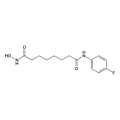
F-SAHA is a histone deacetylase inhibitor (HDACi) structurally derived from suberoylanilide hydroxamic acid (SAHA). Its fluorine-18 (^18F) labeled derivative enables non-invasive imaging of HDAC expression and activity, making F-SAHA a valuable tool for tumor imaging research and the assessment of epigenetic modulation in vivo.
GEM144 is a potent and orally bioavailable dual inhibitor of DNA polymerase α (POLA1) and histone deacetylase 11 (HDAC11). It promotes p53 acetylation, induces p21 activation, and triggers G1/S cell cycle arrest followed by apoptosis. GEM144 exhibits significant antitumor efficacy in human orthotopic malignant pleural mesothelioma xenograft models, highlighting its potential as a targeted therapeutic agent for aggressive thoracic malignancies.
HL23 is a histone deacetylase (HDAC) inhibitor with demonstrated efficacy against hepatocellular carcinoma (HCC). It enhances acetylation at the TXNIP promoter, leading to upregulation of TXNIP expression and modulation of potassium channel activity, ultimately inducing TXNIP-dependent potassium deprivation. HL23 effectively suppresses HCC progression and metastasis, and exhibits a synergistic antitumor effect when combined with Sorafenib, outperforming the combination of Sorafenib and Vorinostat in preclinical models.