
- Cat. No.
- A22589
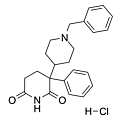
Benzetimide hydrochloride
Synonyms: R4929
Benzetimide hydrochloride is a muscarinic acetylcholine receptor antagonist.
In stock
View Details
Search by product name, CAS, target or catalog number. Press Down Arrow to reach product suggestions, Tab to move between links, and Escape to close suggestions.
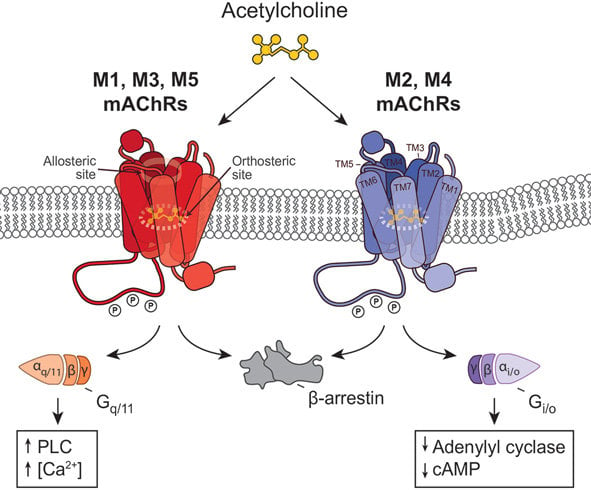
Muscarinic acetylcholine receptors (mAChRs) are a class of G protein-coupled receptors (GPCRs) found in the central and peripheral nervous systems, as well as in various other tissues and organs throughout the body. These receptors are named after muscarine, a natural alkaloid compound found in certain mushrooms, which was one of the first substances discovered to activate them.
There are five subtypes of muscarinic receptors, designated as M1 through M5, each with distinct tissue distribution and functions. Here's an overview of their roles:
Muscarinic receptors are activated by the neurotransmitter acetylcholine and play a vital role in regulating a wide range of physiological processes, including heart rate, smooth muscle contraction, glandular secretion, and neurotransmitter release. They are targets for various drugs, including anticholinergic agents, which block their activity, and drugs used to treat conditions like bradycardia and neurodegenerative disorders.
Understanding the functions and regulation of muscarinic acetylcholine receptors is essential for developing therapies that modulate their activity and for advancing our knowledge of how they contribute to various physiological and pathological processes in the body.
Synonyms: R4929
Benzetimide hydrochloride is a muscarinic acetylcholine receptor antagonist.
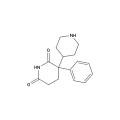
Nor-benzetimide is a major metabolite of Benzetimide. Benzetimide is a mAChR antagonist with anticholinergic activity.
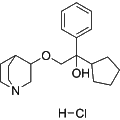
Synonyms: Penequinine hydrochloride
Penehyclidine hydrochloride (also known as Penequinine hydrochloride) is a selective anticholinergic agent that acts as an antagonist of muscarinic M1 and M3 receptors. It exerts anti-inflammatory effects by modulating immune signaling in lung tissue, notably through activation of the NF-κB pathway and inhibition of pro-inflammatory cytokine release. In preclinical studies, Penehyclidine hydrochloride has been shown to alleviate pulmonary inflammation in rat models of chronic obstructive pulmonary disease (COPD), particularly under conditions of mechanical ventilation. These properties suggest its potential utility in managing respiratory inflammatory conditions and improving outcomes in mechanically ventilated patients with COPD.
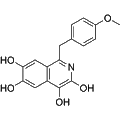
GS 283 is a muscarinic acetylcholine receptor (mAChR) antagonist that exhibits calcium antagonist properties. This compound effectively modulates smooth muscle contraction by inhibiting contractions induced by carbachol and histamine in guinea pig tracheal smooth muscle, as well as high H+ levels in both guinea pig and rat tracheal smooth muscle. Additionally, GS 283 has been shown to inhibit Ca2+-induced contractions, and at elevated concentrations, it can completely abolish carbachol-induced contractions in a Ca2+-free environment. This makes GS 283 a valuable tool for research related to respiratory physiology and the pharmacological modulation of smooth muscle activity.
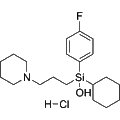
Synonyms: p-Fluorohexahydrosiladifenidol hydrochloride
p-F-HHSiD hydrochloride is a potent and selective antagonist of the M3 muscarinic acetylcholine receptor (mAChR). This compound also demonstrates antagonistic properties towards other mAChR subtypes and the alpha1-adrenoceptor. p-F-HHSiD hydrochloride is useful for research applications involving cancer, metabolic disorders, neurological conditions, and cardiovascular diseases, including colon cancer, Alzheimer’s disease, and diabetes.
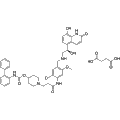
Synonyms: GSK961081 Succinate; TD-5959 Succinate
Batefenterol Succinate is an inhaled bifunctional bronchodilator that acts as a muscarinic acetylcholine receptor (mAChR) antagonist and a beta2-adrenoceptor agonist. This dual mechanism results in effective smooth muscle relaxation, enhancing respiratory function. Batefenterol Succinate is primarily utilized in research focused on chronic obstructive pulmonary disease (COPD) and other respiratory conditions, providing insights into therapeutic strategies for airway obstruction.
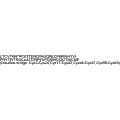
Synonyms: MT3
Muscarinic toxin 3 (MT3) is a selective and non-competitive antagonist of muscarinic acetylcholine receptors (mAChRs) and adrenergic receptors. It exhibits high potency with pIC50 values of 6.71, 8.79, 8.86, 7.57, 8.13, and 8.49 against M1, M4, α1A, α1B, α1D, α2A, α2B, and α2C receptors, respectively, highlighting its prominent adrenoceptor activity. This compound is valuable in studying receptor signaling pathways and has potential applications in pharmacological research focused on nervous system disorders and cardiovascular diseases.
Out of stock
All 3 sizes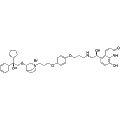
β2AR/M-receptor agonist-1 is a dual-function compound acting as a muscarinic receptor antagonist and β2 adrenoceptor agonist. It exhibits a potent agonistic effect on the β2 adrenoceptor, with an EC50 value of 9.2 nM, and also demonstrates antagonistic activity against the muscarinic receptor, characterized by a Ki value of 30.2 nM. This compound is valuable for research applications involving modulation of adrenergic and muscarinic signaling pathways.
Out of stock
All 3 sizes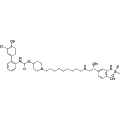
Synonyms: β2AR/M-receptor agonist-2
PF-4348235 is a potent M3 muscarinic receptor antagonist. It demonstrates strong inhibitory activity against the human cloned M3 receptor with a Ki value of 0.73 nM, while also acting as a β2 adrenoceptor agonist with an EC50 of 3.7 nM. This compound is primarily utilized in research related to chronic obstructive pulmonary disease (COPD) due to its significant bronchodilator properties. Its dual action makes it a valuable tool in the study of respiratory disorders.
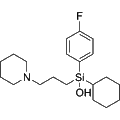
Synonyms: p-Fluorohexahydrosiladifenidol
p-F-HHSiD (p-Fluorohexahydrosiladifenidol) functions as a selective antagonist of the M3 muscarinic acetylcholine receptor (mAChR). This compound exhibits antagonistic activity against various muscarinic receptor subtypes as well as the alpha-1 adrenergic receptor. p-F-HHSiD is valuable for research in cancer, metabolic disorders, neurological pathologies, and cardiovascular diseases, including colon cancer, Alzheimer's disease, and diabetes.
Out of stock
All 3 sizes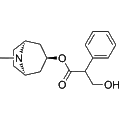
Synonyms: Tropine tropate; DL-Hyoscyamine
Atropine is a competitive antagonist of muscarinic acetylcholine receptors (mAChR), exhibiting IC50 values of 0.39 nM for human mAChR M4 and 0.71 nM for chicken mAChR M4. This compound effectively inhibits acetylcholine-induced relaxations in human pulmonary veins. Atropine is utilized in research focused on anti-myopia and the treatment of bradycardia.
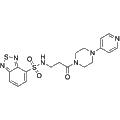
Synonyms: VU 255035
VU 0255035 is a highly selective and competitive antagonist of the M1 muscarinic acetylcholine receptor (mAChR). It effectively inhibits M1 mAChR signaling, which contributes to the reduction of epileptic seizures and the modulation of neuronal membrane potential. This compound is valuable for research applications focused on central nervous system disorders, including epilepsy, Parkinson's disease, and dystonia.
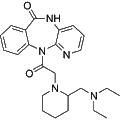
Synonyms: AF-DX 116
Otenzepad is a selective, competitive antagonist of the M2 muscarinic acetylcholine receptor, exhibiting IC50 values of 640 nM in rabbit peripheral lung tissue and 386 nM in rat heart tissue. This compound plays a significant role in modulating cholinergic signaling and has applications in research focused on respiratory and cardiovascular physiology. Its use aids in the study of receptor-mediated pathways and potential therapeutic targets in related disorders.
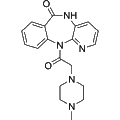
Synonyms: LS 519 free base; Pirenzepin; Gastrozepin
Pirenzepine is a selective antagonist of the M1 muscarinic acetylcholine receptor (mAChR) with limited ability to cross the blood-brain barrier. This compound is primarily utilized for its ability to inhibit gastric acid secretion and alleviate muscle spasm, making it relevant in the study of peptic ulcers. Additionally, Pirenzepine exhibits anti-proliferative properties in various cancer cell lines, providing valuable insights for cancer research applications.
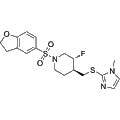
VU6019650 is a potent and selective orthosteric antagonist of the M5 muscarinic acetylcholine receptor (IC50 = 36 nM). This compound is being investigated for its potential in alleviating opioid use disorder by modulating the mesolimbic dopaminergic reward circuitry. VU6019650 effectively reduces neuronal firing rates in midbrain dopamine neurons of the ventral tegmental area in response to Oxotremorine M iodide, offering insights into its pharmacological application in neuropsychiatric research.
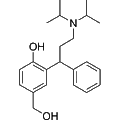
Synonyms: (Rac)-Desfesoterodine; (Rac)-PNU-200577
(Rac)-5-Hydroxymethyl Tolterodine is a mAChR antagonist with high affinity for M1, M2, M3, M4, and M5 receptors, exhibiting Ki values of 2.3 nM, 2 nM, 2.5 nM, 2.8 nM, and 2.9 nM, respectively. This active metabolite of Tolterodine is valuable for investigating the pathophysiology and treatment of overactive bladder conditions. Its selective inhibition of muscarinic acetylcholine receptors allows for exploration of therapeutic strategies targeting bladder hyperactivity.
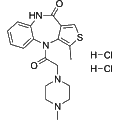
Telenzepine dihydrochloride is a selective antagonist of the muscarinic M1 receptor, exhibiting a Ki value of 0.94 nM. This compound effectively inhibits gastric acid secretion and demonstrates significant antiulcer properties, making it a valuable tool for research into gastrointestinal disorders and therapeutic interventions in related conditions.
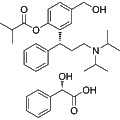
Fesoterodine L-mandelate is a competitive antagonist of muscarinic acetylcholine receptors (mAChR), demonstrating non-subtype selectivity with pKi values of 8.0, 7.7, 7.4, 7.3, and 7.5 for M1, M2, M3, M4, and M5 receptors, respectively. This orally active compound is primarily utilized in the treatment of overactive bladder (OAB). Its inhibition of mAChRs contributes to a reduction in bladder contractions, providing therapeutic benefits for managing urinary incontinence.
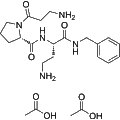
Dipeptide diaminobutyroyl benzylamide diacetate functions as a muscarinic acetylcholine receptor (mAChR) antagonist. It induces muscle relaxation, making it relevant in studies related to skin aging and facial wrinkles, including crow's feet and periorbital creases. This compound can be utilized in research focused on dermatological applications and the physiological mechanisms underlying muscle tone regulation in the skin.
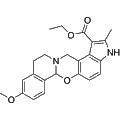
PD 102807 is an antagonist of the M4 muscarinic receptor, exhibiting an IC50 of 90.7 nM. This compound also inhibits M1, M2, M3, and M5 muscarinic receptors with IC50 values of 6558.7 nM, 3440.7 nM, 950.0 nM, and 7411.7 nM, respectively. Due to its selective action, PD 102807 is valuable for studying muscarinic receptor signaling and has potential applications in research focused on antidyskinetic effects.
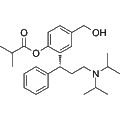
Fesoterodine is a competitive antagonist of muscarinic acetylcholine receptors (mAChR), exhibiting pKi values of 8.0, 7.7, 7.4, 7.3, and 7.5 for the M1, M2, M3, M4, and M5 subtypes, respectively. This orally active compound is primarily utilized in the treatment of overactive bladder (OAB) conditions. Its broad receptor targeting allows for effective modulation of bladder function, making it a valuable tool in urological research and therapy development.
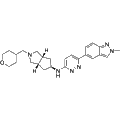
rel-VU6021625, a derivative of VU6021625, serves as a potent and selective antagonist of the mAChR M4 receptor, exhibiting IC50 values of 0.44 nM for human M4 and 57 nM for rat M4. This compound demonstrates significant potential in neurological research, particularly in the study of disorders related to cholinergic signaling. Its use can aid in understanding mAChR M4 functions and therapeutic applications targeting this receptor.
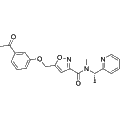
Synonyms: VU0488130
ML381 is a selective orthosteric antagonist of the mAChR M5 receptor, with an IC50 of 450 nM and a Ki value of 340 nM. This compound is known for its ability to penetrate the central nervous system, making it a valuable tool for investigating the role of mAChR M5 in neurological research. Due to its instability in rat plasma, ML381 is primarily utilized as a molecular probe for in vitro studies and electrophysiological applications.
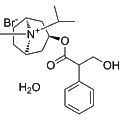
Synonyms: Sch 1000 bromide hydrate
Ipratropium bromide hydrate is a muscarinic acetylcholine receptor (mAChR) antagonist, exhibiting IC50 values of 2.9 nM, 2 nM, and 1.7 nM for M1, M2, and M3 receptors, respectively. This compound effectively induces relaxation of smooth muscle, making it valuable for research applications in chronic obstructive pulmonary disease (COPD) and asthma. Its selective inhibition of mAChRs contributes to its therapeutic potential in respiratory disorders.
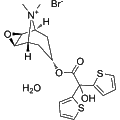
Synonyms: BA-679 BR monohydrate
Tiotropium bromide monohydrate is a long-acting antagonist of muscarinic acetylcholine receptors (mAChRs). It exhibits significant bronchodilator activity, making it effective in the management of chronic obstructive pulmonary disease (COPD) and asthma. This compound is widely utilized in research studies investigating respiratory pharmacology and cholinergic signaling pathways.