mAChR

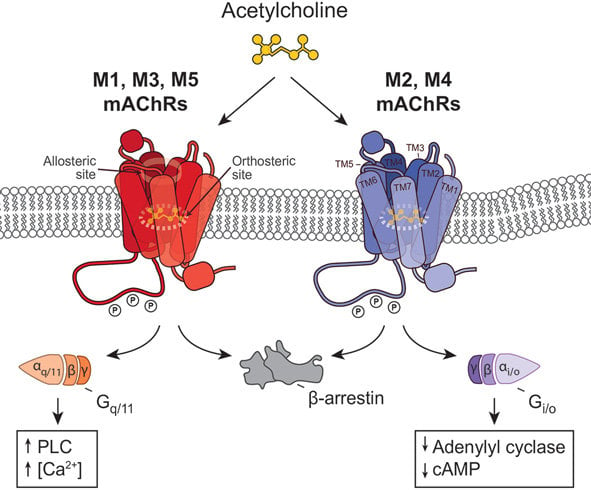
Muscarinic acetylcholine receptors (mAChRs) are a class of G protein-coupled receptors (GPCRs) found in the central and peripheral nervous systems, as well as in various other tissues and organs throughout the body. These receptors are named after muscarine, a natural alkaloid compound found in certain mushrooms, which was one of the first substances discovered to activate them.

There are five subtypes of muscarinic receptors, designated as M1 through M5, each with distinct tissue distribution and functions. Here's an overview of their roles:

  • M1 Receptors: Predominantly found in the central nervous system, particularly in regions associated with cognitive functions. Activation of M1 receptors is linked to memory and learning.
  • M2 Receptors: Found in the heart, where they play a crucial role in regulating heart rate and cardiac contractility. Activation of M2 receptors slows heart rate and reduces the force of cardiac contractions.
  • M3 Receptors: Present in smooth muscle tissues, such as those in the gastrointestinal tract, urinary bladder, and bronchial airways. Activation of M3 receptors leads to smooth muscle contraction.
  • M4 Receptors: Distributed mainly in the central nervous system and involved in modulating neurotransmitter release. Their role in cognition and neuropsychiatric disorders is of interest.
  • M5 Receptors: Located in certain areas of the brain and implicated in the modulation of dopamine release. Research suggests they may be relevant to Parkinson's disease and addiction.

Muscarinic receptors are activated by the neurotransmitter acetylcholine and play a vital role in regulating a wide range of physiological processes, including heart rate, smooth muscle contraction, glandular secretion, and neurotransmitter release. They are targets for various drugs, including anticholinergic agents, which block their activity, and drugs used to treat conditions like bradycardia and neurodegenerative disorders.

Understanding the functions and regulation of muscarinic acetylcholine receptors is essential for developing therapies that modulate their activity and for advancing our knowledge of how they contribute to various physiological and pathological processes in the body.

Items 76-100 of 167

  • VU6028418
    Cat. No.
    A61302

    VU6028418

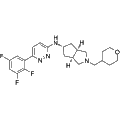
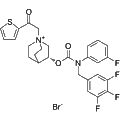
    VU6028418 is a potent and highly selective antagonist of the M4 muscarinic acetylcholine receptor (mAChR), exhibiting an IC50 of 4.1 nM against the human M4 receptor. This compound demonstrates promise in the modulation of cholinergic signaling pathways, making it an invaluable tool for research on neuropharmacology and therapeutic interventions in disorders linked to M4 mAChR activity. Its oral bioavailability further supports its use in in vivo studies, aiding in the exploration of its potential effects on cognition and metabolic processes.

    5 mg
    $475.00
    10 mg
    $880.00
    All 5 sizes
  • Oxyphenonium bromide
    Cat. No.
    A61303

    Oxyphenonium bromide

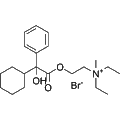
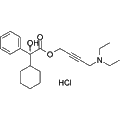
    Oxyphenonium bromide is an antiacetylcholine compound that functions as a muscarinic acetylcholine receptor (mAChR) antagonist. It effectively mitigates bronchial obstruction by blocking acetylcholine's action, thereby reducing airway constriction. This compound is primarily utilized in research investigating respiratory conditions and the modulation of cholinergic signaling pathways.

    10 mg
    $35.00
    25 mg
    $50.00
    All 4 sizes
  • Cyclopentolate hydrochloride
    Cat. No.
    A61305

    Cyclopentolate hydrochloride

    Synonyms: DL-Cyclopentolate hydrochloride

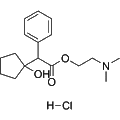
    Cyclopentolate hydrochloride is a muscarinic receptor antagonist, exhibiting a pKB value of 7.8 on the circular ciliary muscle. This anti-muscarinic agent is primarily utilized in ophthalmology for its ability to induce mydriasis and cycloplegia. It serves as a valuable tool in various research applications related to eye physiology and pharmacology.

    5 mg
    $20.00
    10 mg
    $35.00
    All 5 sizes
  • (±)-Darifenacin
    Cat. No.
    A61307

    (±)-Darifenacin ((±)-UK-88525)

    Synonyms: (±)-UK-88525

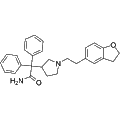
    (±)-Darifenacin is a selective antagonist of the M3 muscarinic acetylcholine receptor (mAChR), functioning primarily by inhibiting receptor activation. This compound demonstrates potent activity in modulating smooth muscle contraction and glandular secretion, making it particularly useful for research in gastrointestinal disorders and urinary incontinence. Applications include studies on the mechanism of muscarinic receptor signaling and the development of therapeutic strategies targeting mAChR-related conditions.

    5 mg
    $35.00
    10 mg
    $55.00
    All 5 sizes
  • Zamifenacin fumarate
    Cat. No.
    A61312

    Zamifenacin fumarate

    Synonyms: UK-76654 fumarate

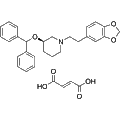
    Zamifenacin fumarate is a potent antagonist of the muscarinic M3 receptor, primarily targeting the gastrointestinal system. It demonstrates significant efficacy in reducing colonic motility, making it relevant for research in conditions such as irritable bowel syndrome. This compound is essential for studies exploring gut motility modulation and the pharmacological mechanisms underlying gastrointestinal disorders.

    2 mg
    $25.00
    5 mg
    $40.00
    All 7 sizes
  • Cycrimine
    Cat. No.
    A61314

    Cycrimine

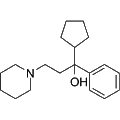
    Cycrimine is an orally active antagonist of the muscarinic acetylcholine receptor M1, effectively inhibiting acetylcholine levels in models of Parkinson's disease. Its antispasmodic properties make Cycrimine a valuable tool for research in behavioral and mental disorders, providing insights into cholinergic signaling pathways. This compound is suitable for studies aimed at understanding the role of mAChRs in neurodegenerative conditions and related therapeutic interventions.

    1 mg
    $130.00
    5 mg
    $310.00
    All 6 sizes
  • PCS1055
    Cat. No.
    A61315

    PCS1055

    PCS1055 is a selective competitive antagonist of the muscarinic M4 receptor, exhibiting an IC50 of 18.1 nM and a Kd of 5.72 nM. It effectively inhibits radioligand [3H]-NMS binding to the M4 receptor with a Ki of 6.5 nM. Additionally, PCS1055 demonstrates inhibitory activity against acetylcholinesterase (AChE), with IC50 values of 22 nM for electric eel AChE and 120 nM for human AChE. This compound is valuable for research focused on muscarinic receptor signaling and cholinergic modulation.

    5 mg
    $190.00
    10 mg
    $300.00
    All 5 sizes
  • Zamifenacin
    Cat. No.
    A61317

    Zamifenacin

    Synonyms: UK-76654

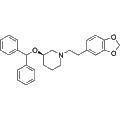
    Zamifenacin is a potent antagonist of the muscarinic M3 receptor, demonstrating gut-selective activity. This compound effectively reduces colonic motility, making it a valuable tool in the study of irritable bowel syndrome and related gastrointestinal disorders. Its mechanism of action provides insights into the modulation of gastrointestinal function and potential therapeutic applications in digestive health.

    5 mg
    $80.00
    10 mg
    $125.00
    All 5 sizes
  • DAU 5884 hydrochloride
    Cat. No.
    A61323

    DAU 5884 hydrochloride

    DAU 5884 hydrochloride is a potent antagonist of the muscarinic M3 receptor. It effectively inhibits methacholine-induced cellular proliferation and muscle contractility, making it a valuable tool for research into muscarinic signaling pathways and related physiological effects. This compound is useful for studies investigating respiratory physiology and disorders associated with muscarinic receptor activation.

    5 mg
    $260.00
    10 mg
    $425.00
    All 3 sizes
  • L-Hyoscyamine sulfate
    Cat. No.
    A61324

    L-Hyoscyamine sulfate

    Synonyms: Daturine sulfate

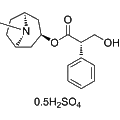
    L-Hyoscyamine sulfate is a competitive antagonist of muscarinic acetylcholine receptors (mAChRs). This natural tropane alkaloid demonstrates significant biological activity by inhibiting mAChRs, making it useful in research applications focused on neuropharmacology and the modulation of cholinergic signaling. Its structural similarity to atropine further emphasizes its relevance in studies related to anticholinergic effects and the exploration of receptor interaction mechanisms.

    5 mg
    $25.00
    10 mg
    $40.00
    All 6 sizes
  • Tridihexethyl chloride
    Cat. No.
    A61326

    Tridihexethyl chloride

    Synonyms: Pathilon chloride

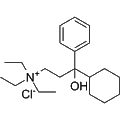
    Tridihexethyl chloride is an anticholinergic agent that acts as a muscarinic acetylcholine receptor (mAChR) antagonist. It exhibits significant antimuscarinic and antisecretory properties, providing pronounced antispasmodic effects on the gastrointestinal system. This compound is valuable for research related to peptic ulcer disease and acquired nystagmus, facilitating studies on gastrointestinal motility and secretion modulation.

    1 mg
    $135.00
    25 mg
    $830.00
    All 4 sizes
  • CHF5407
    Cat. No.
    A61328

    CHF5407

    CHF5407 is a selective, competitive antagonist of the muscarinic M3 receptor, exhibiting subnanomolar affinities for human muscarinic receptors M1, M2, and M3. This compound demonstrates prolonged antibronchospastic activity, making it a valuable tool for research into bronchial hyperreactivity and related respiratory conditions. CHF5407 is suitable for studies investigating the role of muscarinic receptors in various biological processes and potential therapeutic applications.

    1 mg
    $120.00
    5 mg
    $255.00
    All 6 sizes
  • Hexocyclium methylsulfate
    Cat. No.
    A61331

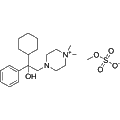
    Hexocyclium methylsulfate

    Hexocyclium methylsulfate is a potent antagonist of muscarinic acetylcholine receptors (mAChR), exhibiting pKi values of 8.9, 7.7, 8.4, and 8.8 for the M1, M2, M3, and M4 subtypes, respectively. This compound demonstrates significant biological activity in modulating cholinergic signaling pathways. It is valuable in research applications related to gastrointestinal conditions such as duodenal ulcers and irritable bowel syndrome.

    5 mg
    $140.00
    10 mg
    $225.00
    All 5 sizes
  • (Rac)-5-Hydroxymethyl Tolterodine hydrochloride
    Cat. No.
    A61340

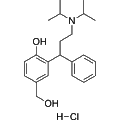
    (Rac)-5-Hydroxymethyl Tolterodine hydrochloride

    Synonyms: (Rac)-Desfesoterodine hydrochloride; (Rac)-PNU-200577 hydrochloride

    (Rac)-5-Hydroxymethyl Tolterodine hydrochloride is an mAChR antagonist, demonstrating Ki values of 2.3 nM, 2.0 nM, 2.5 nM, 2.8 nM, and 2.9 nM for M1, M2, M3, M4, and M5 muscarinic receptors, respectively. This active metabolite of Tolterodine is primarily utilized in research related to overactive bladder conditions. Its selective inhibition of muscarinic acetylcholine receptors provides a valuable tool for investigating bladder dysfunction and potential therapeutic interventions.

    2 mg
    $20.00
    100 mg
    $25.00
    All 4 sizes
  • Velufenacin
    Cat. No.
    A61342

    Velufenacin

    Synonyms: DA-8010

    Velufenacin is a muscarinic receptor antagonist that selectively blocks the activity of muscarinic acetylcholine receptors. This compound demonstrates significant biological activity in various in vitro and in vivo models, making it a valuable tool for studying the role of cholinergic signaling in physiological processes. Velufenacin is applicable in research focused on neurological disorders, respiratory conditions, and other diseases where modulation of the muscarinic receptor pathway is critical.

    1 mg
    $35.00
    5 mg
    $85.00
    All 7 sizes
  • Terodiline hydrochloride
    Cat. No.
    A61344

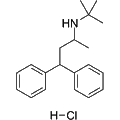
    Terodiline hydrochloride

    Terodiline hydrochloride is an M1-selective muscarinic acetylcholine receptor (mAChR) antagonist, exhibiting binding affinities of 15 nM for M1, 160 nM for M2, and 280 nM for M3 receptors, with further action as a calcium channel blocker. This compound is primarily used in the treatment of urinary frequency and urge incontinence. Its ability to selectively inhibit specific mAChR subtypes makes it a valuable reagent for investigating the pharmacological modulation of urinary tract function.

    5 mg
    $350.00
    25 mg
    $1,025.00
    All 4 sizes
  • mAChR antagonist 1
    Cat. No.
    A61347

    mAChR antagonist 1

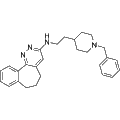
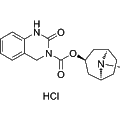
    mAChR antagonist 1 is a selective antagonist for muscarinic acetylcholine receptors (mAChRs), exhibiting Ki values of 255 nM, 121 nM, 158 nM, and 255 nM for the M1, M3, M4, and M5 subtypes, respectively. This compound is useful for studies investigating the role of mAChR signaling in various physiological and pathological processes. Its application extends to neuropharmacology and drug development, making it a valuable tool for exploring mAChR-related pathways.

    5 mg
    $45.00
    10 mg
    $80.00
    All 6 sizes
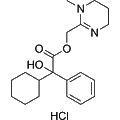
  • Oxyphencyclimine hydrochloride
    Cat. No.
    A61348

    Oxyphencyclimine hydrochloride

    Oxyphencyclimine hydrochloride is a tertiary amine that acts as a muscarinic acetylcholine receptor (mAChR) antagonist. It primarily targets the peripheral parasympathetic nervous system, exhibiting key biological activities related to the inhibition of smooth muscle contraction. This compound is utilized in research focused on gastrointestinal motility and the modulation of parasympathetic responses.

    2 mg
    $25.00
    5 mg
    $40.00
    All 6 sizes
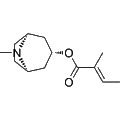
  • Tigloidin
    Cat. No.
    A61352

    Tigloidin

    Synonyms: Tigloyl pseudotropine; Tiglylpseudotropine; Tiglyssin

    Tigloidin is an antagonist of muscarinic acetylcholine receptors (mAChRs) with notable anticholinergic activity. This compound has potential implications in research related to neuropharmacology and the modulation of cholinergic signaling pathways. Its ability to inhibit mAChR activity makes it a valuable tool for investigating conditions influenced by acetylcholine activity.

    5 mg
    $165.00
    10 mg
    $295.00
    All 5 sizes
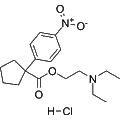
  • Nitrocaramiphen hydrochloride
    Cat. No.
    A61355

    Nitrocaramiphen hydrochloride

    Nitrocaramiphen hydrochloride is a selective antagonist of the M1 muscarinic acetylcholine receptor, exhibiting a Ki value of 5.5 nM. This compound effectively blocks the hyperpolarizing effects induced by muscarine on muscle fibers, making it a valuable tool for research on cholinergic signaling and receptor pharmacology. Its application extends to studies on neuromuscular transmission and the physiological roles of M1 receptors in various systems.

    5 mg
    $25.00
    10 mg
    $40.00
    All 6 sizes
  • (R)-Oxybutynin hydrochloride
    Cat. No.
    A61356

    (R)-Oxybutynin hydrochloride

    Synonyms: Aroxybutynin hydrochloride

    (R)-Oxybutynin hydrochloride is a muscarinic receptor antagonist exhibiting potent antimuscarinic, antispasmodic, and anticholinergic properties. It effectively competes with Carbachol to inhibit induced contractions, making it valuable for studying neurogenic bladder dysfunction and incontinence. Additionally, (R)-Oxybutynin hydrochloride features an alkyne group that allows for copper-catalyzed azide-alkyne cycloaddition (CuAAc), facilitating research in click chemistry applications.

    5 mg
    $115.00
    10 mg
    $200.00
    All 5 sizes
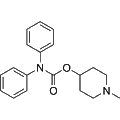
  • 4-Piperidyl N-(2-biphenyl)carbamate
    Cat. No.
    A61358

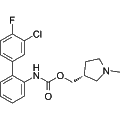
    4-Piperidyl N-(2-biphenyl)carbamate

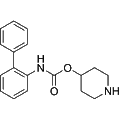
    4-Piperidyl N-(2-biphenyl)carbamate is a competitive antagonist of muscarinic acetylcholine receptors (mAChR), exhibiting notable selectivity for the M2 and M3 subtypes. With pKi values of 7.33 for M2 and 7.51 for M3, this compound demonstrates a markedly higher affinity compared to β2 adrenergic receptors, which has a pKi of 4.94. This specificity makes it a valuable tool for research into mAChR-related signaling pathways and potential therapeutic applications in various neurological disorders.

    1 g
    $20.00
    5 g
    $55.00
    All 4 sizes
  • Nuvenzepine
    Cat. No.
    A61360

    Nuvenzepine

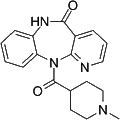
    Nuvenzepine is an mAChR antagonist that demonstrates potential therapeutic applications in the treatment of gastrospasm. By selectively inhibiting muscarinic acetylcholine receptors, Nuvenzepine may help alleviate symptoms associated with gastrointestinal motility disorders. This compound is of particular interest in pharmacological research focused on gastrointestinal therapies.

    1 mg
    $145.00
    5 mg
    $395.00
    All 6 sizes
  • Oxitropium Bromide
    Cat. No.
    A61361

    Oxitropium Bromide

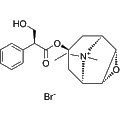
    Oxitropium Bromide is a muscarinic acetylcholine receptor (mAChR) antagonist that serves as an effective anticholinergic bronchodilator. It is primarily utilized in the management of asthma and chronic obstructive pulmonary disease (COPD), where it helps alleviate bronchoconstriction and improve airflow. This compound is essential for research focused on respiratory health and the development of treatments for airway obstructive disorders.

    Out of stock

    All 3 sizes
  • VU6036864
    Cat. No.
    A61362

    VU6036864

    VU6036864 is a selective antagonist of the M5 muscarinic acetylcholine receptor (mAChR) with an IC50 of 20 nM for human M5. This compound exhibits over 500-fold selectivity against human M1-4 receptors, making it a valuable tool for studying M5 receptor functions in both in vitro and in vivo settings. VU6036864 is characterized by its ability to penetrate the blood-brain barrier and demonstrate high oral bioavailability, providing a promising avenue for research in neuropharmacology and related fields.

    Out of stock

    All 3 sizes

Items 76-100 of 167

Added to your cart

View Cart Checkout

    Loading...