mAChR

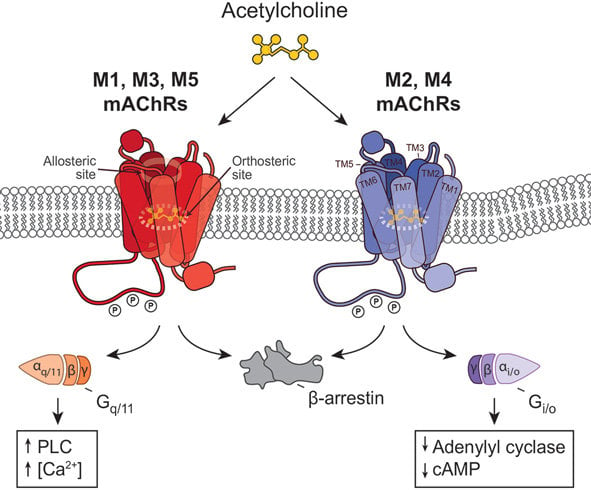
Muscarinic acetylcholine receptors (mAChRs) are a class of G protein-coupled receptors (GPCRs) found in the central and peripheral nervous systems, as well as in various other tissues and organs throughout the body. These receptors are named after muscarine, a natural alkaloid compound found in certain mushrooms, which was one of the first substances discovered to activate them.

There are five subtypes of muscarinic receptors, designated as M1 through M5, each with distinct tissue distribution and functions. Here's an overview of their roles:

  • M1 Receptors: Predominantly found in the central nervous system, particularly in regions associated with cognitive functions. Activation of M1 receptors is linked to memory and learning.
  • M2 Receptors: Found in the heart, where they play a crucial role in regulating heart rate and cardiac contractility. Activation of M2 receptors slows heart rate and reduces the force of cardiac contractions.
  • M3 Receptors: Present in smooth muscle tissues, such as those in the gastrointestinal tract, urinary bladder, and bronchial airways. Activation of M3 receptors leads to smooth muscle contraction.
  • M4 Receptors: Distributed mainly in the central nervous system and involved in modulating neurotransmitter release. Their role in cognition and neuropsychiatric disorders is of interest.
  • M5 Receptors: Located in certain areas of the brain and implicated in the modulation of dopamine release. Research suggests they may be relevant to Parkinson's disease and addiction.

Muscarinic receptors are activated by the neurotransmitter acetylcholine and play a vital role in regulating a wide range of physiological processes, including heart rate, smooth muscle contraction, glandular secretion, and neurotransmitter release. They are targets for various drugs, including anticholinergic agents, which block their activity, and drugs used to treat conditions like bradycardia and neurodegenerative disorders.

Understanding the functions and regulation of muscarinic acetylcholine receptors is essential for developing therapies that modulate their activity and for advancing our knowledge of how they contribute to various physiological and pathological processes in the body.

Items 126-150 of 167

  • AF-DX 384 methanesulfonate
    Cat. No.
    A61441

    AF-DX 384 methanesulfonate

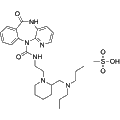
    AF-DX 384 methanesulfonate is a selective antagonist of M2 and M4 muscarinic acetylcholine receptors, with inhibitory constants of 6.03 nM and 10 nM, respectively. This compound has demonstrated the ability to reverse cognitive deficits in novel object recognition and passive avoidance assays in both aged rats and young rats subjected to scopolamine-induced impairments. It serves as a valuable tool in neuroscientific research focused on memory and learning processes.

    25 mg
    $1,275.00
    50 mg
    $1,625.00
    All 3 sizes
  • Tiemonium iodide
    Cat. No.
    A61444

    Tiemonium iodide

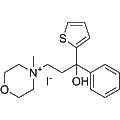
    Tiemonium iodide is a muscarinic acetylcholine receptor (mAChR) antagonist that exhibits antispasmodic properties. It is primarily utilized in research related to the nervous system, where it helps investigate the modulation of cholinergic signaling and its effects on smooth muscle contraction. This reagent serves as a valuable tool for understanding the physiological and pharmacological roles of mAChRs in various biological contexts.

    Out of stock

    All 3 sizes
  • Darotropium bromide
    Cat. No.
    A61446

    Darotropium bromide

    Synonyms: GSK233705

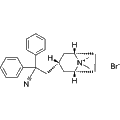
    Darotropium bromide is a long-acting muscarinic antagonist that targets muscarinic acetylcholine receptors. Its primary biological activity is the blockade of these receptors, resulting in bronchodilation and reduced airway resistance. This compound is primarily used in research related to chronic obstructive pulmonary disease (COPD), aiding in the investigation of its therapeutic potential and effects on pulmonary function.

    1 mg
    $60.00
    5 mg
    $155.00
    All 7 sizes
  • Cyclodrine
    Cat. No.
    A61449

    Cyclodrine

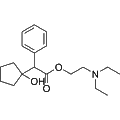
    Cyclodrine is a selective antagonist of muscarinic acetylcholine receptors (mAChR). It exhibits biological activity by inhibiting cholinergic signaling, which has implications in neuropharmacology and the study of various neurological disorders. Research applications include exploring cholinergic system modulation and assessing the role of mAChR in cognitive function and behavior.

    1 mg
    $55.00
    5 mg
    $130.00
    All 7 sizes
  • J 104129 fumarate
    Cat. No.
    A61450

    J 104129 fumarate

    J 104129 fumarate is a selective muscarinic M3 antagonist, demonstrating a Ki value of 4.2 nM for M3 and 490 nM for M2, indicating a high degree of selectivity. This compound effectively antagonizes acetylcholine-induced bronchoconstriction, making it a valuable tool for investigating obstructive airway diseases. Its oral activity and specificity present opportunities for research in pulmonary pharmacology and the treatment of respiratory conditions.

    1 mg
    $160.00
    5 mg
    $410.00
    All 3 sizes
  • Bencycloquidium bromide
    Cat. No.
    A61451

    Bencycloquidium bromide

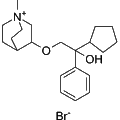
    Bencycloquidium bromide is a muscarinic M(3) receptor antagonist that functions as an anticholinergic bronchodilator. It shows significant potential in modulating airway smooth muscle tone and can be utilized in research focusing on respiratory conditions such as rhinitis. This compound is valuable for exploring therapeutic strategies aimed at relieving bronchoconstriction and improving airflow in pulmonary studies.

    25 mg
    $3,195.00
    50 mg
    $4,065.00
    All 3 sizes
  • L-Hyoscyamine hydrobromide
    Cat. No.
    A61454

    L-Hyoscyamine hydrobromide

    Synonyms: Hyoscyamine hydrobromide

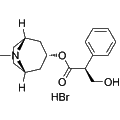
    L-Hyoscyamine hydrobromide is a competitive antagonist of muscarinic acetylcholine receptors (mAChRs). It exhibits significant anticholinergic activity, making it useful in research related to gastrointestinal motility and neurological disorders. This compound is employed in various pharmacological studies to assess its effects on cholinergic signaling and its impact on lactation dynamics when considering long-term use.

    25 mg
    $1,865.00
    50 mg
    $2,200.00
    All 3 sizes
  • ASP9133
    Cat. No.
    A61455

    ASP9133

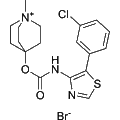
    ASP9133 is a long-acting muscarinic antagonist that effectively inhibits bronchoconstriction. This compound is primarily researched for its potential applications in the treatment of chronic obstructive pulmonary disease (COPD), providing insights into the management of airway obstruction and related respiratory disorders. Its mechanism of action makes it a valuable reagent for studies focusing on respiratory physiology and pharmacology.

    25 mg
    $1,405.00
    50 mg
    $1,790.00
    All 3 sizes
  • Eucatropine
    Cat. No.
    A61456

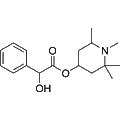
    Eucatropine

    Eucatropine is a potent antagonist of muscarinic acetylcholine receptors (mAChRs) with an IC50 value of 0.583 μM. This anticholinergic agent is effective in modulating acetylcholine signaling pathways, making it valuable for research applications in neuropharmacology and studies related to cholinergic system modulation. Its specificity for mAChRs allows for potential insights into the therapeutic effects and mechanisms underlying various neurological disorders.

    25 mg
    $1,275.00
    50 mg
    $1,625.00
    All 3 sizes
  • SCH 57790
    Cat. No.
    A61459

    SCH 57790

    SCH 57790 is a selective antagonist of the muscarinic M2 receptor, promoting enhanced acetylcholine release that can lead to improved cognitive performance. This compound has demonstrated efficacy in reversing memory deficits induced by Scopolamine in murine models, showcasing its potential in cognitive enhancement research. Notably, SCH 57790 exhibits a favorable toxicity profile at doses up to 100 mg/kg.

    1 mg
    $125.00
    5 mg
    $315.00
    All 4 sizes
  • Diphenidol
    Cat. No.
    A61471

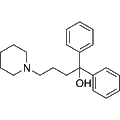
    Diphenidol

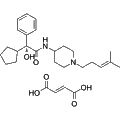
    Diphenidol is a non-selective antagonist of muscarinic M1-M4 receptors, exhibiting anti-arrhythmic properties. Additionally, it acts as a potent inhibitor of voltage-gated ion channels, including sodium, potassium, and calcium channels, in neuronal cells. This compound is valuable for research in the mechanisms of antivertigo and antinausea treatments.

    25 mg
    $1,275.00
    50 mg
    $1,625.00
    All 3 sizes
  • Dexetimide hydrochloride
    Cat. No.
    A61473

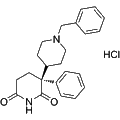
    Dexetimide hydrochloride

    Synonyms: (+)-Benzetimide hydrochloride; (S)-(+)-Dexetimide hydrochloride; Dexbenzetimide hydrochloride

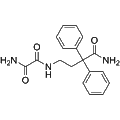
    Dexetimide hydrochloride is a muscarinic acetylcholine receptor (mAChR) antagonist that effectively mitigates neuroleptic-induced Parkinson's syndrome. This compound is utilized primarily to alleviate movement disorders associated with neuroleptic treatment. As a selective inhibitor of cholinergic receptors, Dexetimide hydrochloride provides insights into cholinergic system modulation, making it a valuable tool for research in neuropharmacology and movement disorder therapies.

    25 mg
    $1,275.00
    50 mg
    $1,625.00
    All 3 sizes
  • Propylbenzilylcholine mustard
    Cat. No.
    A61475

    Propylbenzilylcholine mustard

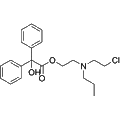
    Propylbenzilylcholine mustard is a selective, irreversible antagonist targeting cardiac muscarinic receptors in rats. It covalently modifies these receptors in a dose- and time-dependent manner, demonstrating stability across various ionic strengths and GTP-containing buffers. This reagent is valuable for investigating the structure and function of cardiac muscarinic receptors, particularly their heterogeneity and implications in cardiovascular pharmacology.

    Out of stock

    All 3 sizes
  • Imidafenacin Metabolite M4
    Cat. No.
    A61476

    Imidafenacin Metabolite M4

    Imidafenacin Metabolite M4 is a key metabolite of the muscarinic acetylcholine receptor antagonist Imidafenacin. This compound retains biological activity that may contribute to the pharmacological effects observed with the parent drug. It serves as a valuable tool for investigating the metabolism and pharmacokinetics of muscarinic antagonists in various research applications.

    0.5 mg
    $220.00
    1 mg
    $390.00
    All 2 sizes
  • AQ-RA 741
    Cat. No.
    A61481

    AQ-RA 741

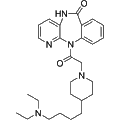
    AQ-RA 741 is a potent and selective M2 antagonist that effectively inhibits vagally or agonist-induced bradycardia in various animal models, including rats, cats, and guinea pigs. This compound is valuable in the study of bradycardic disorders, providing insights into potential therapeutic strategies for managing heart rate irregularities. Its specificity towards the M2 muscarinic receptor makes it a critical tool for investigating cholinergic signaling pathways in cardiovascular research.

    5 mg
    $320.00
    10 mg
    $525.00
    All 2 sizes
  • PSD-506
    Cat. No.
    A61488

    PSD-506

    Synonyms: RO 3202904

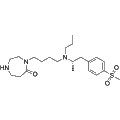
    PSD-506 is a muscarinic M2/M3 antagonist that effectively inhibits the activity of these receptors. This compound demonstrates notable potential in researching bladder overactivity and urinary incontinence. Its specific targeting of M2 and M3 receptors makes PSD-506 a valuable tool for studying related therapeutic avenues and advancing understanding of related physiological mechanisms.

    25 mg
    $1,655.00
    50 mg
    $2,115.00
    All 3 sizes
  • Butropium bromide
    Cat. No.
    A61489

    Butropium bromide

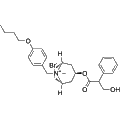
    Butropium bromide is a competitive antagonist of muscarinic acetylcholine receptors (mAChRs). It effectively inhibits acetylcholine-induced glandular secretion and smooth muscle contraction, thereby reducing salivary gland secretion and alleviating respiratory smooth muscle spasms. This compound is valuable for studying conditions related to excessive salivation and could aid in research on respiratory function modulation.

    Out of stock

    All 3 sizes
  • Ethybenztropine hydrochloride
    Cat. No.
    A61490

    Ethybenztropine hydrochloride

    Synonyms: Ponalid hydrochloride; UK 738 hydrochloride

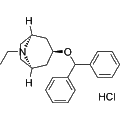
    Ethybenztropine hydrochloride is a potent muscarinic receptor blocker with established anticholinergic properties. This compound demonstrates significant antiparkinsonian activity, effectively improving motor symptoms in patients with Parkinson's disease. Additionally, Ethybenztropine hydrochloride may exhibit dopamine reuptake inhibitory effects, contributing to its therapeutic efficacy. It is utilized in research applications focused on neuropharmacology and the modulation of neurotransmitter balance.

    25 mg
    $1,275.00
    50 mg
    $1,625.00
    All 3 sizes
  • VU0455691
    Cat. No.
    A61497

    VU0455691

    VU0455691 is a selective orthosteric antagonist of the M1 muscarinic acetylcholine receptor (mAChR) with a pIC50 of 6.64 and an IC50 of 0.23 µM for human M1. This compound is useful in investigating the physiological and pathological roles of M1 mAChR in various neurological disorders. Its ability to selectively inhibit M1 mAChR activation makes it a valuable tool for research into cholinergic signaling pathways and potential therapeutic interventions.

    25 mg
    $1,275.00
    50 mg
    $1,625.00
    All 3 sizes
  • UH-AH 37
    Cat. No.
    A61500

    UH-AH 37

    UH-AH 37 is a selective antagonist of muscarinic acetylcholine receptors (mAChR). It demonstrates enhanced potency in inhibiting muscarinic responses in intestinal tissue compared to cardiac tissue. This compound is valuable for research into gastrointestinal motility disorders and the pharmacological modulation of mAChR signaling pathways.

    25 mg
    $1,275.00
    50 mg
    $1,625.00
    All 3 sizes
  • DAU 5884
    Cat. No.
    A61510

    DAU 5884

    DAU 5884 is a selective antagonist of muscarinic acetylcholine receptors (mAChRs), with particular potency towards the M1 receptor subtype while exhibiting discrimination between M4 and M2 subtypes. This compound demonstrates significant biological activity in modulating signaling pathways associated with mAChR, making it a valuable tool for research in neuropharmacology and potential therapeutic applications in disorders related to cholinergic signaling. Functional assays and radioligand binding studies characterize its subtype specificity and efficacy.

    25 mg
    $1,275.00
    50 mg
    $1,625.00
    All 3 sizes
  • AQ-RA 721
    Cat. No.
    A61514

    AQ-RA 721

    AQ-RA 721 is a selective muscarinic acetylcholine receptor (mAChR) antagonist that exhibits a differential affinity for the M2 and M4 receptor subtypes. This compound is valuable for studying muscarinic receptor diversity and function, facilitating research into receptor pharmacology and potential therapeutic applications. It can be employed in investigations into central nervous system activities and cardiovascular regulation, contributing to a better understanding of muscarinic signaling pathways.

    25 mg
    $1,275.00
    50 mg
    $1,625.00
    All 3 sizes
  • AE9C90CB
    Cat. No.
    A61517

    AE9C90CB

    AE9C90CB is a selective antagonist of the M3 muscarinic receptor, exhibiting a high affinity with a pKi value of 9.90. This compound is 20-fold more selective for M3 compared to the M2 muscarinic receptor, making it a valuable tool for studying M3 receptor-mediated signaling pathways. AE9C90CB is suitable for research applications investigating the role of M3 muscarinic receptors in various physiological and pathological processes.

    Out of stock

    All 3 sizes
  • 4,4-Difluorobenzhydrol
    Cat. No.
    A61519

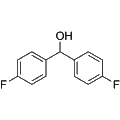
    4,4-Difluorobenzhydrol

    Synonyms: Bis(4-fluorophenyl)methanol

    4,4-Difluorobenzhydrol serves as a precursor for a muscarinic acetylcholine receptor (mAChR) antagonist, with potential applications in neuroscience research. Its derivative, 4,4-Difluorobenzhydrol Carbamate, can selectively target the M1 receptor subtype. This specificity makes 4,4-Difluorobenzhydrol an important compound for studying the physiological roles of mAChRs and developing therapeutics for related disorders.

    1 g
    $20.00
    25 g
    $25.00
    All 5 sizes
  • Tolterodine dimer
    Cat. No.
    A61523

    Tolterodine dimer

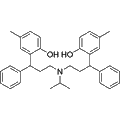
    Tolterodine dimer acts as a muscarinic acetylcholine receptor (mAChR) antagonist. It serves as an impurity of Tolterodine, a compound known for its potent activity against mAChRs. This reagent is primarily utilized in research applications aimed at investigating cholinergic signaling pathways and evaluating potential therapeutic strategies for bladder control and related disorders.

    0.5 mg
    $25.00
    1 mg
    $45.00
    All 2 sizes

Items 126-150 of 167

Added to your cart

View Cart Checkout

    Loading...