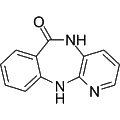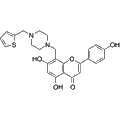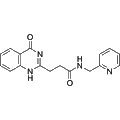
PARP

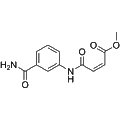
PARP inhibitors block poly(ADP-ribose) polymerases (PARPs), enzymes that mark DNA damage and recruit repair proteins. PARP1 and PARP2 bind DNA single-strand breaks and attach poly(ADP-ribose) chains to themselves and to nearby chromatin proteins. Cells lacking breast cancer susceptibility proteins 1 or 2 (BRCA1, BRCA2), and therefore defective in homologous recombination, are highly sensitive to PARP inhibition. This synthetic lethal relationship, reported in 2005, has shaped much of the research on DNA repair inhibitors. Olaparib, niraparib, veliparib and talazoparib target the catalytic domains of PARP1 and PARP2, and 3-aminobenzamide is an early benzamide inhibitor. XAV 939 instead inhibits tankyrases 1 and 2 (TNKS1, TNKS2), which stabilizes axin in Wnt signaling studies.

Items 151-175 of 252

  • ARTD3/PARP3-IN-1
    Cat. No.
    A29052

    ARTD3/PARP3-IN-1

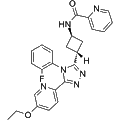
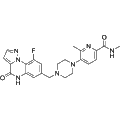
    ARTD3/PARP3-IN-1 is an unselective inhibitor targeting diphtheria toxin-like ADP-ribosyltransferase 3 (ARTD3) and PARP3. This compound modulates ADP-ribosylation processes, influencing cellular responses to DNA damage and stress. It is primarily used in research applications investigating the roles of ARTD3 and PARP3 in cellular signaling, cell survival, and cancer biology.

    1 mg
    $50.00
    5 mg
    $120.00
    All 5 sizes
  • LS-75
    Cat. No.
    A29053

    LS-75

    LS-75 is a potent inhibitor of PARP-1, exhibiting an IC50 value of 18 μM and demonstrating blood-brain barrier permeability. This compound is recognized for its neuroprotective properties, making it a valuable tool for research in neurodegenerative diseases and cellular response to DNA damage. Its selective inhibition of PARP-1 activity lends itself to investigations of therapeutic strategies aimed at neurological health and related disorders.

    200 mg
    $25.00
    500 mg
    $30.00
    All 6 sizes
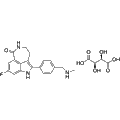
  • Rucaparib tartrate
    Cat. No.
    A29054

    Rucaparib tartrate

    Synonyms: AG-014699 tartrate; PF-01367338 tartrate

    Rucaparib tartrate is a potent inhibitor of PARP proteins, specifically targeting PARP-1, PARP-2, and PARP-3, with a Ki value of 1.4 nM for PARP-1. This compound also exhibits modest inhibitory activity against hexose-6-phosphate dehydrogenase (H6PD). Rucaparib tartrate is primarily utilized in research related to castration-resistant prostate cancer (CRPC), making it a valuable reagent for studies involving DNA repair mechanisms and cancer therapeutics.

    25 mg
    $1,800.00
    50 mg
    $2,285.00
    All 3 sizes
  • PARP1-IN-5
    Cat. No.
    A29056

    PARP1-IN-5

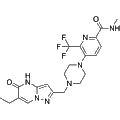
    PARP1-IN-5 is a potent and selective inhibitor of PARP-1, exhibiting an IC50 of 14.7 nM. This compound demonstrates low toxicity and is orally active, making it suitable for in vivo studies. PARP1-IN-5 is primarily used in cancer research to elucidate the role of PARP-1 in DNA repair mechanisms and its potential as a therapeutic target in oncology.

    Out of stock

    All 3 sizes
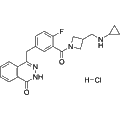
  • Venadaparib hydrochloride
    Cat. No.
    A29057

    Venadaparib hydrochloride

    Synonyms: IDX-1197 hydrochloride

    Venadaparib hydrochloride is a potent and selective inhibitor of poly(ADP-ribose) polymerase (PARP) with demonstrated anticancer activity. This compound is primarily utilized in research focused on solid tumors, aiding in the exploration of cancer therapies targeting DNA repair mechanisms.

    5 mg
    $795.00
    All 1 sizes
  • Rucaparib acetate
    Cat. No.
    A29058

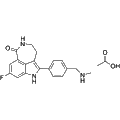
    Rucaparib acetate

    Synonyms: AG014699 acetate; PF-01367338 acetate

    Rucaparib acetate is a potent oral inhibitor of PARP proteins, primarily PARP-1, with a Ki of 1.4 nM. By targeting PARP-1, PARP-2, and PARP-3, Rucaparib acetate induces synthetic lethality in cancer cells with defective homologous recombination. Its unique profile also includes modest inhibition of hexose-6-phosphate dehydrogenase (H6PD). This reagent is applicable in research for castration-resistant prostate cancer (CRPC) and other malignancies characterized by DNA repair deficiencies.

    25 mg
    $1,800.00
    50 mg
    $2,285.00
    All 3 sizes
  • Rucaparib hydrochloride
    Cat. No.
    A29059

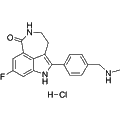
    Rucaparib hydrochloride

    Synonyms: AG014699 hydrochloride; PF-01367338 hydrochloride

    Rucaparib hydrochloride is a potent, orally active inhibitor of PARP proteins, specifically targeting PARP-1, PARP-2, and PARP-3, with a Ki value of 1.4 nM for PARP-1. In addition to its principal function as a PARP inhibitor, Rucaparib exhibits modest inhibitory activity toward hexose-6-phosphate dehydrogenase (H6PD). This compound is primarily utilized in research focused on castration-resistant prostate cancer (CRPC), contributing to studies aimed at better understanding and overcoming resistance mechanisms in cancer therapy.

    25 mg
    $1,800.00
    50 mg
    $2,285.00
    All 3 sizes
  • Mefuparib
    Cat. No.
    A29061

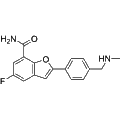
    Mefuparib

    Synonyms: CVL218

    Mefuparib is a potent poly ADP-ribose polymerase (PARP) inhibitor that demonstrates significant brain penetration attributed to its high protein binding affinity. This compound is utilized in cancer research to investigate the therapeutic potential of PARP inhibition in various malignancies. Its ability to interfere with DNA repair mechanisms makes it a valuable tool for studying tumor biology and treatment resistance.

    5 mg
    $95.00
    10 mg
    $155.00
    All 5 sizes
  • PARP7-IN-19
    Cat. No.
    A29063

    PARP7-IN-19

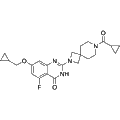
    PARP7-IN-19 is a potent inhibitor of PARP7, exhibiting an IC50 of less than 10 nM. This compound is valuable for research focused on the role of PARP7 in tumor biology, enabling investigations into cancer progression and therapeutic targeting. Its high specificity makes it an important tool for studying the mechanisms underlying PARP7-related pathways in various cancer models.

    Out of stock

    All 3 sizes
  • Lerzeparib
    Cat. No.
    A29064

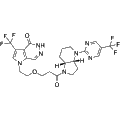
    Lerzeparib

    Lerzeparib is a potent inhibitor of poly(ADP-ribose) polymerase (PARP), demonstrating significant antineoplastic activity. By obstructing the PARP enzyme, Lerzeparib effectively disrupts DNA repair mechanisms in cancer cells, leading to increased cellular apoptosis. This compound is primarily utilized in cancer research to explore therapeutic strategies for tumors with homologous recombination deficiencies, such as BRCA-mutated cancers.

    Out of stock

    All 3 sizes
  • PARP1-IN-9
    Cat. No.
    A29065

    PARP1-IN-9

    PARP1-IN-9 is a potent inhibitor of PARP1, exhibiting an IC50 value of 30.51 nM. This compound effectively induces apoptosis in cancer cells, demonstrating significant anticancer activity. PARP1-IN-9 is useful for research applications related to cancer treatment and the study of DNA repair mechanisms.

    25 mg
    $1,275.00
    50 mg
    $1,625.00
    All 3 sizes
  • PARP1-IN-42
    Cat. No.
    A29067

    PARP1-IN-42

    PARP1-IN-42 is a potent inhibitor of PARP1, exhibiting an IC50 value of less than 10 nM. This compound has demonstrated significant biological activity in disrupting DNA repair mechanisms, making it a valuable tool in cancer research. Its application can provide insights into the efficacy of PARP1 inhibition in various cancer models.

    Out of stock

    All 3 sizes
  • TNKS1/2-IN-2
    Cat. No.
    A29068

    TNKS1/2-IN-2

    TNKS1/2-IN-2 is a potent inhibitor of tankyrases, specifically targeting TNK1 and TNK2 with IC50 values of 4 nM and 63 nM, respectively, in enzymatic assays. This compound effectively inhibits the proliferation of A549 and H292 cell lines, demonstrating IC50 values of 39.5 nM and 12.8 nM. TNKS1/2-IN-2 is valuable for research applications focused on cancer, providing insights into tankyrase-related pathways and their influence on tumor growth.

    25 mg
    $1,655.00
    50 mg
    $2,115.00
    All 3 sizes
  • OM-1700
    Cat. No.
    A29069

    OM-1700

    OM-1700 is a potent tankyrase inhibitor, exhibiting IC50 values of 127 nM for tankyrase 1 and 14 nM for tankyrase 2. This compound effectively reduces cell proliferation in the colon cancer cell line COLO 320DM, with a GI50 of 650 nM. OM-1700 serves as a valuable tool for investigating the role of tankyrase in cancer biology and potential therapeutic applications.

    25 mg
    $1,800.00
    50 mg
    $2,285.00
    All 3 sizes
  • iRucaparib-TP3
    Cat. No.
    A29070

    iRucaparib-TP3

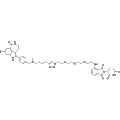
    iRucaparib-TP3 is a selective degrader of PARP1, exhibiting a DC50 of 36 nM. This compound is instrumental in research focused on oncology, particularly in the context of BRCA-mutated cancers, as well as in the investigation of neurodegenerative diseases. Its ability to modulate PARP1 levels positions it as a valuable tool for understanding the mechanisms underlying these diseases.

    Out of stock

    All 3 sizes
  • CQ-16
    Cat. No.
    A29071

    CQ-16

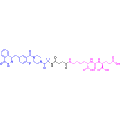
    CQ-16 is an orally active small molecule drug conjugate (SMDC) that targets prostate-specific membrane antigen (PSMA). This compound demonstrates selective antiproliferative activity against PSMA-positive prostate cells while sparing PSMA-negative cells. Additionally, CQ-16 exhibits potent PARP inhibitory activity with an IC50 value of 1 nM, making it a valuable tool for research applications focused on prostate cancer therapy and PARP-related pathways.

    Out of stock

    All 3 sizes
  • ARTD10/PARP10-IN-1
    Cat. No.
    A29072

    ARTD10/PARP10-IN-1

    ARTD10/PARP10-IN-1 is a potent and non-selective inhibitor of Poly(ADP-ribose) polymerases (PARPs), including ARTD7/PARP15, ARTD8/PARP14, ARTD10/PARP10, and ARTD1/PARP1, exhibiting IC50 values of 1.7 μM, 1.6 μM, 0.8 μM, and 4.4 μM respectively. This compound serves as a valuable tool for investigating the roles of mono-ADP-ribosylation and poly(ADP-ribosylation) in cellular processes. Its ability to inhibit multiple PARP family members makes it suitable for various research applications, including studies on DNA damage repair, cell proliferation, and apoptosis.

    1 mg
    $195.00
    5 mg
    $555.00
    All 7 sizes
  • GPI 15427
    Cat. No.
    A29073

    GPI 15427

    GPI 15427 is a selective inhibitor of poly (ADP-ribose) polymerase-1 (PARP-1), an enzyme implicated in inflammatory responses. This compound exhibits significant anti-inflammatory activity, particularly in rodent models of gut injury such as splanchnic artery occlusion shock and dinitrobenzene sulfonic acid-induced colitis. GPI 15427 effectively reduces inflammatory cell infiltration, mitigates histological damage, and prevents poly (ADP-ribose) accumulation in the ileum and colon. Its application in research is valuable for studying the role of PARP-1 in inflammatory diseases and potential therapeutic strategies.

    25 mg
    $1,275.00
    50 mg
    $1,625.00
    All 3 sizes
  • PARP-1-IN-13
    Cat. No.
    A29075

    PARP-1-IN-13

    PARP-1-IN-13 is a potent inhibitor of the enzyme PARP-1, exhibiting an IC50 value of 26 nM. This compound effectively disrupts DNA single-strand break repair mechanisms and exacerbates DNA double-strand breakage. Through the activation of the mitochondrial apoptosis pathway, PARP-1-IN-13 promotes apoptosis in cancer cells, making it a valuable tool for research in cancer therapy and DNA repair pathways.

    Out of stock

    All 3 sizes
  • YCH3292
    Cat. No.
    A29076

    YCH3292

    YCH3292 is a highly potent and selective inhibitor of PARP1 and PARP2, displaying an IC50 of less than 0.001 nM. This compound enhances the stability of PARP-DNA complexes and demonstrates significant antiproliferative effects by inducing double-strand breaks in DNA and increasing the expression levels of γH2AX, P-RPA32, and P-Chk1. YCH3292 effectively causes cell cycle arrest in the S and G2/M phases and promotes apoptosis in tumor cells, making it a valuable reagent for cancer research, particularly in exploring therapeutic strategies targeting PARP pathways. In vivo studies indicate that YCH3292 inhibits tumor growth in the MC38 xenograft mouse model.

    Out of stock

    All 3 sizes
  • PARP-1-IN-1
    Cat. No.
    A29077

    PARP-1-IN-1

    PARP-1-IN-1 is a highly selective and orally active inhibitor of PARP-1, exhibiting an IC50 of 0.96 nM. This compound demonstrates excellent tolerability and significant single-dose efficacy in the MDA-MB-436 xenotransplantation model. PARP-1-IN-1 is valuable for research in cancer biology and therapeutic applications targeting DNA repair mechanisms.

    Out of stock

    All 3 sizes
  • PARP1-IN-54
    Cat. No.
    A29078

    PARP1-IN-54

    PARP1-IN-54 is a selective inhibitor of the poly(ADP-ribose) polymerase 1 (PARP1) enzyme, which plays a crucial role in DNA repair mechanisms. This compound exhibits significant antitumor activity, making it a valuable tool in cancer research. Its inhibition of PARP1 can effectively enhance the therapeutic efficacy of DNA-damaging agents, and it is particularly relevant in studies focusing on cancer biology and treatment strategies involving synthetic lethality.

    Out of stock

    All 3 sizes
  • PARP1-IN-47
    Cat. No.
    A29079

    PARP1-IN-47

    PARP1-IN-47 is a highly selective inhibitor of the enzyme PARP1, demonstrating an IC50 value of less than 100 nM. By effectively blocking poly(ADP-ribosyl)ation, PARP1-IN-47 disrupts DNA damage repair mechanisms, leading to apoptosis in tumor cells. This compound holds potential for research applications in both solid tumors and hematological malignancies.

    Out of stock

    All 3 sizes
  • PARP14 inhibitor 1
    Cat. No.
    A29080

    PARP14 inhibitor 1

    PARP14 inhibitor 1 is a selective inhibitor of the poly(ADP-ribose) polymerase 14 (PARP14), demonstrating an IC50 of 5.52 nM. This compound exhibits anti-inflammatory properties and a half-life of 182 minutes in mouse liver microsomes. Its efficacy makes it a valuable tool for research in atopic dermatitis and related inflammatory disorders.

    Out of stock

    All 3 sizes
  • NCT-TFP
    Cat. No.
    A29081

    NCT-TFP

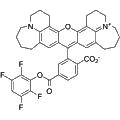
    NCT-TFP is a PARP probe designed for the identification of Poly(ADP-ribose) polymerases (PARP) inhibitors, facilitating research in cancer therapeutics and DNA repair mechanisms. This reagent enables the assessment of PARP activity and its modulation, which is critical for studying cellular responses to DNA damage. NCT-TFP is essential for investigating the role of PARP in various biological processes and for developing targeted therapies.

    Out of stock

    All 3 sizes

Items 151-175 of 252

Added to your cart

View Cart Checkout

    Loading...