- Cat. No.
- A13015
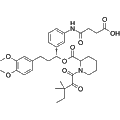
GPI-1046
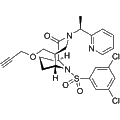
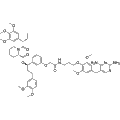
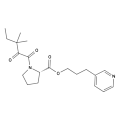
GPI-1046 is a immunophilin ligand without antibiotic action and attenuates ethanol intake in part through the upregulation of glutamate transporter 1 (GLT1) in PFC and NAc-core.
Search by product name, CAS, target or catalog number. Press Down Arrow to reach product suggestions, Tab to move between links, and Escape to close suggestions.
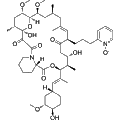
FKBP ligands bind FK506-binding proteins (FKBPs), a family of peptidyl-prolyl cis-trans isomerases. In 1989 the receptor for the immunosuppressant FK506 (tacrolimus) was shown to be such an isomerase, now known as FKBP12. Pimecrolimus is a related macrolactam that also binds FKBP12 and inhibits calcineurin. SAFit1 and SAFit2 selectively inhibit FKBP51 through an induced-fit binding mode reported in 2015. Shield-1 stabilizes fusions to a destabilized FKBP12 domain, a method described in 2006 for rapid, reversible control of protein levels. AP1867 binds the engineered mutant FKBP12(F36V), and FKBP12 PROTAC dTAG-7 uses this ligand to degrade tagged proteins in the degradation tag (dTAG) system. Rimiducid and zapalog are chemical inducers of dimerization for FKBP fusion proteins.
GPI-1046 is a immunophilin ligand without antibiotic action and attenuates ethanol intake in part through the upregulation of glutamate transporter 1 (GLT1) in PFC and NAc-core.
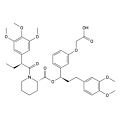
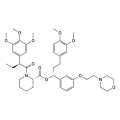
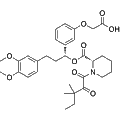
Shield-1 is a specific, cell-permeant and high-affinity ligand of FK506-binding protein-12 (FKBP), and reverses the instability by binding to mutated FKBP (mtFKBP), allowing conditional expression of mtFKBP-fused proteins.
Synonyms: PROTAC FKBP12-binding moiety 1
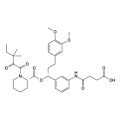
SLF-amido-C2-COOH (PROTAC FKBP12-binding moiety 1) is a synthetic ligand for FKBP (SLF). SLF-amido-C2-COOH (PROTAC FKBP12-binding moiety 1) can be used in the synthesis of PROTACs.
Synonyms: B/B Homodimerizer
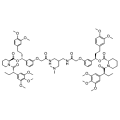
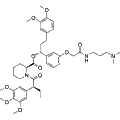
AP20187 (B/B Homodimerizer) is a cell-permeable ligand used to dimerize FK506-binding protein (FKBP) fusion proteins and initiate biological signaling cascades and gene expression or disrupt protein-protein interactions.
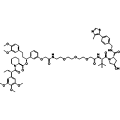
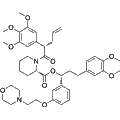
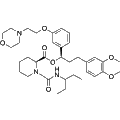
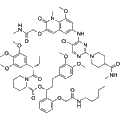
PROTAC FKBP Degrader-3 is a proteolysis-targeting chimera that utilizes a FKBP ligand binding group and a von Hippel-Lindau (VHL) E3 ligase recruiting moiety linked by a flexible linker. This compound effectively induces the degradation of FKBP12, demonstrating potent biological activity in targeted protein degradation. It is primarily used in research applications related to protein homeostasis, cellular signaling mechanisms, and therapeutic development strategies for modulating protein levels.
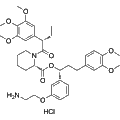
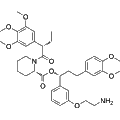
AP1867-3-(aminoethoxy) hydrochloride is a synthetic ligand targeting FKBP and plays a crucial role in the development of PROTAC-based therapies. This compound is utilized in the synthesis of PROTAC FKBP12 F36V degraders, facilitating targeted protein degradation. Its application extends to research in therapeutic modalities that employ ubiquitin-proteasome system for regulating protein levels in various diseases.
Out of stock
All 3 sizes
SLF is a synthetic ligand specifically targeting FK506-binding protein (FKBP), exhibiting an affinity of 3.1 μM for FKBP51 and an IC50 of 2.6 μM for FKBP12. This compound serves as a valuable tool in the development of PROTACs, enabling selective degradation of target proteins. Its application in chemical biology research facilitates the exploration of protein regulation and therapeutic strategies.
Synonyms: ZZY05-092
RapaBlock is a potent FKBP12 ligand that does not exert immunosuppressive effects and is characterized by its inability to penetrate the blood-brain barrier. This compound is primarily utilized in research to investigate FKBP12-related pathways and functions, offering valuable insights into cellular signaling mechanisms while minimizing unintended effects in neural tissue.
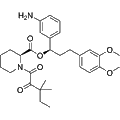
AP1867-3-(aminoethoxy) is a synthetic ligand that targets FKBP, facilitating the design of PROTAC molecules. This compound is essential for the synthesis of the PROTAC FKBP12 F36V degrader, enabling targeted protein degradation in various biological contexts. Its use is crucial in research applications focused on protein regulation and therapeutic development.
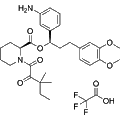
SLF TFA is a synthetic ligand specifically targeting FK506-binding proteins (FKBPs), exhibiting an affinity of 3.1 μM for FKBP51 and an IC50 value of 2.6 μM for FKBP12. This compound is pivotal in research applications involving the development of PROTACs (proteolysis-targeting chimeras), which facilitate targeted protein degradation. Its selective interaction with FKBPs underscores its potential utility in studying protein regulation and cellular processes.
FKBP12 ligand-2 is a high-affinity ligand that selectively targets FKBP12. This compound enhances the binding of heterobifunctional molecules to BRD4, facilitating the formation of a ternary complex of FKBP12, ligand, and BRD4 through the "CellTrap" effect. The resulting complex exhibits inhibitory activity against BRD4, leading to the downregulation of BRD4 target genes such as MYC and promoting cancer cell apoptosis. FKBP12 ligand-2 is suitable for research applications focused on cancer mechanisms influenced by intracellular protein levels.
Out of stock
All 3 sizes
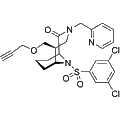
FKBP51F67V-selective antagonist Ligand2 is a potent ligand specifically targeting the FKBP51 F67V variant. It effectively reverses the anxiogenic phenotype induced by the overexpression of FKBP51 F67V in the amygdala, thereby highlighting its potential in anxiety research. This compound selectively binds to FKBP51 F67V without interacting with wild-type FKBP51 or FKBP52, making it a valuable tool for studying the specific roles of FKBP51 F67V in neurobiology and related disorders.
FKBP12 ligand-3 is a high-affinity ligand that selectively targets FKBP12. By facilitating the binding of heterobifunctional molecules to BRD4, it enhances intracellular drug enrichment through the "CellTrap" effect, leading to the formation of a ternary complex of FKBP12-ligand-BRD4. This complex exhibits inhibitory effects on BRD4, resulting in the downregulation of target genes such as MYC and promoting tumor cell apoptosis. FKBP12 ligand-3 is valuable for research focused on cancer therapeutics, particularly in studies that exploit variations in intracellular presenter protein levels.
Out of stock
All 3 sizes
FKBP12 Ligand-1 is a specific ligand designed to target FKBP12, facilitating the selective recruitment of proteins for ubiquitin-mediated degradation. This compound is primarily utilized in research applications involving proteolysis-targeting chimera (PROTAC) technology, particularly with MC-25B. FKBP12 Ligand-1 serves as a vital tool for studying protein degradation pathways and examining the functional dynamics of cellular targets.
Out of stock
All 3 sizes
AP21998 is a selective ligand for the Fv domain of mutant FKBP, primarily targeting FKBPv. This compound effectively disrupts FKBP-mediated oligomerization, leading to the inhibition of proliferation in transformed myeloid progenitors while promoting their terminal myeloid differentiation. Additionally, AP21998 facilitates the resolution of aggregates in CAD-hM1 receptor fusion proteins, enabling their transit from the endoplasmic reticulum to the plasma membrane. Its unique properties make it valuable for research in cancer biology and related fields.
Out of stock
All 3 sizes
Shield-2 is a potent stabilizing ligand that specifically targets the FKBP (F36V) protein, exhibiting a dissociation constant of 29 nM. This compound effectively binds to FKBP mutants, which destabilize protein domains and subsequently prevents their degradation. Shield-2 offers a valuable tool for researchers studying intracellular protein regulation and the modulation of protein levels within cellular environments.
TSPO ligand-3 serves as a ligand for AUTAC2, which features a p-fluorobenzylguanine (FBnG) moiety alongside a synthetic FKBP ligand (SLF). This compound exhibits notable biological activity by significantly silencing FKBP12 in HeLa cells. Research applications include studying targeted protein degradation and investigating the mechanistic pathways of autophagy-related and intracellular degradation processes.
Out of stock
All 3 sizes
Synonyms: BAK-04-212
EB-TCIP is an EWSR1::FLI1 binder that operates by forming a ternary complex with the tagged fusion protein BCL6 and FKBP12F36V. This compound specifically recruits the EWSR1::FLI1 fusion to BCL6-associated DNA regions, leading to chromatin remodeling and the relocalization of transcriptional factors. As a result, EB-TCIP activates the expression of previously repressed BCL6 target genes. It serves as a valuable tool in the exploration of innovative epigenetic therapies for Ewing sarcoma.
RA190-PEG1-NH2 is an E3 ligase ligand and a derivative of RA190. This compound is utilized in the synthesis of FKBP12 PROTAC degrader RAFKBP12, facilitating targeted protein degradation through the modulation of E3 ligase activity. Its application supports research into the development of proteolysis-targeting chimeras (PROTACs) and advances studies in cellular protein regulation.
Out of stock
All 3 sizes
MY-11B is a ligand for DCAF1, specifically exhibiting reactivity with the DCAF1_C1113 domain. This compound effectively inhibits YT41R and YT47R-mediated degradation of HA-FKBP12, making it a valuable tool in studying protein degradation pathways. MY-11B is also applicable in the synthesis of PROTACs, contributing to the development of targeted protein degradation strategies in chemical research.
Out of stock
All 3 sizes
EcDHFR/FKBP12 F36V binder-1 is a bifunctional molecule designed to target the Escherichia coli dihydrofolate reductase (EcDHFR) domain and the FKBP12 F36V domain. This compound exhibits significant biological activity by acting as an efficient linker between the two protein domains, facilitating studies of protein-protein interactions and enabling the development of synthetic biological systems. Its applications include protein engineering, understanding signaling pathways, and advancing drug discovery efforts.
Out of stock
All 3 sizes