
- Cat. No.
- A11833
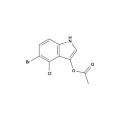
BCDA
Synonyms: 5-bromo-4-chloroindoxyl acetate
BCDA is a chromogenic substrate of esterase used to detect the activity of esterase.
In stock
View Details
Search by product name, CAS, target or catalog number. Press Down Arrow to reach product suggestions, Tab to move between links, and Escape to close suggestions.
Biochemical Assay Reagents collects small molecules used to prepare, run and calibrate biochemical and cell-based assays. Vitamins and cofactors such as niacin, riboflavin and biotin sit alongside sugars, sugar alcohols and amino acids such as L-arginine. Enzyme substrates and metal-ion chelators complete the range, including the calcium chelator 1,2-bis(2-aminophenoxy)ethane-N,N,N′,N′-tetraacetic acid (BAPTA). Three subcategories group related reagents, namely Carbohydrates & Glycobiology, Acyl-CoA & Cofactors for acyl-coenzyme A (acyl-CoA) compounds, and Chelators & Bifunctional Chelators. Most of these compounds act as substrates, cofactors, standards or buffer components rather than as inhibitors of a defined target.
Synonyms: 5-bromo-4-chloroindoxyl acetate
BCDA is a chromogenic substrate of esterase used to detect the activity of esterase.
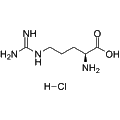
Synonyms: (S)-(+)-Arginine hydrochloride
L-Arginine hydrochloride is a key nitrogen donor and substrate for endothelial nitric oxide synthase (eNOS), facilitating the generation of nitric oxide (NO). This compound is essential for vascular smooth muscle function, as it is transported via the cationic amino acid transporter family, where it is metabolized to NO and other bioactive molecules. L-Arginine shows significant vasodilatory effects and is widely utilized in research investigating cardiovascular function and experimental models of acute pancreatitis.
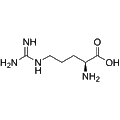
L-Arginine is the primary substrate for endothelial nitric oxide synthase (eNOS), facilitating the production of nitric oxide (NO). This amino acid is transported into vascular smooth muscle cells via cationic amino acid transporters, where it contributes to key metabolic pathways, including the synthesis of polyamines and L-proline. As a potent vasodilator, L-Arginine has significant applications in research, particularly in studies related to vascular function and the induction of experimental acute pancreatitis.
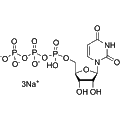
Synonyms: UTP trisodium salt; Uridine 5'-triphosphate trisodium salt
Uridine triphosphate trisodium salt is a pyrimidine nucleoside triphosphate that serves as a key substrate in RNA synthesis and functions as an energy source in various metabolic pathways. This compound is also known to activate P2Y2 receptors, playing a significant role in cellular signaling and response mechanisms. Its applications extend to studies in molecular biology, signal transduction, and metabolic research.
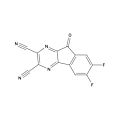
NQO1 substrate acts as an efficient NQO1 substrate and may be a new option for the treatment of NQO1-overexpresssing drug-resistant NSCLC.
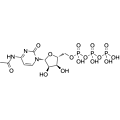
Synonyms: ac4CTP
N4-Acetylcytidine triphosphate is efficiently used as a substrate in T7 Polymerase-catalyzed in vitro transcription and can be incorporated into multiple templates.
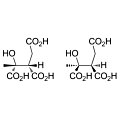
DL-threo-2-methylisocitrate is a substrate of isocitrate lyase 1(ICL1).
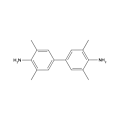
Synonyms: BM blue; Sure Blue TMB
TMB (BM blue) is a chromogenic substrate used in staining procedures in immunohistochemistry as well as being a visualising reagent used in enzyme-linked immunosorbent assays (ELISA).
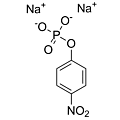
PNPP is a non-proteinaceous chromogenic substrate for alkaline and acid phosphatases used in ELISA and conventional spectrophotometric assays.
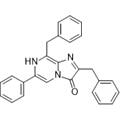
Synonyms: Coelenterazine 400a; Bisdeoxycoelenterazine
Coelenteramine 400a is a highly effective substrate for Renilla luciferase (RLuc), facilitating the emission of blue light at 395 nm. This compound enhances bioluminescence signal resolution by replacing sulfur and oxygen heteroatoms in the methylene bridge, resulting in distinct color changes during RLuc bioluminescence reactions. Coelenteramine 400a is particularly valuable in research applications involving bioluminescence resonance energy transfer (BRET), enabling advanced studies in cell signaling and molecular interactions.
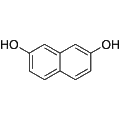
Synonyms: 2,7-DHN; Naphthalene-2,7-diol
2,7-Dihydroxynaphthalene (2,7-DHN) serves as a substrate for a novel class of aromatic prenyltransferases found in fungi, facilitating a regiospecific prenylation reaction. This compound is also capable of undergoing various chemical transformations, including oxidation and substitution reactions. Its unique reactivity makes it a valuable tool in the study of enzyme mechanisms and the biosynthesis of natural products. Additionally, 2,7-DHN can be utilized in research applications focusing on aromatic compound functionalization and metabolic engineering.
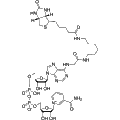
Biotin-NAD+ is a biotin-conjugated form of β-NAD+ that serves as a substrate for poly(ADP-ribosyl) polymerase (PARP) enzymes. This reagent is essential for biochemical analysis, particularly in applications such as Western blotting, ELISA, and immunoprecipitation. Its role in monitoring PARP activity makes it valuable for research into DNA repair mechanisms and cellular stress responses.
Out of stock
All 3 sizes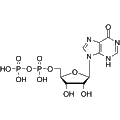
Synonyms: IDP disodium; Inosine-5'-diphosphoric acid disodium
Inosine-5'-diphosphate disodium functions as a decoy substrate for NM23-H2, demonstrating high binding affinity to the GDP-binding pocket of the enzyme (KD: 5.0 μM). This compound effectively abrogates c-MYC transcription, induces apoptosis, and causes G2/M cell cycle arrest by disrupting NM23-H2-Pu27-GQ interactions while preserving NM23-H2-mediated kinase activity. In addition to its role in cancer research, particularly in Burkitt's lymphoma, it exhibits antihypoxic, antihyperthermic, and antiarrhythmic properties, providing protective effects against γ-irradiation in animal models.
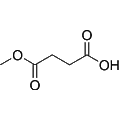
Methyl succinate is a substrate for mitochondrial Complex II, facilitating electron transfer by bypassing Complex I inhibition. This compound has shown the ability to restore mitochondrial function and reduce AMPK phosphorylation, demonstrating protective effects on MIN6 β-cells and primary rat β-cells against biguanide-induced toxicity and apoptosis in vitro. Methyl succinate is valuable for research applications related to metabolic disorders, particularly in the study of diabetes mellitus.
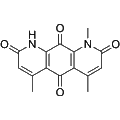
Deoxynyboquinone is a potent substrate for NAD(P)H:quinone oxidoreductase 1 (NQO1) and serves as an effective antineoplastic agent. This compound induces apoptosis in various cancer cell lines, primarily through mechanisms involving oxidative stress and the generation of reactive oxygen species (ROS). Its ability to selectively target cancer cells makes it a valuable tool in cancer research and therapeutic studies.
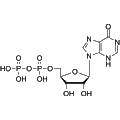
Synonyms: IDP; Inosine-5'-diphosphoric acid
Inosine-5'-diphosphate (IDP) serves as a decoy substrate for NM23-H2, exhibiting high affinity for the GDP-binding pocket (KD: 5.0 μM). This compound effectively inhibits c-MYC transcription and induces apoptosis and G2/M cell cycle arrest by disrupting NM23-H2-Pu27-GQ interactions, while preserving NM23-H2’s kinase activity. Additionally, IDP possesses antihypoxic, antihyperthermic, and antiarrhythmic properties, providing protective effects against γ-irradiation. It is applicable in research concerning Burkitt's lymphoma and cardiovascular diseases.

RR-SRC is a specific substrate for the src-tyrosine kinase, facilitating the study of tyrosine phosphorylation events. It plays a key role in the investigation of signaling pathways and cellular processes associated with src-family kinases. This reagent is valuable for research applications in cancer biology, cell signaling, and the mechanistic understanding of kinase activity.
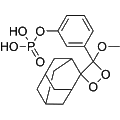
Synonyms: Lumi-Phos Plus; Lumigen PPD; PPD
AMPPD is a chemiluminescent substrate for alkaline phosphatase (APase). It undergoes hydrolysis by APase to produce an unstable dioxetane intermediate, which emits a chemiluminescent signal upon decomposition. This property enables the sensitive detection of biological molecules and is particularly valuable in quantitative enzyme-linked immunosorbent assays (ELISAs) for targets such as human tissue kininogen. AMPPD is suitable for applications in chemiluminescent detection of proteins and nucleic acids, facilitating research in various biological and biochemical studies.
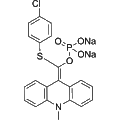
Lumigen APS-5 is a highly sensitive substrate for alkaline phosphatase (ALP). It enables precise measurement of ALP activity in various biological samples, making it a valuable tool for research applications in enzymology and signal transduction pathways. This compound is essential for studies involving enzyme kinetics and the evaluation of ALP-related biological processes.
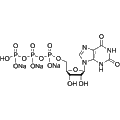
Synonyms: 5'-XTP trisodium
Xanthosine-5'-Triphosphate trisodium solution (100mM) is a nucleotide that functions as a substrate for inosine triphosphate pyrophosphatase (ITPase). It plays a critical role in nucleotide metabolism and is involved in various biochemical pathways. This reagent is suitable for studies requiring the analysis of nucleotide interactions, enzymatic activity assays, and nucleic acid synthesis.
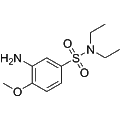
Fast Red ITR is a nonlinear optical material that serves as a substrate for alkaline phosphatase histochemistry. It exhibits heightened sensitivity and specificity, making it suitable for various research applications in immunohistochemistry and tissue analysis. Utilizing Fast Red ITR can enhance the visualization of cellular components, facilitating more accurate interpretation of histological samples.
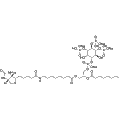
PtdIns-(3,4,5)-P3-biotin sodium is a biotin-tagged derivative of phosphatidylinositol (3,4,5)-trisphosphate (PI(3,4,5)P3), functioning as a substrate for nuclear phosphatidylinositol 5-phosphatase (PIP5Pase). This compound facilitates the study of PI(3,4,5)P3 interactions, particularly its binding to the N-terminus of RAP1 (repressor activator protein 1), which is crucial for regulating its DNA binding activity. PtdIns-(3,4,5)-P3-biotin sodium is essential for research applications focused on signal transduction pathways and the modulation of gene expression mediated by phosphoinositides.
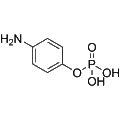
p-Aminophenyl phosphate serves as a substrate for alkaline phosphatase, enabling the assessment of enzyme activity. Its primary biological activity involves hydrolysis by alkaline phosphatase, leading to the release of p-aminophenol, which can be quantitatively measured. This reagent is valuable in various research applications, particularly in enzymology and assays that investigate alkaline phosphatase activity in biological samples.
Out of stock
All 3 sizes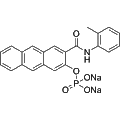
Naphthol AS-GR phosphate disodium serves as a substrate for both acid and alkaline phosphatases. This compound exhibits intense green fluorescence, making it a valuable tool for histochemical studies. Its ability to provide sensitive detection of phosphatase activity supports a variety of biological and biomedical research applications.
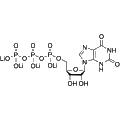
Synonyms: 5'-XTP lithium
Xanthosine-5'-triphosphate lithium is a nucleotide that serves as a substrate for inosine triphosphate pyrophosphatase (ITPase). This compound plays a crucial role in nucleotide metabolism and cellular energy transfer. Its biological activity is particularly relevant in studies involving purine metabolism and enzymatic regulation. Researchers can utilize Xanthosine-5'-triphosphate lithium in various applications, including biochemical assays and pathway analysis.
Out of stock
All 3 sizes