Carbohydrates & Glycobiology

Carbohydrates for glycobiology research range from sugars and sugar alcohols to amino sugars and polysaccharides. Sugar alcohols such as D-Sorbitol and maltitol are used as osmotic agents, stabilizers and enzyme substrates. Among the sugars, lactulose is a synthetic disaccharide built from galactose and fructose. Glucosamine and its salts represent the amino sugars, which are building blocks of glycosaminoglycans and chitin. Polysaccharides include hyaluronic acid, a glycosaminoglycan of the extracellular matrix, and chitosan, the deacetylated form of chitin. Protected sugars such as D-Xylofuranose, 1,2,3,5-tetraacetate serve as starting materials for nucleoside synthesis. The category belongs to Biochemical Assay Reagents, next to Acyl-CoA & Cofactors and Chelators & Bifunctional Chelators.

Items 101-125 of 1090

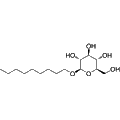
  • Nonyl β-D-glucopyranoside
    Cat. No.
    A87268

    Nonyl β-D-glucopyranoside

    Synonyms: n-Nonyl-β-D-glucopyranoside

    Nonyl β-D-glucopyranoside is a surfactant that interacts with lipid monolayers, making it valuable in studies of membrane dynamics and cellular interactions. It serves as an effective agent for the enantiomeric separation of phenoxy acid herbicides and amino acid derivatives. This compound is utilized in various biochemical and biophysical applications that require surfactant properties.

    100 mg
    $25.00
    250 mg
    $40.00
    All 4 sizes
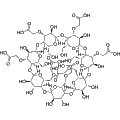
  • Carboxymethyl-β-cyclodextrin
    Cat. No.
    A87270

    Carboxymethyl-β-cyclodextrin

    Carboxymethyl-β-cyclodextrin is a cationic cyclodextrin that functions as an efficient drug carrier. It demonstrates high affinity and selectivity for binding nonsteroidal anti-inflammatory drugs (NSAIDs), enhancing their solubility and bioavailability. This compound is utilized in pharmaceutical research for drug formulation and delivery studies.

    1 g
    $20.00
    5 g
    $50.00
    All 3 sizes
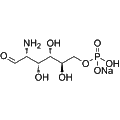
  • D-Glucosamine 6-phosphate sodium
    Cat. No.
    A87287

    D-Glucosamine 6-phosphate sodium

    Synonyms: GlcN6P-Na

    D-Glucosamine 6-phosphate sodium is a biochemical reagent utilized in glycobiology research. This compound plays a critical role in the study of carbohydrate chemistry and glycan biosynthesis, facilitating investigations into the structure, synthesis, and biological functions of glycans. Its applications extend to understanding protein-glycan interactions and the relevance of carbohydrates in various biological systems, making it essential for basic research, biomedicine, and biotechnological advancements.

    5 mg
    $65.00
    10 mg
    $110.00
    All 3 sizes
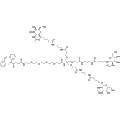
  • Trivalent GalNAc-DBCO
    Cat. No.
    A87308

    Trivalent GalNAc-DBCO

    Trivalent GalNAc-DBCO is a versatile biochemical assay reagent designed for efficient oligonucleotide coupling. It facilitates the bioconjugation of GalNAc moieties to oligonucleotides, enhancing targeting and delivery capabilities in nucleic acid research. This compound is particularly useful in developing targeted therapeutic strategies and studying oligonucleotide interactions within biological systems.

    1 mg
    $45.00
    5 mg
    $100.00
    All 6 sizes
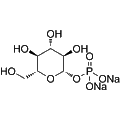
  • β-D-Glucopyranose 1-phosphate disodium salt
    Cat. No.
    A87318

    β-D-Glucopyranose 1-phosphate disodium salt

    Synonyms: beta-D-Glucopyranose 1-phosphate disodium salt

    β-D-Glucopyranose 1-phosphate disodium salt is a biochemical assay reagent primarily utilized in glycosylation studies and carbohydrate metabolism research. This compound serves as a key substrate for enzyme assays and offers insights into glycoprotein synthesis and carbohydrate signaling pathways. Its application in metabolic research enhances understanding of sugar phosphate metabolic processes in various biological systems.

    1 mg
    $110.00
    5 mg
    $275.00
    All 2 sizes
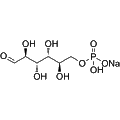
  • D-Mannose,6-dihydrogen phosphate (sodium)
    Cat. No.
    A87331

    D-Mannose,6-dihydrogen phosphate (sodium)

    D-Mannose,6-dihydrogen phosphate (sodium) serves as a vital biochemical reagent in glycobiology research. This compound plays a crucial role in the study of carbohydrate structures, their synthesis, and biological functions, particularly in protein-glycan recognition and the enzymatic pathways of glycan metabolism. D-Mannose,6-dihydrogen phosphate (sodium) is instrumental in elucidating the roles of glycans in various biological systems, making it essential for advancements in biomedicine and biotechnology.

    5 mg
    $80.00
    10 mg
    $125.00
    All 4 sizes
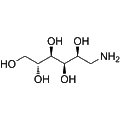
  • D-Glucamine, 98%
    Cat. No.
    A87358

    D-Glucamine, 98%

    Synonyms: 1-Amino-1-deoxy-D-glucitol; 98%

    D-Glucamine is an amino sugar derivative that functions primarily as a substrate for sugar transporter studies. Its primary application lies in pharmaceutical formulations as an excipient, facilitating the delivery of active ingredients. Additionally, D-Glucamine can be utilized in research investigating metabolic pathways and cellular transport mechanisms associated with sugars.

    500 mg
    $25.00
    1 g
    $35.00
    All 2 sizes
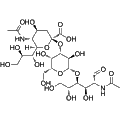
  • 3′-Sialyl-N-acetyllactosamine
    Cat. No.
    A87387

    3′-Sialyl-N-acetyllactosamine

    3′-Sialyl-N-acetyllactosamine is a sialylated disaccharide that serves as an important reagent in glycobiology research. It plays a key role in studying glycan structure, synthesis, and protein-glycan interactions, which are crucial for various biological processes. This compound is particularly useful in elucidating the roles of sialylated glycans in cellular signaling, immune response, and disease mechanisms, making it relevant for both basic research and biotechnological applications.

    5 mg
    $185.00
    10 mg
    $300.00
    All 4 sizes
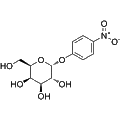
  • 4-Nitrophenyl α-D-galactopyranoside
    Cat. No.
    A87389

    4-Nitrophenyl α-D-galactopyranoside

    Synonyms: PNP-alpha-D-Gal; PNP-α-D-Gal

    4-Nitrophenyl α-D-galactopyranoside serves as an artificial substrate for the detection of α-galactosidase activity. This compound facilitates the release of 4-nitrophenol (pNP) upon enzymatic cleavage, allowing for quantitative measurement of enzyme function. It is widely utilized in biochemical assays and research applications focused on glycosidase activity, contributing to studies in enzymology and carbohydrate metabolism.

    100 mg
    $25.00
    250 mg
    $50.00
    All 2 sizes
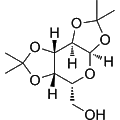
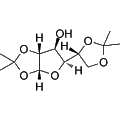
  • 1,2:3,4-Di-O-isopropylidene-α-D-galactopyranose
    Cat. No.
    A87444

    1,2:3,4-Di-O-isopropylidene-α-D-galactopyranose

    1,2:3,4-Di-O-isopropylidene-α-D-galactopyranose is a biochemical reagent that serves as a versatile building block in carbohydrate chemistry. Its protective isopropylidene groups facilitate various synthetic applications, particularly in the study of glycosylation reactions and carbohydrate-protein interactions. This compound is useful in the preparation of complex oligosaccharides, aiding research in glycobiology and related fields.

    5 g
    $35.00
    10 g
    $60.00
    All 5 sizes
  • (+)-Arabinogalactan,from larch wood, 80%
    Cat. No.
    A87448

    (+)-Arabinogalactan,from larch wood, 80%

    Synonyms: Polyarabinogalactan; 80%

    (+)-Arabinogalactan, derived from larch wood, primarily functions as a polysaccharide. This compound plays significant roles in glycobiology research, particularly in studies related to cell signaling, immune response, and the modulation of cellular interactions. Its unique structural properties make it valuable for investigating carbohydrate-protein interactions and potential therapeutic applications.

    5 g
    $20.00
    10 g
    $30.00
    All 6 sizes
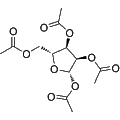
  • beta-D-Ribofuranose 1,2,3,5-tetraacetate
    Cat. No.
    A87456

    beta-D-Ribofuranose 1,2,3,5-tetraacetate

    Beta-D-Ribofuranose 1,2,3,5-tetraacetate is a biochemical reagent utilized primarily as a building block in nucleic acid synthesis. This compound serves as an important intermediary in various biochemical applications, particularly in studying carbohydrate metabolism and nucleoside chemistry. Its structural features enhance its utility in various life science research contexts, enabling the investigation of ribonucleotide derivatives and their biological roles.

    5 g
    $20.00
    10 g
    $25.00
    All 5 sizes
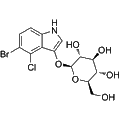
  • 5-Bromo-4-chloro-3-indolyl β-D-glucopyranoside
    Cat. No.
    A87478

    5-Bromo-4-chloro-3-indolyl β-D-glucopyranoside

    5-Bromo-4-chloro-3-indolyl β-D-glucopyranoside serves as a chromogenic substrate specifically for the detection of β-galactosidase activity. It is widely utilized in molecular biology applications, including gene expression and reporter gene analysis. Upon cleavage by β-galactosidase, this substrate yields a blue precipitate, allowing for straightforward visualization via microscopy or alternative detection methods. Its high sensitivity and specificity enhance its utility in various research contexts involving β-galactosidase assays.

    100 mg
    $20.00
    200 mg
    $25.00
    All 6 sizes
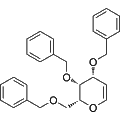
  • 3,4,6-Tri-O-benzyl-D-galactal
    Cat. No.
    A87479

    3,4,6-Tri-O-benzyl-D-galactal

    3,4,6-Tri-O-benzyl-D-galactal is a glycosyl donor used in glycobiology research, targeting glycan synthesis and manipulation. This compound facilitates the study of carbohydrate structures, enzymatic processes in glycan formation and degradation, and protein-glycan interactions. Its application extends to basic biological research, biomedicine, and the development of glycan-based biotechnologies.

    100 mg
    $20.00
    250 mg
    $35.00
    All 7 sizes
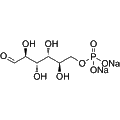
  • D-Mannose-6-phosphate disodium
    Cat. No.
    A87481

    D-Mannose-6-phosphate disodium

    D-Mannose-6-phosphate disodium is a biochemical reagent that serves as a key tool in glycobiology research. This compound plays a critical role in understanding the structure and function of glycan molecules, influencing various processes such as glycan synthesis and degradation, along with protein-glycan interactions. Its applications extend to fundamental research, biomedicine, and biotechnology, making it essential for studies focused on carbohydrate chemistry and the biological significance of glycans.

    5 mg
    $110.00
    10 mg
    $170.00
    All 4 sizes
  • Diacetone-D-glucose
    Cat. No.
    A87531

    Diacetone-D-glucose

    Synonyms: D-Glucose diacetonide; 1,2:5,6-Diisopropylidene-D-glucose

    Diacetone-D-glucose is a sugar-derived secondary alcohol that serves as a versatile biochemical reagent. This compound is primarily utilized as an intermediate in the synthesis of pharmaceuticals and other chemical derivatives. Its unique structure makes it valuable in various research applications involving carbohydrate chemistry and biochemical assays.

    1 mg
    $20.00
    100 g
    $25.00
    All 4 sizes
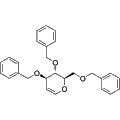
  • Tri-O-benzyl-D-glucal, 97%
    Cat. No.
    A87544

    Tri-O-benzyl-D-glucal, 97%

    Synonyms: 3,4,6-Tri-O-benzyl-D-glucal; 97%

    Tri-O-benzyl-D-glucal is a glycoside compound that acts as a protein detergent. It is primarily utilized in glycobiology research for glycan analysis and carbohydrate-related studies. Its ability to stabilize proteins during extraction and purification makes it valuable in various biochemical applications.

    250 mg
    $20.00
    1 g
    $40.00
    All 2 sizes
  • Neu5Acα(2-3)Galβ MP glycoside
    Cat. No.
    A87549

    Neu5Acα(2-3)Galβ MP glycoside

    Synonyms: Neu5Ac alpha(2-3)Gal beta MP glycoside

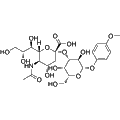
    Neu5Acα(2-3)Galβ MP glycoside is a biochemical assay reagent targeting sialic acid interactions. This glycoside serves as a valuable tool in the study of glycosylation and its implications in biological processes. It is particularly useful in investigations related to cell signaling, pathogen recognition, and cellular interactions in various life science research applications.

    5 mg
    $150.00
    10 mg
    $245.00
    All 2 sizes
  • α-D-Glucopyranose, 2,3,4,6-tetraacetate
    Cat. No.
    A87579

    α-D-Glucopyranose, 2,3,4,6-tetraacetate

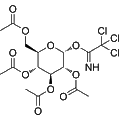
    α-D-Glucopyranose, 2,3,4,6-tetraacetate is a biochemical assay reagent primarily utilized for glycosylation studies. This compound serves as a substrate for various enzymatic reactions, enabling the investigation of glycoside hydrolases and glycosyltransferases. Its acetylated form enhances solubility and stability in aqueous solutions, making it suitable for diverse applications in carbohydrate chemistry and enzymology.

    100 mg
    $25.00
    250 mg
    $40.00
    All 6 sizes
  • Chondroitinase B
    Cat. No.
    A87609

    Chondroitinase B

    Chondroitinase B is an enzyme that specifically targets chondroitin sulfate, catalyzing its degradation into smaller oligosaccharides. This biochemical reagent is pivotal in studying extracellular matrix components and their roles in cellular processes. Its applications extend to research on cartilage degradation, tissue engineering, and the development of therapeutics for osteoarthritis and other joint disorders.

    20 mg
    $305.00
    50 mg
    $600.00
    All 2 sizes
  • p-Nitrophenyl α-L-fucoside
    Cat. No.
    A87648

    p-Nitrophenyl α-L-fucoside

    Synonyms: PNP α-L-Fuc

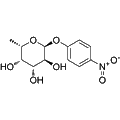
    p-Nitrophenyl α-L-fucoside is a specific substrate for α-L-fucosidase, enabling the quantitative determination of enzymatic activity. This compound is widely utilized in biochemical assays to study the metabolism of fucose-containing glycoconjugates. Its use in α-L-fucosidase assays aids in the investigation of various biological processes and diseases linked to fucosylation.

    5 mg
    $35.00
    10 mg
    $55.00
    All 4 sizes
  • D-Galactosamine pentaacetate
    Cat. No.
    A87649

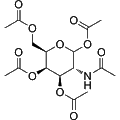
    D-Galactosamine pentaacetate

    D-Galactosamine pentaacetate is a biochemical reagent primarily utilized in research involving glycoprotein synthesis and cellular metabolism. Its acetylated form enhances solubility and stability, making it suitable for various biochemical assays. This compound is instrumental in studies focusing on galactose metabolism and related pathways, contributing to the understanding of cellular functions and disease mechanisms.

    1 g
    $20.00
    5 g
    $30.00
    All 6 sizes
  • Keratin sulfate
    Cat. No.
    A87674

    Keratin sulfate

    Keratin sulfate is a heparin-related proteoglycan that interacts with specific receptors, influencing their stability and functionality. This compound is primarily involved in cellular processes associated with matrix organization and cellular signaling. Research applications include studies on proteoglycan interactions and the effects on fibroblast growth factor pathways, despite its lack of enhancement on the mitogenic effects of FGF-2.

    50 mg
    $25.00
    100 mg
    $40.00
    All 4 sizes
  • Hydroxypropylmethyl cellulose acetate succinate (Mw: 20-100k Da)
    Cat. No.
    A87697

    Hydroxypropylmethyl cellulose acetate succinate (Mw: 20-100k Da)

    Hydroxypropylmethyl cellulose acetate succinate (Mw: 20-100k Da) functions primarily as a cosolvent, enhancing the solubility of low-solubility compounds in solid dispersion systems (SDDs). This polymer demonstrates a favorable safety profile, exhibiting no acute, subchronic, or chronic toxicity in rat models, with an oral LD50 greater than 2.5 g/kg. It is widely utilized in pharmaceutical formulations to improve bioavailability and stability of drug compounds.

    5 mg
    $40.00
    10 mg
    $65.00
    All 5 sizes
  • α-D-Glucose 1-phosphate dipotassium
    Cat. No.
    A87698

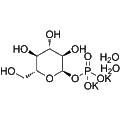
    α-D-Glucose 1-phosphate dipotassium

    α-D-Glucose 1-phosphate dipotassium is a biochemical reagent that primarily targets carbohydrate metabolism. It plays a crucial role in glycobiology by facilitating the study of glycan synthesis, degradation, and their biological functions. This compound is essential for researching enzymatic processes related to glycan recognition and offers valuable insights into carbohydrate chemistry and its applications in biomedicine and biotechnology.

    5 mg
    $20.00
    10 mg
    $25.00
    All 6 sizes

Items 101-125 of 1090

Added to your cart

View Cart Checkout

    Loading...