- Cat. No.
- A19650
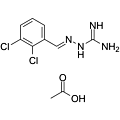
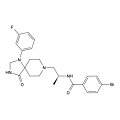
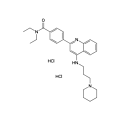
SHIP2-IN-1
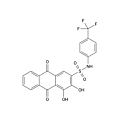
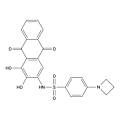
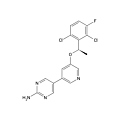
SHIP2-IN-1 is a potent SHIP2 inhibitor, inhibits SHIP2 activity, with an IC50 of 2 µM. SHIP2-IN-1 blocks GSK3β activation by phosphorylation at the Ser9 residue. SHIP2-IN-1 is used in the research of Alzheimer’s disease.
Search by product name, CAS, target or catalog number. Press Down Arrow to reach product suggestions, Tab to move between links, and Escape to close suggestions.
Phosphatase inhibitors act on protein, lipid and inositol phosphatases that hydrolyze phosphate esters. A 2004 survey of the human genome counted 107 genes for protein tyrosine phosphatases (PTPs). Serine/threonine phosphatases such as protein phosphatases 1 and 2A (PP1, PP2A) reverse many kinase-driven signals. Calyculin A, reported in 1989 as an inhibitor of protein phosphatase activity, blocks both PP1 and PP2A. LB-100 targets PP2A, tautomycetin prefers PP1, and sodium orthovanadate inhibits PTPs broadly and is a common lysis buffer additive. Among lipid and inositol phosphatases, 3AC inhibits Src homology 2 (SH2) domain-containing inositol 5-phosphatase 1 (SHIP1), and L-690330 targets inositol monophosphatase.
SHIP2-IN-1 is a potent SHIP2 inhibitor, inhibits SHIP2 activity, with an IC50 of 2 µM. SHIP2-IN-1 blocks GSK3β activation by phosphorylation at the Ser9 residue. SHIP2-IN-1 is used in the research of Alzheimer’s disease.
Synonyms: ISAtx-247
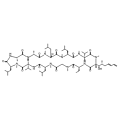
Voclosporin is a calcineurin (CN) inhibitor.
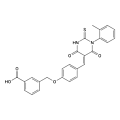
PGMI-004A is a potent phosphoglycerate mutase 1 (PGAM1) inhibitor with an IC50 of 13.1 μM.
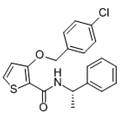
AS1949490 is a potent and selective SHIP-2 (SH2 domain-containing inositol 5?? phosphatase 2) inhibitor, with an IC50 of 620 nM. AS1949490 activated glucose metabolism via up-regulation of GLUT1 gene in L6 myotubes.
LTV-1 is a highly potent, cell-permeable and reversible inhibitor of lymphoid tyrosine phosphatase (LYP) (IC50 = 508 nM).
Raphin1 acetate is an orally bioavailable, selective inhibitor of the regulatory phosphatase PPP1R15B (R15B).
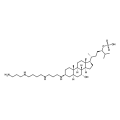
Synonyms: Trodusquemine; Aminosterol-1436
MSI-1436 is a selective, non-competitive inhibitor of the enzyme protein-tyrosine phosphatase 1B (PTB1B), with an IC50 of appr 1 μM, 200-fold preference over TCPTP (IC50, 224 μM).
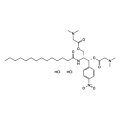
Synonyms: 1,3DMG-B13 dihydrochloride; LCL 521
LCL521 dihydrochloride (1,3DMG-B13 dihydrochloride) is an acid ceramidase (ACDase) inhibitor.
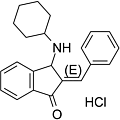
Synonyms: (E)-BCI hydrochloride
BCI hydrochloride ((E)-BCI hydrochloride) is an allosteric inhibitor of dual specificity phosphatase (DUSP).
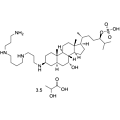
Synonyms: Trodusquemine lactate; Aminosterol-1436 lactate; MSI 1436
MSI-1436 lactate is a selective, non-competitive inhibitor of the enzyme protein-tyrosine phosphatase 1B (PTB1B), with an IC50 of 1 μM, 200-fold preference over TCPTP (IC50 of 224 μM).
MB07803 is an orally available prodrug of a potent, noncompetitive inhibitor (MB07729) of fructose 1,6-bisphosphatase (FBPase), with EC50 of 140 nM and t1/2 of 7.6±2.9 h.
MB-07729 is a potent fructose 1,6-bisphosphatase (FBPase) noncompetitive inhibitor with IC50 values of 31, 121, and 189 nM for human, monkey, and rat, respectively.
Synonyms: VU0463568
ML299 (VU0463568) is a dual inhibitor of PLD1 and PLD2 with IC50 of 6 nM and 20 nM, respectively.
NSC-45586 is a pan-PHLPP inhibitor selective for PHLPP1 and PHLPP2.
KLH45 is a potent and selective DDHD2 inhibitor, with an IC50 of 1.3 nM.
LMPTP INHIBITOR 1 (dihydrochloride) is a selective inhibitor of low molecular weight protein tyrosine phosphatase (LMPTP), with an IC50 of 0.8 μM LMPTP-A.
Synonyms: NSC 150117
(E/Z)-BCI (NSC 150117) is a dual-specificity phosphatase 6 (DUSP6) inhibitor with anti-inflammatory activities. (E/Z)-BCI attenuates LPS-induced inflammatory mediators and ROS production in macrophage cells via activating the Nrf2 signaling axis and inhibiting the NF-κB pathway.
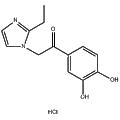
Synonyms: ML-095; CID-25067483 hydrochloride; CID25067483; MLS-0315848 hydrochloride; MLS 0315848
ML-095 is an inhibitor of PLAP (IC50 = 3.7 μM) that demonstrates high selectivity against the related alkaline phosphatases, TNAP and IAP (IC50s > 100 μM).
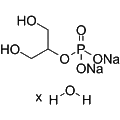
β-Glycerophosphate disodium salt pentahydrate is a bioactive endogenous metabolite and a widely used phosphatase inhibitor. It plays a critical role in promoting and sustaining osteoblast differentiation, supporting mineral metabolism, and modulating cellular signal transduction pathways. In tissue engineering and drug delivery, it is commonly utilized as a component in the formation of heat-sensitive hydrogels due to its thermoresponsive properties. Additionally, β-glycerophosphate disodium salt accelerates calcification in vascular smooth muscle cells, making it a valuable tool for studying vascular calcification and related pathologies.
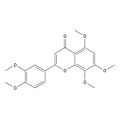
Isosinensetin is a bioactive flavonoid compound with diverse pharmacological properties. It acts as a dual inhibitor of HIV-1 protease and protein tyrosine phosphatase 1B (PTP1B), with an IC₅₀ of 2.61 µM and a Kᵢ of 0.92 µM for PTP1B, indicating its potential in antiviral and metabolic disease research. Additionally, isosinensetin inhibits P-glycoprotein (P-gp) activity in MDR1-MDCKII cells, suggesting its utility in overcoming multidrug resistance. Isosinensetin exhibits multiple therapeutic effects, including anti-tumor, anti-viral, anti-inflammatory, and antioxidant activities. These properties support its application in the research of various conditions such as cancer, chronic inflammation, osteoporosis, diabetes, and infectious diseases.
HKB99 is an allosteric inhibitor of phosphoglycerate mutase 1 (PGAM1) that induces apoptosis and suppresses cell migration by inhibiting the formation of invasive pseudopodia. It increases oxidative stress, activates the JNK/c-Jun pathway, and downregulates AKT and ERK signaling. HKB99 is a promising compound for the study of non-small cell lung cancer (NSCLC).
Synonyms: GDC-1971
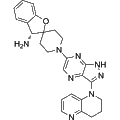
Migoprotafib (GDC-1971; compound 199) is a selective SHP2 inhibitor that suppresses the MAPK/ERK signaling pathway. It exhibits antitumor activity and is under investigation for its potential in targeting SHP2-driven cancers.
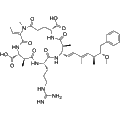
Nodularin is a potent hepatotoxin, tumor promoter, and protein phosphatase inhibitor.
Synonyms: ABBV-CLS-484
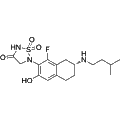
Osunprotafib (ABBV-CLS-484) is an orally active and selective active site PTPN1 (IC50: 2.5 nM) and PTPN2(IC50: 1.8 nM) inhibitor. Osunprotafib has 6-8-fold weaker activity on PTPN9 and no detectable activity on SHP-1 or SHP-2. Osunprotafib increases the sensitivity of human cancer cell lines to IFNγ. Osunprotafib generates robust anti-tumor immunity by enhancing JAK-STAT signalling and reducing T cell dysfunction.
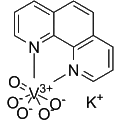
bpV(phen) is a potent inhibitor of protein tyrosine phosphatases (PTPs) and PTEN, exhibiting IC50 values of 38 nM, 343 nM, and 920 nM for PTEN, PTP-β, and PTP-1B, respectively. This compound demonstrates significant anti-proliferative effects on the protozoan parasite Leishmania in vitro. Additionally, bpV(phen) enhances the secretion of various chemokines and pro-inflammatory cytokines while promoting a Th1-type immune response characterized by IL-12 and IFNγ production. It also induces apoptosis and exhibits anti-angiogenic and anti-tumor properties, making it valuable for research in cancer and inflammation biology.