PROTAC Degrader

PROTAC degraders recruit an E3 ubiquitin ligase to a target protein so that the proteasome degrades it. Each proteolysis-targeting chimera (PROTAC) links a target-binding ligand to an E3 ligase ligand through a chemical linker. The approach was first described in 2001, and later work showed that small-molecule PROTACs can act catalytically, removing several target copies per molecule. Examples include the bromodomain and extra-terminal (BET) degraders dBET1, MZ1 and ARV-771, and the estrogen receptor degrader ERD-308. Degraders of anti-apoptotic proteins, such as PROTAC Mcl1 degrader-1, are also listed.

Items 801-824 of 824

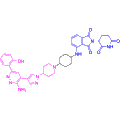
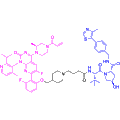
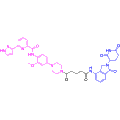
  • PROTAC SMARCA2/4-degrader-1
    Cat. No.
    A84616

    PROTAC SMARCA2/4-degrader-1

    PROTAC SMARCA2/4-degrader-1 is a PROTAC degrader specifically designed to target SMARCA2 and SMARCA4 proteins. It effectively degrades these proteins in A549 cells, exhibiting a DC50 of less than 100 nM and achieving over 90% degradation after 24 hours of treatment. This compound is suitable for research applications focused on understanding the role of SMARCA2 and SMARCA4 in various biological processes and disease models.

    Out of stock

    All 3 sizes
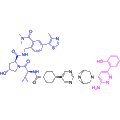
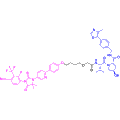
  • ND1-YL2
    Cat. No.
    A84617

    ND1-YL2

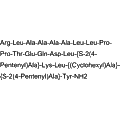
    ND1-YL2 is a PROTAC that selectively targets and degrades SRC-1 through the N-degron pathway. This compound has demonstrated significant inhibition of cancer cell invasion and migration both in vitro and in vivo. ND1-YL2 serves as a valuable tool in cancer research, providing insights into the role of SRC-1 in tumor progression and metastasis.

    0.1 mg
    $1,050.00
    All 1 sizes
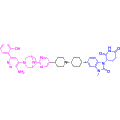
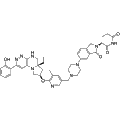
  • PROTAC SMARCA2/4-degrader-2
    Cat. No.
    A84618

    PROTAC SMARCA2/4-degrader-2

    PROTAC SMARCA2/4-degrader-2 is a molecular degrader specifically designed to target SMARCA2 and SMARCA4 proteins. It effectively induces degradation of these proteins in A549 cell lines with degradation concentrations (DC50s) less than 100 nM, achieving a maximum degradation rate (Dmax%) exceeding 90% after 24 hours of exposure. This compound is valuable for investigating the roles of SMARCA2 and SMARCA4 in various biological processes and may have applications in cancer research and therapeutic development.

    Out of stock

    All 3 sizes
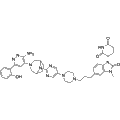
  • PROTAC SMARCA2 degrader-13
    Cat. No.
    A84619

    PROTAC SMARCA2 degrader-13

    PROTAC SMARCA2 degrader-13 is a novel PROTAC targeted at the degradation of SMARCA2 proteins. This compound effectively induces the degradation of SMARCA2 in A549 cells with a DC50 of less than 100 nM, achieving over 90% degradation after 24 hours of treatment. It serves as a valuable tool for studying the functional role of SMARCA2 in cancer biology and other cellular processes.

    Out of stock

    All 3 sizes
  • PROTAC AR Degrader-5
    Cat. No.
    A84621

    PROTAC AR Degrader-5

    PROTAC AR Degrader-5 is a potent androgen receptor (AR) PROTAC degrader, exhibiting an IC50 value of 49 nM. This compound facilitates the targeted degradation of AR, demonstrating significant potential in inhibiting sebaceous plaque formation and promoting hair regeneration. Its mechanism utilizes a bifunctional ligand to recruit an E3 ligase, making it a valuable tool for research in androgen signaling and related therapeutic applications.

    Out of stock

    All 3 sizes
  • PROTAC SMARCA2/4-degrader-33
    Cat. No.
    A84623

    PROTAC SMARCA2/4-degrader-33

    PROTAC SMARCA2/4-degrader-33 (compound I-277) is a targeted protein degradation compound that engages and induces degradation of SMARCA2 and SMARCA4. It demonstrates effective biological activity in A549 cells, with degradation concentrations (DC50s) below 100 nM, achieving over 90% protein degradation (Dmax%) after 24 hours of treatment. This reagent is suitable for research applications involving epigenetic regulation and cancer biology.

    Out of stock

    All 3 sizes
  • PROTAC SMARCA2 degrader-9
    Cat. No.
    A84625

    PROTAC SMARCA2 degrader-9

    PROTAC SMARCA2 degrader-9 (compound I-285) is an innovative PROTAC agent designed to selectively degrade SMARCA2 proteins. It demonstrates potent biological activity with a DC50 value of less than 100 nM, achieving over 90% degradation of SMARCA2 in A549 cell lines after 24 hours of treatment. This compound serves as a valuable tool for research applications aimed at elucidating the role of SMARCA2 in cancer biology and exploring targeted protein degradation strategies.

    Out of stock

    All 3 sizes
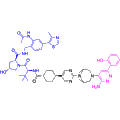
  • YN14 (mixture of diastereomers)
    Cat. No.
    A84626

    YN14 (mixture of diastereomers)

    YN14 is a mixture of diastereomers that functions as a proteolysis targeting chimera (PROTAC) specifically targeting KRASG12C. This compound exhibits high potency and selectivity in degrading KRASG12C by forming a stable ternary complex with VHL, characterized by low binding free energy (ΔG). YN14 demonstrates significant antiproliferative activity, effectively inhibiting the growth of KRASG12C-mutant cancer cells, making it a valuable tool for cancer research and drug development.

    Out of stock

    All 3 sizes
  • PRT3789 epimer
    Cat. No.
    A84627

    PRT3789 epimer

    PRT3789 epimer is an epimer of PRT3789, a selective degrader targeting SMARCA2 through the PROTAC approach. This compound facilitates the ubiquitination and subsequent proteasomal degradation of SMARCA2, thereby providing a valuable tool for studying the role of this protein in cancer and other diseases. It is essential for research applications focused on targeted protein degradation mechanisms and their therapeutic implications.

    1 mg
    $590.00
    5 mg
    $1,510.00
    All 2 sizes
  • SNIPER(ABL)-020
    Cat. No.
    A84628

    SNIPER(ABL)-020

    SNIPER(ABL)-020 is a PROTAC compound designed to selectively degrade the BCR-ABL fusion protein through targeted ubiquitin-proteasome pathway engagement. By conjugating Dasatinib, an ABL inhibitor, with Bestatin, an IAP ligand, SNIPER(ABL)-020 effectively promotes the protein's ubiquitination and subsequent degradation. This reagent is valuable for research focused on chronic myeloid leukemia and BCR-ABL related signaling pathways, offering insights into targeted protein degradation mechanisms in cancer therapeutics.

    5 mg
    $695.00
    10 mg
    $1,220.00
    All 3 sizes
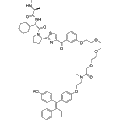
  • SNIPER(ER)-87
    Cat. No.
    A84629

    SNIPER(ER)-87

    SNIPER(ER)-87 is a PROTAC compound designed to efficiently degrade estrogen receptor α (ERα) through targeted ubiquitination. It consists of an IAP ligand (LCL161 derivative) linked to the ERα ligand (4-hydroxytamoxifen) via a PEG linker, resulting in an IC50 of 0.097 μM for ERα degradation. This compound preferentially recruits XIAP, the primary E3 ubiquitin ligase, to facilitate the selective degradation of ERα in cellular contexts. SNIPER(ER)-87 is valuable for research on hormone receptor regulation, breast cancer studies, and the development of targeted protein degradation strategies.

    5 mg
    $850.00
    All 1 sizes
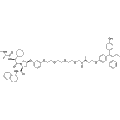
  • SNIPER(ER)-110
    Cat. No.
    A84631

    SNIPER(ER)-110

    SNIPER(ER)-110 is a PROTAC compound designed for targeted degradation of the estrogen receptor (ER). Comprising an IAP ligand and an estrogen ligand linked together, SNIPER(ER)-110 effectively induces ER protein degradation, exhibiting DC50 values of less than 3 nM at 4 hours and approximately 7.7 nM at 48 hours. This reagent is valuable for studies investigating ER-related signaling pathways and therapeutic strategies in hormone-dependent cancers.

    Out of stock

    All 3 sizes
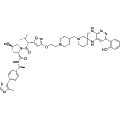
  • PROTAC SMARCA2 degrader-1
    Cat. No.
    A84660

    PROTAC SMARCA2 degrader-1

    PROTAC SMARCA2 degrader-1 is a targeted degrader designed to selectively degrade BRM2 (SMARCA2) with a DC50 value of less than 0.1 μM. This compound functions as an E3 ubiquitin ligase binding linker, facilitating the targeted degradation of specific proteins. Its application in cancer research makes it a valuable tool for elucidating the role of BRM2 in tumor biology and developing potential therapeutic strategies.

    Out of stock

    All 3 sizes
  • ZL-12A probe
    Cat. No.
    B11074

    ZL-12A probe

    ZL-12A probe is a selective degrader targeting the ERCC3 helicase within the TFIIH complex. By covalently modifying cysteine residue C342, ZL-12A facilitates the targeted degradation of ERCC3. This compound is valuable for researchers studying DNA repair mechanisms and the functional role of TFIIH in nucleotide excision repair.

    5 mg
    $710.00
    10 mg
    $1,090.00
    All 2 sizes
  • SH6
    Cat. No.
    B18432

    SH6

    SH6 is a targeted degrader of the transcription factor ZBTB7A. This compound demonstrates significant potential in the study of β-hemoglobinopathies, including sickle cell disease (SCD) and β-thalassemia. By modulating ZBTB7A levels, SH6 may provide insights into the underlying mechanisms of these disorders and facilitate the development of novel therapeutic approaches.

    1 mg
    $600.00
    5 mg
    $1,575.00
    All 6 sizes
  • MRC71
    Cat. No.
    B18737

    MRC71

    MRC71 is a TRIMTAC degrader designed to target the Halo Tag, utilizing a PEG linker and chloroalkane moiety for enhanced specificity. This compound selectively induces the degradation of oligomeric CAV1- and Cavin1-mEGFP-Halo constructs while sparing monomeric mEGFP-Halo. MRC71 displays a characteristic hook effect, demonstrating concentration-dependent degradation profiles, making it a valuable tool for studying protein regulation and turnover in cellular models.

    Out of stock

    All 3 sizes
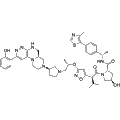
  • FcⅢ-GN3
    Cat. No.
    B18841

    FcⅢ-GN3

    FcⅢ-GN3 is a dual-functional peptide targeting IgG degradation through enhanced internalization mechanisms in HepG2 cells. Upon internalization, IgG localizes within late endosomes and lysosomes, promoting clearance via the liver's natural pathway. This agent is particularly valuable for investigating diseases associated with elevated IgG levels, facilitating the exploration of therapeutic interventions in related pathologies.

    Out of stock

    All 3 sizes
  • TKP-5
    Cat. No.
    B21905

    TKP-5

    TKP-5 is a potent PROTAC protein degrader that targets the epigenetic reader proteins BRD2, BRD3, and BRD4, exhibiting binding affinities (Ka) of 150 nM and 100 nM, respectively. This compound inhibits the production of thymic stromal lymphopoietin and downregulates IL-33 mRNA expression. Its utility extends to investigations pertaining to tape-stripping induced skin injury, making it valuable for diverse research applications in immunology and dermatology.

    Out of stock

    All 3 sizes
  • MS115 TFA
    Cat. No.
    B21917

    MS115 TFA

    MS115 TFA is a selective degrader targeting the PRMT5/MEP50 complex, demonstrating DC50 values of 17.4 nM and 11.3 nM for PRMT5 and MEP50, respectively, after 24 hours in MDA-MB-468 cells. This compound effectively inhibits the proliferation of breast cancer cells, making it a valuable tool for research into targeted protein degradation and potential therapeutic strategies in oncology.

    Out of stock

    All 3 sizes
  • WCF-598
    Cat. No.
    B21925

    WCF-598

    WCF-598 is an RXRγ-targeting PROTAC degrader with a binding affinity (Kd) of 234.2 nM. It facilitates the degradation of RXRγ through the ubiquitin-proteasome pathway, leading to the destabilization of the RXRγ-AR-V7 complex and subsequent downregulation of AR-V7 levels. This compound has been observed to induce tumor cell apoptosis, inhibit cell proliferation, activate the p53 signaling pathway, and suppress cell cycle progression, making it a valuable tool for research in prostate cancer.

    Out of stock

    All 3 sizes
  • PROTAC CDK2-pRb degrader-1
    Cat. No.
    B21941

    PROTAC CDK2-pRb degrader-1

    PROTAC CDK2-pRb degrader-1 is an orally active PROTAC that targets cyclin-dependent kinase 2 (CDK2) for degradation. This compound effectively inhibits the phosphorylation of retinoblastoma protein (Rb) at serine 807/811 by promoting the ubiquitination and proteasomal degradation of CDK2. Demonstrating significant biological activity with EC50 values of 12 nM and 125 nM in human cells, PROTAC CDK2-pRb degrader-1 is particularly useful in research focused on CCNE1-amplified cancers, including ovarian, gastric, and breast cancers, as it inhibits tumor growth and induces tumor stasis in xenograft models.

    Out of stock

    All 3 sizes
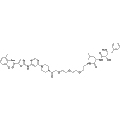
  • PDL1 degrader-3
    Cat. No.
    B21953

    PDL1 degrader-3

    PDL1 degrader-3 is a CSN5 degrader that targets human CSN5 with an affinity of 4.53 μM. This compound inhibits the enzymatic activity of CSN5, promoting PD-L1 ubiquitination and subsequent degradation through the ubiquitin-proteasome pathway, thus decreasing PD-L1 expression on tumor cell membranes. PDL1 degrader-3 effectively disrupts the PD-1/PD-L1 interaction, thereby enhancing the tumor immune microenvironment, increasing tumor-infiltrating T-cell immunity, and inhibiting the activation of immunosuppressive myeloid-derived suppressor cells (MDSCs) and regulatory T cells (Tregs). Its antitumor efficacy has been demonstrated in various mouse tumor models, making it a valuable tool for research in colorectal and lung cancer.

    Out of stock

    All 3 sizes
  • PSP-0119
    Cat. No.
    B22084

    PSP-0119

    PSP-0119 is a highly selective PROTAC degrader targeting IRAK4, demonstrating an IC50 of 2.83 nM. This compound effectively inhibits IRAK4 kinase activity, NF-κB signaling, and IL-1β-induced IRAK4 phosphorylation. Notably, PSP-0119 induces degradation of IRAK4 specifically in FLT3-mutant acute myeloid leukemia (AML) cell lines while sparing FLT3-wild-type AML cells and normal bone marrow. It serves as a valuable tool for research into the mechanisms underlying AML, particularly in targeting aberrant IRAK4 activity.

    5 mg
    $1,230.00
    10 mg
    $1,890.00
    All 5 sizes
  • PROTAC SMARCA2/4 degrader-40
    Cat. No.
    B22089

    PROTAC SMARCA2/4 degrader-40

    PROTAC SMARCA2/4 degrader-40 is a specific degrader targeting SMARCA2 and SMARCA4. It demonstrates potent degradation activity in HeLa cells, with a DC50 value of less than 0.1 nM. This compound is particularly useful for investigating cancers linked to SMARCA2/SMARCA4 abnormalities or mutations within the SWI/SNF complex, facilitating insights into their role in tumorigenesis.

    Out of stock

    All 3 sizes
Items 801-824 of 824

Added to your cart

View Cart Checkout

    Loading...