- Cat. No.
- A10986
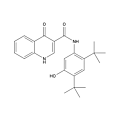
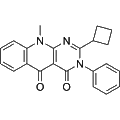
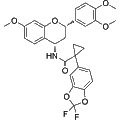
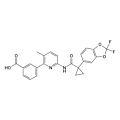
Lumacaftor (VX-809)
Synonyms: VX809
VX-809 is the second investigational oral candidate compound for the treatment of cystic fibrosis (CF).
Search by product name, CAS, target or catalog number. Press Down Arrow to reach product suggestions, Tab to move between links, and Escape to close suggestions.
Cystic fibrosis transmembrane conductance regulator (CFTR) modulators act on an epithelial chloride channel. The CFTR gene was cloned in 1989, and its most common disease-associated variant deletes phenylalanine 508 (F508del). Potentiators raise the open probability of the channel, as reported in 2009 for ivacaftor under the code VX-770. Correctors such as lumacaftor and VX-661 improve folding and trafficking of F508del-CFTR to the plasma membrane. Inhibitors serve to probe channel function, among them CFTRinh-172, a thiazolidinone described in 2002, and the quinoxalinedione PPQ-102. Ataluren promotes readthrough of premature stop codons and is used with nonsense variants of the gene. Other chloride-conducting proteins are listed under the sibling category Chloride Channels.
Synonyms: VX809
VX-809 is the second investigational oral candidate compound for the treatment of cystic fibrosis (CF).
Synonyms: Kalydeco; VX770
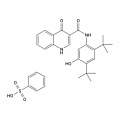
VX-770 (Ivacaftor) is known as a CFTR potentiator.
Synonyms: VX-770 benzenesulfonate
Ivacaftor benzenesulfonate is an orally bioavailable CFTR potentiator, used for cystic fibrosis treatment.
Synonyms: VX-770 hydrate
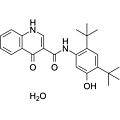
Ivacaftor hydrate is an orally bioavailable CFTR potentiator, used for cystic fibrosis treatment.
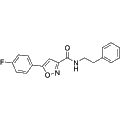
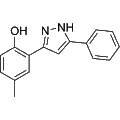
PG 01 is a cystic fibrosis transmembrane conductance regulator (CFTR) potentiator. PG 01 is effective on G970R although with a significant decrease in potency relative to E193K and δF508.
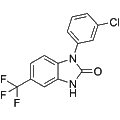
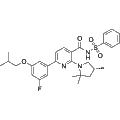
GLPG2451 is a cystic fibrosis transmembrane conductance regulator (CFTR) potentiator, which effectively potentiates low temperature rescued F508del CFTR with an EC50 of 11.1 nM.
Synonyms: ABBV-974
GLPG1837 is a potent and reversible CFTR potentiator, with EC50s of 3 nM and 339 nM for F508del and G551D CFTR, respectively.
Synonyms: VX-445; VX445??
Elexacaftor (VX-445, Compound 1) is a modulator of cystic fibrosis transmembrane conductance regulator (CFTR).
Synonyms: VX-440
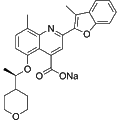
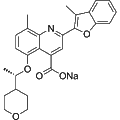
Olacaftor is a cystic fibrosis transmembrane conductance regulator (CFTR) modulator that enhances the function of the defective CFTR protein. It has been shown to improve chloride ion transport, leading to increased hydration of airway surfaces and improved pulmonary function. Olacaftor is primarily utilized in research focused on cystic fibrosis and the development of therapies aimed at restoring CFTR activity.
SRI-41315 is a CFTR (cystic fibrosis transmembrane conductance regulator) activator that induces a prolonged pause at stop codons and suppresses premature termination codons (PTCs) associated with cystic fibrosis. This compound restores CFTR expression and function in both immortalized and primary human bronchial epithelial cells by decreasing the levels of the termination factor eRF1. Additionally, SRI-41315 enhances aminoglycoside-mediated readthrough, resulting in synergistic increases in CFTR activity, making it a valuable tool for research into cystic fibrosis and related therapies.
Synonyms: VX-121
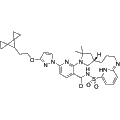
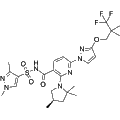
Vanzacaftor is a novel CFTR modulator that acts as a corrector of the cystic fibrosis transmembrane conductance regulator (CFTR) protein. It enhances the proper processing and trafficking of CFTR, thereby promoting increased chloride ion transport in combination with Tezacaftor and Deutivacaftor. This combination has shown efficacy in improving lung function and alleviating respiratory symptoms in cystic fibrosis patients, making it a valuable tool for research aimed at understanding and treating cystic fibrosis-related conditions.
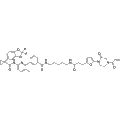
NJH-2-057 is a CFTR modulator that functions as an EN523 OTUB1 recruiter. It is designed to enhance the activity of the ΔF508-CFTR mutant protein, which is associated with cystic fibrosis. This compound has potential applications in studying CFTR modulation and offers insights into therapeutic strategies for cystic fibrosis treatment.
Synonyms: QBW251
Icenticaftor is an orally active potentiator of the cystic fibrosis transmembrane conductance regulator (CFTR) channel, demonstrating EC50 values of 79 nM and 497 nM for the F508del and G551D CFTR mutations, respectively. This compound is valuable for research focused on chronic obstructive pulmonary disease (COPD) and cystic fibrosis, facilitating the study of disease mechanisms and potential therapeutic strategies.
Synonyms: PTI-801 sodium
Posenacaftor sodium is a modulator of the cystic fibrosis transmembrane conductance regulator (CFTR) protein, facilitating its proper folding and trafficking. This compound is predominantly utilized in research on cystic fibrosis (CF), aiming to enhance CFTR function and investigate potential therapeutic approaches for this genetic disorder. Its role in correcting defects in CFTR provides valuable insights into the disease mechanism and efficacy of treatment strategies.
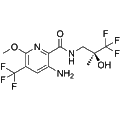
CFTR activator 1 is a potent and selective modulator of the cystic fibrosis transmembrane conductance regulator (CFTR) channel, exhibiting an EC50 of 23 nM. This compound effectively enhances CFTR function and is applicable in research related to dry eye disease treatment. Its ability to promote chloride ion transport makes it a valuable tool for investigating therapeutic strategies in CFTR-related pathologies.
CFTR Corrector 6 is a potent activator of the Cystic Fibrosis Transmembrane Conductance Regulator (CFTR). It is specifically designed for research into cystic fibrosis and other disorders associated with CFTR dysfunction. This compound enhances CFTR protein function, making it a valuable tool for investigating therapeutic strategies and understanding the underlying mechanisms of CFTR-related diseases.
Synonyms: (R)-VX-445
(R)-Elexacaftor is an enantiomeric modulator of the cystic fibrosis transmembrane conductance regulator (CFTR), specifically targeting the F508del mutation. With an EC50 value of 0.29 µM, it exhibits potent biological activity in restoring CFTR function. This compound is essential for research focused on cystic fibrosis therapies and drug discovery aimed at improving CFTR activity in affected individuals.
CFTR Corrector 8 is a potent modulator of the cystic fibrosis transmembrane conductance regulator (CFTR) protein. It enhances the function of misfolded CFTR mutants, thereby improving chloride transport across epithelial cell membranes. This compound is valuable for research applications focused on cystic fibrosis and related therapies, facilitating investigations into drug efficacy and cellular rescue mechanisms.
Synonyms: (R)-PTI-801 sodium
(R)-Posenacaftor sodium is the R-enantiomer of Posenacaftor, a modulator of the cystic fibrosis transmembrane conductance regulator (CFTR) protein. This compound is known to enhance the proper folding and trafficking of CFTR, making it a valuable tool in cystic fibrosis research. Its application aids in studies aimed at understanding CFTR-related diseases and developing potential therapeutic strategies.
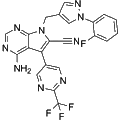
CFTR Corrector 17 is a modulator targeting the cystic fibrosis transmembrane conductance regulator (CFTR). This compound enhances the function and trafficking of misfolded CFTR proteins, making it valuable for the study of CFTR-mediated diseases such as cystic fibrosis. It serves as a critical tool in pharmacological research aimed at developing therapies for conditions associated with CFTR dysfunction.
UCCF-853 is a CFTR modulator that targets the Cystic Fibrosis Transmembrane Conductance Regulator (CFTR) protein, enhancing its chloride ion channel activity. This compound has demonstrated the ability to improve epithelial ion transport, making it a valuable tool for research into therapies for cystic fibrosis and related disorders. UCCF-853 is essential for studying the modulation of CFTR function and potential rescue of defective CFTR variants in cellular models.
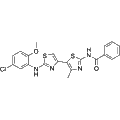
Corr4A is a chemical corrector that targets the cystic fibrosis transmembrane conductance regulator (CFTR). It enhances the surface expression of the ΔF508 CFTR mutant by facilitating its proper folding and trafficking to the plasma membrane. This compound demonstrates significant potential for improving the stability and function of the rescued protein, making it valuable for research focused on cystic fibrosis and related therapies.
Riselcaftor is a CFTR modulator that exhibits an EC50 value of 20.1 nM in human bronchial epithelial cells. This compound is primarily utilized in research focused on cystic fibrosis, facilitating investigations into the modulation of cystic fibrosis transmembrane conductance regulator activity. Its potent effects on CFTR function make it a valuable tool for studying therapeutic pathways in the treatment of cystic fibrosis.
Out of stock
All 3 sizes
Synonyms: CFpot-532
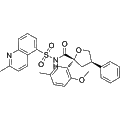
VRT-532 is a potent modulator of the cystic fibrosis transmembrane conductance regulator (CFTR) channel. It significantly enhances channel activity and intrinsic ATPase activity in G551D-CFTR variants, providing valuable insights into cystic fibrosis mechanisms. This compound is suitable for research applications focused on developing therapeutic strategies for cystic fibrosis and understanding CFTR-related dysfunction.
Synonyms: (R)-VX-440
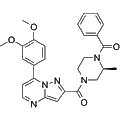
(R)-Olacaftor, a CFTR modulator, functions by enhancing the activity of the cystic fibrosis transmembrane conductance regulator. This compound demonstrates significant potential in the therapeutic investigation of cystic fibrosis, making it a valuable tool for research into CF-related pathophysiology and treatment strategies. Its role in restoring CFTR function supports studies targeting the underlying mechanisms of cystic fibrosis.