
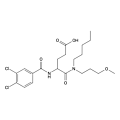
- Cat. No.
- A11769
Loxiglumide (CR1505)
Synonyms: anoicacid; CR1505
Loxiglumide (CR1505) is a cholecystokinin antagonist
In stock
View Details
Search by product name, CAS, target or catalog number. Press Down Arrow to reach product suggestions, Tab to move between links, and Escape to close suggestions.
Cholecystokinin receptors (CCKRs) are a class of G-protein coupled receptors that respond to the peptide hormone cholecystokinin (CCK). CCK is predominantly found in the gastrointestinal tract and the central nervous system. There are two primary subtypes of cholecystokinin receptors: CCK-A (CCK1) receptor, mainly located in the pancreas, gallbladder, stomach, and certain areas of the brain, and CCK-B (CCK2) receptor, found predominantly in the brain and the stomach lining.
The primary function of CCKRs is to mediate the physiological actions of CCK. In the digestive system, CCK is involved in stimulating the digestion of fats and protein. It achieves this by inducing the secretion of digestive enzymes from the pancreas and bile from the gallbladder. Moreover, CCK plays a crucial role in regulating appetite by promoting satiety, making it a point of interest in obesity research.
In the central nervous system, CCK is involved in various functions, including anxiety, pain, and neuroendocrine control. CCK and its receptors are also implicated in psychiatric disorders like anxiety and panic attacks.
CCKRs are also significant in the medical field as potential targets for therapeutic intervention. For instance, CCK-B antagonists are being explored for their potential in treating anxiety disorders and gastrointestinal issues.
Overall, cholecystokinin receptors are integral to various physiological processes, from digestion to brain function, highlighting their importance in both understanding bodily functions and developing medical treatments.
Synonyms: anoicacid; CR1505
Loxiglumide (CR1505) is a cholecystokinin antagonist
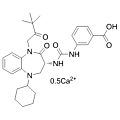
Synonyms: Z360
Z-360 is a selective, orally available, 1,5-benzodiazepine-derivative gastrin/cholecystokinin 2 (CCK-2) receptor antagonist with potential antineoplastic activity.
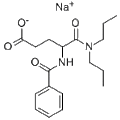
Proglumide sodium salt is a non-selective cholecystokinin (CCK) antagonist. It inhibits CCK-stimulated amylase secretion and prevents CCK-induced 2-deoxyglucose uptake in mouse pancreatic acini.
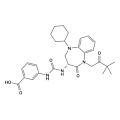
Synonyms: Z360
Nastorazepide is a selective, orally available, 1,5-benzodiazepine-derivative gastrin/cholecystokinin 2 (CCK-2) receptor antagonist with potential antineoplastic activity.
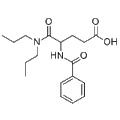
Synonyms: W 5219; CR 242
Proglumide is a drug that exerts an inhibitory effect on gastric secretion and reduces gastrointestinal motility. IProglumide is a known cholecystokinin (CCK) antagonist.
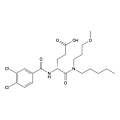
Synonyms: CR-2017
Dexloxiglumide is a selective cholecystokinin type A (CCKA) receptor antagonist. Dexloxiglumide, the active enantiomer of Loxiglumide, inhibits smooth muscle cell contractions induced by cholecystokinin-octapeptide (CCK-8).

Synonyms: Netazepide; YF 476; YM-220
Sograzepide (Netazepide; YF 476; YM-220) is an extremely potent , highly selective and orally active Gastrin/CCK-B antagonist with an IC50 value of 0.1 nM, has inhibitory effect on Gastrin/CCK-A activity with an IC50 of 502 nM.
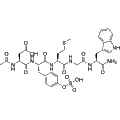
Synonyms: CCK-(26-30) (sulfated)
N-acetyl CCK-(26-30) amide (CCK-(26-30) (sulfated)) is a cholecystokinin (CCK) receptor antagonist.
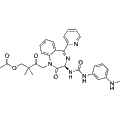
Synonyms: TR2-A
Ceclazepide is a cholecystokinin-2 receptor (CCK2R) antagonist that serves as an orally active inhibitor of Mycobacterium abscessus. This compound effectively reduces acid secretion in rat models and demonstrates significant suppression of both wild-type and multiple subspecies of M. abscessus. Importantly, Ceclazepide inhibits the growth of M. abscessus within macrophages while maintaining cell integrity, making it a valuable tool for research into mycobacterial infections and related therapeutic strategies.
Out of stock
All 3 sizes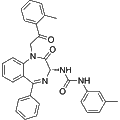
YM022 is a highly potent and selective antagonist of the gastrin/cholecystokinin (CCK)-B receptor (CCK-BR). With Ki values of 68 pM for CCK-B and 63 nM for CCK-A, YM022 effectively blocks gastrin-induced gastric acid secretion and inhibits histidine decarboxylase activation in vivo. This compound is valuable for research applications related to gastrointestinal disorders and receptor signaling pathways.
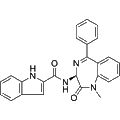
Synonyms: L-364,718; MK-329
Devazepide is a potent, competitive, and selective antagonist of the cholecystokinin (CCK) receptor. It exhibits high affinity with IC50 values of 81 pM, 45 pM, and 245 nM for rat pancreatic, bovine gallbladder, and guinea pig brain CCK receptors, respectively. This nonpeptide agent is primarily utilized in research focused on gastrointestinal disorders, providing insights into gastrointestinal physiology and the therapeutic potential of CCK receptor modulation.
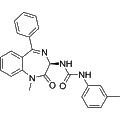
L-365260 is a selective antagonist of the cholecystokinin B receptor (CCK-B), exhibiting high affinity with Ki values of 1.9 nM for non-peptide gastrin and 2.0 nM for brain CCK receptors. It engages competitively and stereoselectively with these receptors, making it valuable in studies of neuropharmacology. Additionally, L-365260 has been shown to enhance morphine analgesia while preventing the development of morphine tolerance, highlighting its potential utility in pain management research.
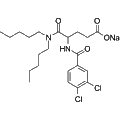
Synonyms: CR-1409 sodium
Lorglumide sodium is a potent cholecystokinin (CCK) receptor antagonist that inhibits the action of CCK, a peptide hormone involved in digestion and satiety. Its antagonistic properties make it useful in research applications related to gastrointestinal function, appetite regulation, and the modulation of pain pathways. Lorglumide sodium serves as a valuable tool for studying CCK receptor-mediated signaling and related biological processes.
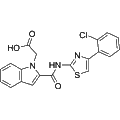
Synonyms: SR 27897
Lintitript is a highly potent and selective non-peptide antagonist of the cholecystokinin (CCK1) receptor, exhibiting an EC50 of 6 nM and a Ki value of 0.2 nM. It demonstrates over 33-fold selectivity for CCK1 compared to CCK2 receptors, which have an EC50 of 200 nM. This compound is significant in research applications focused on appetite regulation, as it increases plasma concentration of leptin and insulin, thereby influencing food intake.
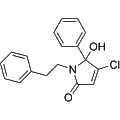
PNB-001 is a selective antagonist of the cholecystokinin receptor type 2 (CCK2), demonstrating significant anti-inflammatory and analgesic properties. This compound is particularly valuable in research focused on pain management and inflammation pathways. Its oral bioactivity makes it a suitable candidate for in vivo studies examining CCK2 modulation in various biological systems.
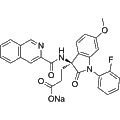
T-0632 is a potent cholecystokinin (CCK) A receptor antagonist that effectively inhibits the binding of [125I]CCK-8 to rat pancreatic CCK A receptors, demonstrating a K_i value of 0.24 nM. It shows significant selectivity in blocking CCK-8-induced pancreatic enzyme release, with an IC_50 value of 5.0 nM. T-0632 exhibits reversible antagonistic effects in rabbit gallbladder smooth muscle, distinguishing it from other CCK A antagonists. This compound is valuable for researching the physiological roles of CCK receptors and their impact on gastrointestinal function.
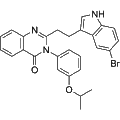
LY 225910 is a selective antagonist of the cholecystokinin receptor (CCK2 receptor), primarily impacting the excitatory response associated with morphine. By inhibiting this receptor, LY 225910 plays a significant role in morphine sensitization, making it a valuable tool in research focused on pain management and addiction. Its application can aid in understanding the mechanisms underlying opioid response and potential therapeutic strategies.
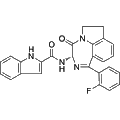
Synonyms: FR120480
Pranazepide is a selective antagonist of the cholecystokinin-A receptor (CCK-A), implicated in regulating gastrointestinal functions and satiety. This compound exhibits significant biological activity by modulating neural signaling pathways associated with appetite control and gastrointestinal motility. Pranazepide is commonly utilized in pharmacological research focused on obesity, anxiolytic effects, and the role of CCK in the central nervous system.
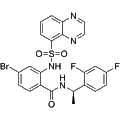
JNJ-26070109 is a selective antagonist of the cholecystokinin 2 (CCK2) receptor, exhibiting high-affinity and competitive binding. With favorable pharmacokinetic properties, it demonstrates pKis of 8.49, 7.99, and 7.70 for human, rat, and dog CCK2 receptors, respectively. This compound is particularly relevant for research into gastroesophageal reflux disease, as CCK2 receptors play a dual role in regulating gastric acid secretion and the growth of gastrointestinal mucosa.
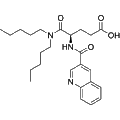
A-65186 is a cholecystokinin (CCK) A receptor antagonist that effectively inhibits CCK8-induced amylase secretion. This compound exhibits high binding affinity for pancreatic CCK-A receptors and demonstrates over 500-fold selectivity for CCK-A over CCK-B receptors. It serves as a valuable tool in research focused on gastrointestinal physiology and the role of CCK signaling in pancreatic function.
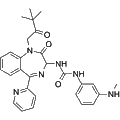
Synonyms: (Rac)-Netazepide; (Rac)-YF 476; (Rac)-YM-220
(Rac)-Sograzepide functions as an antagonist of the cholecystokinin B (CCK-B) receptor, effectively inhibiting its activity. This compound is primarily utilized in research focused on modulating gastric acid secretion and exploring potential therapeutic strategies for gastrointestinal disorders. Its role in receptor inhibition makes it valuable for studies related to the regulation of digestive processes and related physiological pathways.
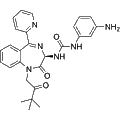
CCK-B Receptor Antagonist 2 is a potent antagonist of the Gastrin/CCK-B receptor, exhibiting an IC50 of 0.43 nM. This compound also demonstrates inhibitory activity against the gastrin/CCK-A receptor with an IC50 of 1.82 μM. CCK-B Receptor Antagonist 2 serves as a valuable tool for research on gastrointestinal signaling and modulation of gastrin-related pathways, making it significant for studies concerning gastric function and disorders.
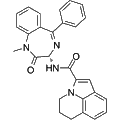
Tarazepide is a potent antagonist of the cholecystokinin A (CCK-A) receptor. This compound inhibits CCK-A mediated signaling, demonstrating significant biological activity in modulating gastrointestinal functions and appetite regulation. Tarazepide is utilized in research applications related to digestion, metabolic disorders, and neurobiology, making it a valuable tool for studying the role of CCK receptors in various physiological processes.

Synonyms: ICI-50123 meglumine
Pentagastrin meglumine is a selective antagonist of the Cholecystokinin B (CCKB) receptor, exhibiting an IC50 of 11 nM for CCKB and 1100 nM for CCKA. It plays a significant role in enhancing gastric mucosal defense mechanisms against acidity and provides protective effects on the gastric mucosa from experimental injury. This compound is valuable for research applications focused on gastrointestinal health and pathology.
Out of stock
All 3 sizes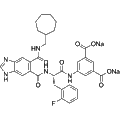
Synonyms: JB95008
Gastrazole is a potent and selective antagonist of the CCK2/gastrin receptor. This compound effectively reduces gastric acid levels and has been shown to inhibit gastrin-stimulated growth in pancreatic cancer cells. As such, Gastrazole is a valuable tool for research focused on gastrointestinal disorders and cancer biology.