- Cat. No.
- A20679
GLP-1R Antagonist 1
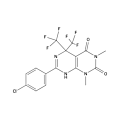
GLP-1R Antagonist 1 (compound 5d) is an orally active, CNS penetrant and non-competitive antagonist of glucagon-like peptide 1 receptor (GLP-1R), with an IC50 of 650 nM.
Search by product name, CAS, target or catalog number. Press Down Arrow to reach product suggestions, Tab to move between links, and Escape to close suggestions.
GLP-1 receptor agonists and modulators act on the receptor for glucagon-like peptide 1 (GLP-1), an incretin hormone. Intestinal L cells release GLP-1 after a meal, and the hormone enhances glucose-dependent insulin secretion from pancreatic beta cells. The receptor, a class B G protein-coupled receptor, was cloned from beta cells by expression cloning in 1992. Peptide agonists in this category include liraglutide and lixisenatide, while tirzepatide also acts at the glucose-dependent insulinotropic polypeptide (GIP) receptor. BETP is a small-molecule ligand that binds the GLP-1 receptor outside the peptide site. The set also includes dipeptidyl peptidase 4 (DPP-4) inhibitors such as linagliptin, which slow the breakdown of endogenous GLP-1.
GLP-1R Antagonist 1 (compound 5d) is an orally active, CNS penetrant and non-competitive antagonist of glucagon-like peptide 1 receptor (GLP-1R), with an IC50 of 650 nM.
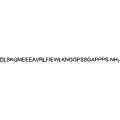
Synonyms: Avexitide
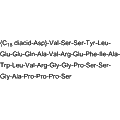
Avexitide (Exendin (9-39)) is a specific and competitive GLP-1 receptor antagonist.
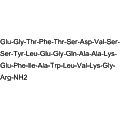
GLP-1(9-36)amide is a potent antagonist of the glucagon-like peptide-1 (GLP-1) receptor, generated from the enzymatic action of dipeptidyl peptidase-4 (DPP-4) on GLP-1(7-36)amide. This peptide plays a crucial role in glucose metabolism and insulin signaling and is utilized in research aimed at understanding metabolic disorders and the role of GLP-1 in obesity and diabetic conditions. The study of GLP-1(9-36)amide can provide insights into receptor regulation and potential therapeutic strategies for GLP-1 related pathologies.
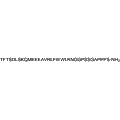
Exendin (5-39) is a selective glucagon-like peptide 1 (GLP-1) receptor antagonist. This compound has been shown to effectively ameliorate memory impairment in β-amyloid protein-treated rodents, making it a valuable tool for studying cognitive decline and neurodegenerative diseases. Its ability to modulate GLP-1 signaling pathways positions Exendin (5-39) as a useful reagent in research focused on metabolic disorders and brain function.
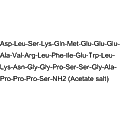
Synonyms: Avexitide acetate
Exendin(9-39) amide acetate is a potent glucagon-like peptide-1 (GLP-1) antagonist that selectively competes with endogenous GLP-1 for the GLP-1 receptor (GLP-1R). By inhibiting GLP-1 signaling, it counteracts the physiological effects associated with elevated GLP-1 levels. This reagent is particularly valuable for research into postbariatric hypoglycemia (PBH) and other metabolic disorders where GLP-1 modulation is critical.
Synonyms: MBX 1416
Imapextide is a glucagon-like peptide-1 (GLP-1) receptor antagonist that plays a critical role in the study of hypoglycemia. By inhibiting GLP-1 activity, Imapextide provides insights into glucose homeostasis and insulin secretion regulation. It is a valuable tool for researchers investigating metabolic disorders and the physiological effects of GLP-1 signaling.
GIPR Antagonist 2 is a potent antagonist of the GIP receptor, which plays a crucial role in glucose metabolism and energy homeostasis. This compound demonstrates significant potential for research applications related to obesity and type 2 diabetes. Its ability to inhibit GIPR signaling provides a valuable tool for investigating the underlying mechanisms of metabolic disorders and evaluating therapeutic strategies.
Out of stock
All 3 sizes