- Cat. No.
- A10408
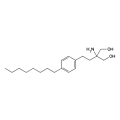
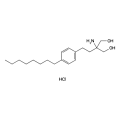
FTY720 (Fingolimod)
Synonyms: Gilenia
FTY720 is a derivative of ISP-1 (myriocin), a fungal metabolite of the Chinese herb Iscaria sinclarii as well as a structural analog of sphingosine.
Search by product name, CAS, target or catalog number. Press Down Arrow to reach product suggestions, Tab to move between links, and Escape to close suggestions.
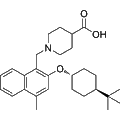
Sphingosine-1-phosphate (S1P) receptor modulators act on S1PR1 to S1PR5, five G protein-coupled lipid receptors. In 1998 S1P was identified as a ligand of the orphan receptor endothelial differentiation gene 1 (EDG-1), now called S1PR1. FTY720 (fingolimod) was shown in 2002 to be phosphorylated in vivo and to act on four of the five S1P receptors. Two years later, lymphocyte egress from thymus and lymph nodes was found to depend on S1PR1. Ozanimod, BAF312 and ponesimod are further S1PR1-directed modulators, CYM 5442 HCl is a selective S1PR1 agonist and TY-52156 blocks S1PR3. Opaganib inhibits sphingosine kinase 2 (SphK2) and so limits S1P synthesis upstream of the receptors.
Synonyms: Gilenia
FTY720 is a derivative of ISP-1 (myriocin), a fungal metabolite of the Chinese herb Iscaria sinclarii as well as a structural analog of sphingosine.
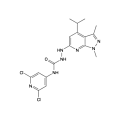
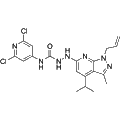
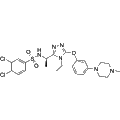
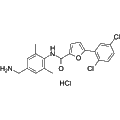
TY-52156 is a potent and selective S1P3 receptor antagonist with a Ki value of 110 nM.
XL541 is a selective antagonist of the sphingosine-1-phosphate receptor 1 (S1P1), effectively inhibiting GDP-GTP exchange. This compound has been shown to induce significant surface hemorrhaging in tumors, highlighting its potential as a therapeutic agent. Additionally, XL541 demonstrates enhanced antitumor activity when used in combination with Paclitaxel, making it a valuable tool for research in breast and lung cancer therapies.
Out of stock
All 3 sizes
Synonyms: FTY720 (free base)
Fingolimod is a sphingosine 1-phosphate (S1P) antagonist with IC50 of 0.033 nM in K562 and NK cells. Fingolimod also is a pak1 activator, a immunosuppressant.
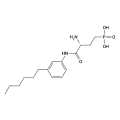
VPC 23019, an aryl amide-containing Sphingosine 1-phosphate (S1P) analog, is a competitive antagonist at the S1P1 and S1P3 receptors (pKi= 7.86 and 5.93, respectively) and an agonist at the S1P4 and S1P5 receptors (pEC50= 6.58 and 7.07, respectively).
W146 is a selective antagonist of sphingosine-1-phosphate receptor 1 (S1PR1) with an EC50 value of 398 nM.
NIBR-0213 is a potent and selective antagonist of S1P(1) with efficacy in experimental autoimmune encephalomyelitis.
JTE-013 is a potent and specific S1P2 (Sphingosine-1-Phosphate 2; EDG-5) antagonist. JTE-013 inhibits the specific binding of radiolabeled S1P to human and rat S1P2 with IC50s of 17 nM and 22 nM, respectively.
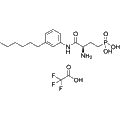
W146 TFA is a selective antagonist of sphingosine-1-phosphate receptor 1 (S1PR1), exhibiting an EC50 value of 398 nM. This compound is instrumental in studying the role of S1PR1 in various biological processes, including immune modulation and cardiovascular function. W146 TFA is valuable for research applications involving cytokine signaling and cellular proliferation pathways.
AB1 is a highly selective antagonist of the sphingosine-1-phosphate receptor 2 (S1P2) with an IC50 of 3.5 nM. It effectively inhibits S1P signaling pathways, leading to the suppression of tumor cell migration, angiogenesis, and the expression of the profibrotic mediator CTGF, while promoting apoptosis in cancer cells. This compound demonstrates significant potential for research focused on solid tumors and their microenvironment.
Out of stock
All 3 sizes
Synonyms: APD334
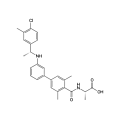
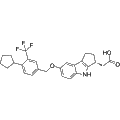
Etrasimod is a potent and selective antagonist of the sphingosine-1-phosphate-1 (S1P1) receptor, demonstrating an IC50 value of 1.88 nM in CHO cells. This orally bioavailable compound is primarily utilized in research focused on autoimmune diseases and cardiovascular conditions, where modulation of S1P signaling plays a crucial role in cell trafficking and inflammation. Its specificity makes it a valuable tool for exploring the therapeutic potential of S1P1 receptor inhibition.
Synonyms: BML-241
CAY10444 is an antagonist of the sphingosine-1-phosphate receptor 3 (S1P3). This compound effectively inhibits S1P-induced calcium ion (Ca2+) increases by 37% in HeLa cells that express S1P3 receptors. It serves as a valuable tool for research into S1P3-related signaling pathways and their implications in various physiological and pathological processes.
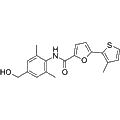
CYM50358 is a potent and selective antagonist of the sphingosine-1-phosphate receptor 4 (S1PR4), exhibiting an IC50 of 25 nM. This compound serves as a valuable tool for investigating the role of S1PR4 in various biological processes, including its implications in influenza infection research. Its selective inhibition of S1PR4 allows for detailed mechanistic studies and potential therapeutic applications in related inflammatory diseases.
GLPG2938 is a potent and selective antagonist of the sphingosine-1-phosphate receptor 2 (S1P2). This compound demonstrates significant efficacy in inhibiting S1P2-mediated signaling pathways, making it a valuable tool for investigating mechanisms underlying idiopathic pulmonary fibrosis. Researchers can utilize GLPG2938 to explore its therapeutic potential and role in fibrotic disease models.
S1PR5-IN-1 is a selective antagonist of the sphingosine-1-phosphate receptor 5 (S1PR5), exhibiting an IC50 of 85.4 nM in human assays and a binding affinity (Ka) of 2.173 nM. This orally bioavailable inhibitor effectively impedes the migration of natural killer cells towards sphingosine-1-phosphate. S1PR5-IN-1 is a valuable tool for research applications related to multiple sclerosis and other conditions involving S1PR5 signaling pathways.
KSI-6666 is a competitive antagonist of the sphingosine 1-phosphate receptor 1 (S1PR1) with an IC50 of 6.4 nM. This compound demonstrates significant anti-inflammatory effects in models of autoimmune encephalomyelitis and T cell transfer colitis. KSI-6666 is valuable for research aimed at understanding the role of S1PR1 in inflammation and autoimmune diseases.
Synonyms: S1P1-IN-Ex26
Ex26 is a potent and selective antagonist of the sphingosine 1-phosphate receptor 1 (S1P1), with an IC50 of 0.93 nM. This compound exhibits over 3,000-fold selectivity for S1P1 compared to other sphingosine 1-phosphate receptors, making it a valuable tool for dissecting S1P1-related pathways. Ex26 is applicable in research focused on autoimmune encephalomyelitis and related neurological disorders, providing insights into receptor function and therapeutic potential.
TASP0277308 is a highly selective antagonist of the S1P1 receptor. It displays significant immunomodulatory effects, including inducing lymphopenia, disrupting T cell egress from the thymus, and causing marginal zone B cell displacement, along with upregulating CD69 expression on lymphocytes. This compound is useful for studying collagen-induced arthritis in murine models, providing insights into the modulation of immune responses and potential therapeutic approaches.
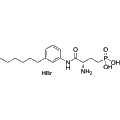
W140 hydrobromide is a selective antagonist of the sphingosine-1-phosphate receptor 1 (S1P1), exhibiting a Ki value of 2.84 μM. It plays a significant role in enhancing capillary leakage and facilitating the restoration of lymphocyte egress. This compound is valuable for research applications focused on immune response modulation and vascular biology.
CYM50374 is a potent antagonist of sphingosine-1-phosphate receptor 4 (S1P4), exhibiting an IC50 value of 34 nM. This compound effectively modulates S1P4 signaling, making it valuable for research applications related to immune response and inflammation. Its selective inhibition of S1P4 provides a useful tool for studying the role of this receptor in various biological processes.
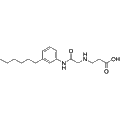
W123 is an S1P1 receptor antagonist derived from FTY720. This compound exhibits significant biological activity by inhibiting GTPγS activation, MAPK recruitment, and cell migration while also promoting ligand-induced receptor internalization. W123 is valuable for research applications focused on sphingosine 1-phosphate signaling pathways and their role in various physiological and pathological processes.
Out of stock
All 3 sizes
CYM50358 hydrochloride is a potent and selective antagonist of the sphingosine-1-phosphate 4 (S1P4) receptor. This compound exhibits significant biological activity by inhibiting S1P4-mediated signaling pathways, making it a valuable tool in research focused on the immune response and inflammation. Its application extends to the study of influenza infection, facilitating investigations into viral pathogenesis and potential therapeutic interventions.
S1P5 receptor antagonist 1 is a selective antagonist targeting the S1P5 receptor, characterized by an EC50 of 0.1 nM and a Ki of 4.4 nM. This compound is capable of inhibiting the migration of natural killer cells towards sphingosine 1-phosphate in vitro, while leaving T cell migration unaffected. S1P5 receptor antagonist 1 is employed in research focused on central nervous system diseases, providing insights into the modulation of immune responses within the brain.
Out of stock
All 3 sizes