

- Cat. No.
- A11428
Glucagon receptor antagonists-1
Glucagon receptor antagonists-1 is a highly potent glucagon receptor antagonist.
In stock
View Details
Search by product name, CAS, target or catalog number. Press Down Arrow to reach product suggestions, Tab to move between links, and Escape to close suggestions.
Glucagon receptor antagonists block the receptor through which glucagon raises hepatic glucose output. The glucagon receptor (GCGR) is a class B G protein-coupled receptor (GPCR) expressed mainly in liver and kidney. Expression cloning of the rat receptor in 1993 described its signaling through cyclic adenosine monophosphate (cAMP) and intracellular calcium. Small-molecule antagonists in this list include MK 0893, adomeglivant and PF-06291874, which serve as tools in models of glucose homeostasis and type 2 diabetes. Glucagon (Human, Porcine) is included as the native peptide agonist for receptor activation assays. The set also contains related incretin tools for glucagon-like peptide 1 (GLP-1) research, such as Glucagon-Like Peptide 1 (7-36) Amide and GLP-1R Antagonist 1.
Glucagon receptor antagonists-1 is a highly potent glucagon receptor antagonist.
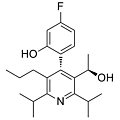
Glucagon receptor antagonists-2 is a highly potent glucagon receptor antagonist.
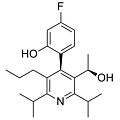
Glucagon receptor antagonists-3 is a highly potent glucagon receptor antagonist.
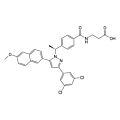
MK 0893 is glucagon receptor antagonist as antidiabetic agents.
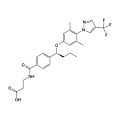
Synonyms: Glucagon receptor antagonists-4
PF-06291874 (Glucagon receptor antagonists-4) is a highly potent and orally active glucagon receptor antagonist. It displays low in vivo clearance in both rats and dogs.
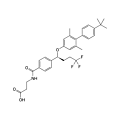
Synonyms: LY2409021
Adomeglivant is a potent and selective glucagon receptor antagonist that is used in clinical trial for type 2 diabetes mellitus.
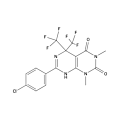
GLP-1R Antagonist 1 (compound 5d) is an orally active, CNS penetrant and non-competitive antagonist of glucagon-like peptide 1 receptor (GLP-1R), with an IC50 of 650 nM.
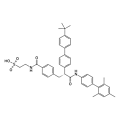
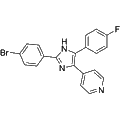
Glucagon receptor antagonist-8 is a selective antagonist of the human glucagon receptor (GCGR) and p38 mitogen-activated protein (MAP) kinase. It exhibits IC50 values of 0.27 μM for GCGR and 0.16 μM for p38 MAP kinase, demonstrating significant inhibitory activity. This compound is applicable in research focused on metabolic disorders, glucose homeostasis, and signaling pathways associated with glucagon activity.
Out of stock
All 3 sizes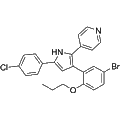
L-168049 is a potent and selective non-competitive antagonist of the glucagon receptor, exhibiting IC50 values of 3.7 nM for human, 63 nM for murine, and 60 nM for canine receptors. This compound serves as a valuable tool for investigating the role of glucagon signaling in metabolic disorders and diabetes research. Its oral bioavailability enhances its utility in various in vivo studies aimed at elucidating glucagon-related pathways.
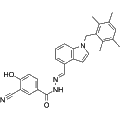
GCGR Antagonist 2 is a furan-2-carbohydrazide that acts as an orally active glucagon receptor antagonist. It shows high binding affinity for the human glucagon receptor (Kd = 2.3 nM) and effectively inhibits the rat glucagon receptor with an IC50 of 0.43 nM. This compound is useful in studies investigating the role of glucagon in metabolic processes, particularly in the inhibition of glucagon-stimulated glycogenolysis.
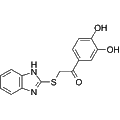
NNC 92-1687 is a non-peptide competitive antagonist of the human glucagon receptor, exhibiting an IC50 value of 20 μM and a Ki of 9.1 μM. This compound is valuable in the investigation of type 2 diabetes, facilitating research into glucagon signaling pathways and potential therapeutic interventions. Its role in receptor modulation can aid in understanding glucose homeostasis and diabetes-related metabolic processes.
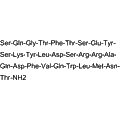
Des-His1,Glu9-Glucagon amide is a highly effective peptide antagonist of the glucagon receptor, exhibiting a pA2 of 7.2. This compound plays a significant role in investigating the mechanisms underlying diabetes pathogenesis, making it a valuable tool for research in metabolic disorders. Its ability to modulate glucagon activity allows for deeper insights into glucose regulation and related diseases.
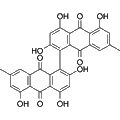
Skyrin is a glucagon receptor antagonist derived from an anthraquinone compound found in almond fruit. This compound selectively inhibits glucagon receptor activity, demonstrating significant potential in regulating glucose metabolism. Research indicates that Skyrin effectively inhibits the growth of tumor cells, making it a valuable tool for studies focused on cancer biology and metabolic disorders.
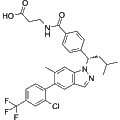
Glucagon receptor antagonist-5 is a selective antagonist for the glucagon receptor (GCGR), exhibiting a Ki value of 32 nM, indicative of its potent inhibitory activity. This indazole-based compound demonstrates significant oral bioavailability, making it a promising candidate for therapeutic intervention in type 2 diabetes mellitus (T2DM). Its mechanism of action highlights its potential in regulating glucose metabolism and insulin sensitivity, making it valuable for research into diabetes-related pathways.
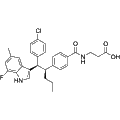
MK-3577 is an orally effective glucagon receptor (GCGR) antagonist that inhibits glucagon signaling, leading to reduced hepatic glucose production and decreased blood glucose levels. This compound is particularly valuable in diabetes research, facilitating studies on glucose metabolism and the management of hyperglycemia. Pharmacokinetic studies in domestic cats demonstrate peak plasma concentrations occurring 3 to 4 hours post-administration, with a half-life of approximately 15 hours, highlighting its potential for sustained therapeutic effects.
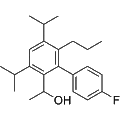
BAY-27-9955 is an orally active non-peptide antagonist of the glucagon receptor. This compound competitively inhibits glucagon binding to the human glucagon receptor with an IC50 of 110 nM. BAY-27-9955 is primarily utilized in research focusing on type 2 diabetes, facilitating studies on metabolic regulation and glucose homeostasis.

GCGR Antagonist 3 targets the glucagon receptor (GCGR) and functions as a potent antagonist. This compound plays a critical role in diabetes research by inhibiting glucagon signaling, which may aid in the investigation of glucose homeostasis and metabolic disorders. Its application in preclinical studies offers valuable insights into potential therapeutic strategies for diabetes management.
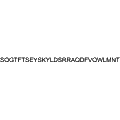
[Des-His1,Glu9] Glucagon is a potent antagonist of the glucagon receptor, effectively inhibiting glucagon's biological activity. This peptide enhances glucose-stimulated insulin secretion from pancreatic islet cells, making it a valuable tool for studying insulin regulation. [Des-His1,Glu9] Glucagon is particularly relevant in diabetes research, aiding in the exploration of therapeutic strategies targeting glucose homeostasis and pancreatic function.
Out of stock
All 3 sizes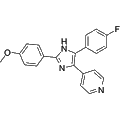
Glucagon receptor antagonist-9 is a potent antagonist of the glucagon receptor, exhibiting a pIC50 of 7.000. This compound effectively inhibits glucagon signaling, which plays a critical role in glucose metabolism and homeostasis. Its application in research includes the study of metabolic disorders, diabetes, and potential therapeutic strategies targeting glucagon pathways.
Out of stock
All 3 sizes
Glucagon receptor antagonist inactive control is a compound designed to serve as a structural analog to the glucagon receptor (GCGR) antagonist, but it lacks the active antagonistic properties against GCGR. This inactive control compound is ideal for use in experiments aimed at elucidating the mechanisms associated with GCGR-mediated signaling pathways, providing a valuable comparison to active antagonists in research settings. Its application helps ensure accurate interpretation of results in studies related to glucagon receptor function.

Glucagon receptor antagonist-11 is a selective antagonist of the glucagon receptor with a pIC50 of 6.677. This compound plays a critical role in studies related to glucose homeostasis and insulin sensitivity, making it a valuable tool for exploring metabolic disorders. Its inhibitory effect on glucagon signaling can be leveraged in research focused on diabetes, obesity, and related metabolic diseases.
Out of stock
All 3 sizes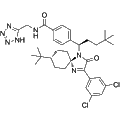
SCH 900822 is a potent and selective antagonist of the human glucagon receptor (hGCGR). By inhibiting the binding of glucagon to its receptor, it effectively reduces hepatic glycogenolysis and gluconeogenesis, leading to decreased blood glucose production. This compound is primarily utilized in research related to type 2 diabetes, providing insights into potential therapeutic interventions for managing hyperglycemia.
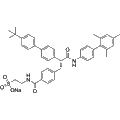
LGD-6972 sodium is a selective antagonist of the glucagon receptor (GCGR), exhibiting oral bioavailability. This compound demonstrates significant potential in the research of type 2 diabetes by modulating glucose metabolism and insulin sensitivity. Its application in studying glucagon-mediated pathways underscores its importance in metabolic disease research.
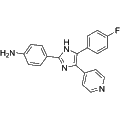
Glucagon receptor antagonist-10 is a selective antagonist of the glucagon receptor, exhibiting a pIC50 of 7.154. This compound is valuable in investigating the regulation of glucose homeostasis and its implications in metabolic disorders. It serves as a useful tool for researchers studying the pathways involved in glucagon signaling and potential therapeutic approaches to diabetes management.
Out of stock
All 3 sizes