
- Cat. No.
- A11445
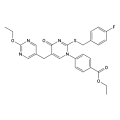
GW-1100
GW-1100 is a selective GPR40 antagonist with a pIC50 of 6.9.
In stock
View Details
Search by product name, CAS, target or catalog number. Press Down Arrow to reach product suggestions, Tab to move between links, and Escape to close suggestions.
Free fatty acid receptor (FFAR) ligands act on G protein-coupled receptors (GPCRs) that sense fatty acids. FFAR1 and FFAR4, also called G protein-coupled receptors 40 and 120 (GPR40, GPR120), respond to medium- and long-chain fatty acids. FFAR2 and FFAR3 are GPCRs that instead bind short-chain fatty acids produced by gut bacteria. In 2003 GPR40 was shown to mediate fatty acid-stimulated insulin secretion from pancreatic beta cells. Two years later, GPR120 was linked to fatty acid-induced secretion of glucagon-like peptide 1 (GLP-1) in the gut. Fasiglifam, TUG-770 and LY2922470 are FFAR1 agonists, and GW-1100 is an FFAR1 antagonist. TUG-891 is an FFAR4 agonist, whereas GW9508 acts on both FFAR1 and FFAR4.
GW-1100 is a selective GPR40 antagonist with a pIC50 of 6.9.
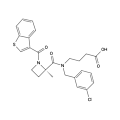
GLPG0974 is a free fatty acid receptor-2 (FFA2/GPR43) antagonist with an IC50 of 9 nM.
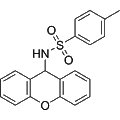
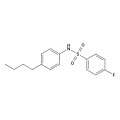
AH-7614 is a selective antagonist of FFA4 (GPR120), exhibiting potent inhibition with pIC50 values of 7.1, 8.1, and 8.1 for human, mouse, and rat FFA4, respectively. This compound demonstrates high specificity for FFA4 over FFA1, with a pIC50 value lower than 4.6. AH-7614 effectively blocks the biological effects induced by both linoleic acid, a polyunsaturated ω-6 fatty acid, and synthetic FFA4 agonists, making it a valuable tool for research on metabolic processes and signaling pathways associated with fat metabolism.
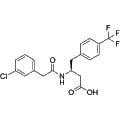
CATPB is a selective antagonist of the free fatty acid receptor 2 (FFA2R/GPR43). It exhibits potent inhibitory activity, making it a valuable tool for studying the role of FFA2R in various biological processes. Research applications include investigating metabolic disorders and inflammatory responses, as well as exploring the receptor's potential as a therapeutic target.
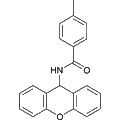
TUG-1387 is a structural analog of the FFA4 antagonist AH-7614 and serves as a negative control compound in research involving FFA4 functional assessments. It does not exhibit inhibitory activity against the FFA4 receptor, making it an ideal reference compound for evaluating the efficacy of FFA4 antagonists. TUG-1387 is valuable in studies aimed at understanding the role of FFA4 in various biological processes.
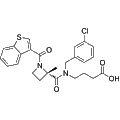
(S)-GLPG0974 is the isomer of GLPG0974 and serves as an experimental control in research settings. It acts as a potent antagonist of the free fatty acid receptor-2 (FFA2/GPR43) with an IC50 of 9 nM, making it valuable for studies investigating FFA2-mediated biological processes. This compound can be employed in various applications, including metabolic research and inflammation-related studies.