
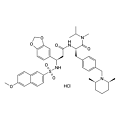
-
-
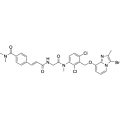
- Cat. No.
- A12964
FR167344 free base
Synonyms: FR 167344
FR167344 free base is an orally active, nonpeptide bradykinin receptor B2 antagonist.
In stock View Details -
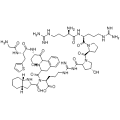
- Cat. No.
- A18074
Icatibant
Synonyms: Firazyr
Icatibant (HOE-140) is a selective and specific antagonist of bradykinin B2 receptor with IC50 and Ki of 1.07 nM and 0.798 nM respectively.
In stock View Details -
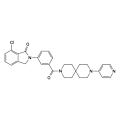
- Cat. No.
- A21207
ELN-441958
ELN-441958 is a potent, neutral antagonist of B1 receptor, inhibits the binding of the B1 agonist ligand [3H]DAKD to IMR-90 cells with Ki of 0.26 nM.
In stock View Details -
- Cat. No.
- A23883
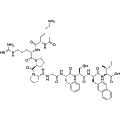
R715
R715 is a selective bradykinin B1 receptor antagonist. R715 significantly attenuates the hyperalgesic effect developed in Streptozotocin-diabetic mice.
In stock View Details -
- Cat. No.
- A59123
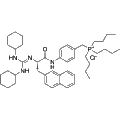
WIN 64338
WIN 64338 is a non-peptide antagonist of the bradykinin B2 receptor. It effectively inhibits bradykinin-evoked trigeminal nerve stimulation, making it valuable for research related to pain signaling pathways and inflammatory responses. This compound is relevant for studies investigating the role of bradykinin in various physiological and pathological states.
Out of stock
All 3 sizes -
- Cat. No.
- A59127
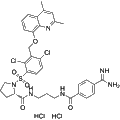
Anatibant hydrochloride
Synonyms: LF 16-0687 hydrochloride; XY-2405 hydrochloride
Anatibant hydrochloride is a selective non-peptide antagonist of the bradykinin B2 receptor. It exhibits high affinity binding to recombinant B2 receptors in human, rat, and guinea pig models, with Ki values of 0.67 nM, 1.74 nM, and 1.37 nM, respectively. Notably, Anatibant hydrochloride is capable of crossing the blood-brain barrier, making it a valuable tool for investigating pathophysiological conditions related to brain injury and neuroinflammation.
In stock View Details -
- Cat. No.
- A59131
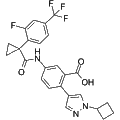
Fulimetibant
Fulimetibant is a selective antagonist of bradykinin receptors, primarily B1 and B2 subtypes. This compound inhibits the action of bradykinin, a peptide involved in pain and inflammatory responses. Fulimetibant is utilized in research to investigate the role of bradykinin in various pathological conditions, including pain mechanisms and inflammation-related disorders.
In stock View Details -
- Cat. No.
- A59132
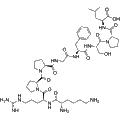
Lys-(Des-Arg9,Leu8)-Bradykinin
Lys-(Des-Arg9,Leu8)-Bradykinin is a selective antagonist of the bradykinin B1 receptor. This compound inhibits bradykinin-mediated signaling pathways, making it valuable for studies focused on pain, inflammation, and vascular permeability. Its role in various experimental models facilitates the investigation of bradykinin's effects on physiological and pathological conditions.
In stock View Details -
- Cat. No.
- A59133
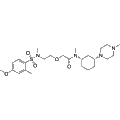
BI-113823
BI-113823 is a selective antagonist of the bradykinin B1 receptor, exhibiting oral bioactivity. It effectively alleviates mechanical hyperalgesia induced by complete Freund's adjuvant in animal models. This compound is relevant for research focused on chronic inflammatory pain mechanisms and potential therapeutic strategies.
In stock View Details -
- Cat. No.
- A59137
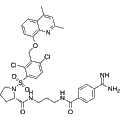
Anatibant
Synonyms: LF 16-0687; XY-2405
Anatibant is a selective non-peptide antagonist of the bradykinin B2 receptor. It demonstrates high affinity for recombinant human, rat, and guinea-pig B2 receptors, with Ki values of 0.67 nM, 1.74 nM, and 1.37 nM, respectively. This compound effectively crosses the blood-brain barrier, making it a valuable tool for investigating the role of bradykinin signaling in brain damage diseases and related neuroinflammatory conditions.
In stock View Details -
- Cat. No.
- A59139
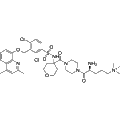
Fasitibant free base
Fasitibant free base is a selective antagonist of the bradykinin B2 receptor, exhibiting high affinity and prolonged activity. This compound is primarily utilized in research focused on inflammatory pathways, particularly in the study of osteoarthritis and rheumatoid arthritis. Its ability to modulate proinflammatory responses makes it a valuable tool for investigating therapeutic approaches targeting these conditions.
In stock View Details -
- Cat. No.
- A59142
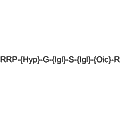
B 9430
B 9430 is a potent antagonist of both bradykinin B1 and B2 receptors. By inhibiting these receptors, B 9430 plays a crucial role in modulating inflammatory responses and pain signaling pathways. This compound is applicable in research focused on cardiovascular diseases, pain management, and various inflammatory conditions.
Out of stock
All 3 sizes -
- Cat. No.
- A59144
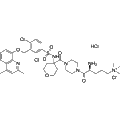
Fasitibant chloride hydrochloride
Synonyms: MEN16132
Fasitibant chloride hydrochloride is a selective and high-affinity antagonist of the bradykinin B2 receptor, exhibiting potent and long-lasting activity. This compound is specifically investigated for its proinflammatory effects and is valuable in research focused on osteoarthritis and rheumatoid arthritis. Its mechanism offers insights into bradykinin-mediated pathways and potential therapeutic interventions in inflammatory conditions.
Out of stock
All 3 sizes -
- Cat. No.
- A59147
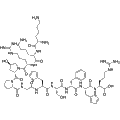
B4148
B4148 is a selective competitive antagonist of the bradykinin receptor, effectively blocking the action of bradykinin. This compound has been shown to significantly inhibit bradykinin-induced hypotension in rat models, particularly in the context of endotoxin shock induced by Escherichia coli lipopolysaccharide. Researchers can utilize B4148 to study vascular responses and blood pressure regulation under inflammatory conditions.
In stock View Details -
- Cat. No.
- A59149
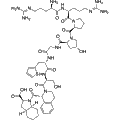
[Des-Arg10]-HOE I40
[Des-Arg10]-HOE I40 is a potent antagonist of the bradykinin B1 receptor, known for its ability to inhibit bradykinin-induced signaling. This compound plays a significant role in research investigating inflammatory processes and pain pathways, particularly in conditions associated with bradykinin receptor activation. Its effectiveness in blocking B1 receptor activity makes it a valuable tool for studying the therapeutic potential in various pathological states.
Out of stock
All 3 sizes -
- Cat. No.
- A59153
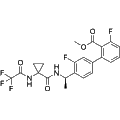
Bradykinin B1 receptor antagonist 1
Bradykinin B1 receptor antagonist 1 is a selective antagonist of the bradykinin B1 receptor, notable for its ability to cross the blood-brain barrier. This compound exhibits efficacy in modulating pain pathways, making it a valuable tool for research into pain mechanisms and potential therapeutic interventions. Its unique action on the bradykinin B1 receptor complements studies focusing on inflammatory responses and pain management.
In stock View Details -
- Cat. No.
- A59157
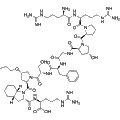
NPC 17731
NPC 17731 is a potent bradykinin (BK) receptor antagonist that effectively inhibits both contractile and relaxant responses induced by bradykinin. With an IC50 of 23 nM for contractile effects and 29 nM for relaxant effects, this compound serves as a valuable tool for studying bradykinin signaling pathways. Research applications include investigating cardiovascular responses and potential therapeutic strategies for conditions associated with bradykinin dysregulation.
In stock View Details -
- Cat. No.
- A59161
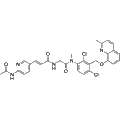
FR173657
Synonyms: FK-3657
FR173657 is a potent orally active antagonist of the bradykinin B2 receptor, exhibiting IC50 values of 0.56, 1.5, and 2.9 nM for pig, rat, and human receptors, respectively. This compound effectively inhibits bradykinin-induced bronchoconstriction in guinea pigs with an ED50 of 0.075 mg/kg and demonstrates the ability to reduce carrageenan-induced paw edema in mice at an ED50 of 6.8 mg/kg. FR173657 is valuable for research into inflammatory diseases and related physiological responses.
In stock View Details -
- Cat. No.
- A59163
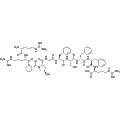
NPC-567
NPC-567 is a potent bradykinin B2 receptor antagonist. This compound effectively inhibits the acute response to allergens in the airways, making it valuable for research in allergy and respiratory conditions. Its mechanism of action provides a useful tool for exploring the role of bradykinin signaling in inflammatory responses.
In stock View Details -
- Cat. No.
- A59168
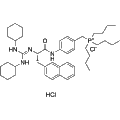
WIN 64338 hydrochloride
WIN 64338 hydrochloride is a selective, nonpeptide competitive antagonist of the bradykinin B2 receptor, effectively inhibiting [3H]-Bradykinin binding in human IMR-90 cells with a Ki value of 64 nM. Additionally, this compound demonstrates inhibitory effects on [3H]Quinuclidinyl benzilate binding to rat brain muscarinic receptors, with a Ki of 350 nM. Its ability to modulate bradykinin signaling positions WIN 64338 hydrochloride as a valuable tool for research in pain, inflammation, and cardiovascular studies.
Out of stock
All 3 sizes -
- Cat. No.
- A59169
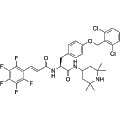
BKM-570
BKM-570 is a nonpeptide bradykinin antagonist that exhibits significant anticancer properties. This compound is valuable for research applications focusing on lung, prostate, and ovarian cancers, providing insights into the role of bradykinin signaling in tumor biology and potential therapeutic approaches. Its antagonistic action contributes to the understanding of bradykinin's involvement in cancer progression.
In stock View Details