- Cat. No.
- A12450
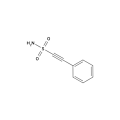
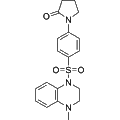
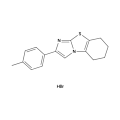
Pifithrin-beta
Pifithrin-beta is a small molecule inhibitor of p53.
Search by product name, CAS, target or catalog number. Press Down Arrow to reach product suggestions, Tab to move between links, and Escape to close suggestions.
p53 activators and inhibitors act on the tumor suppressor p53, a transcription factor activated by cellular stress. In unstressed cells the ubiquitin ligase mouse double minute 2 (MDM2) keeps p53 levels low by promoting its degradation. RG7112 blocks the p53-MDM2 interaction, and SJ 172550 targets the related protein mouse double minute 4 (MDM4, also called MDMX). RITA binds p53 itself, while tenovin-1 and tenovin-6 raise cellular p53 levels. Tenovin-6 also inhibits the deacetylases sirtuin 1 and sirtuin 2 (SIRT1, SIRT2). Pifithrin-α hydrobromide works the other way, inhibiting p53-dependent transcription in cells exposed to genotoxic stress. Further compounds directed at MDM2 are listed in the neighboring MDM2 category.
Pifithrin-beta is a small molecule inhibitor of p53.
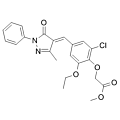
SJ 172550 is the first MDMX inhibitor with EC50 of 0.84 uM; binds reversibly to MDMX and effectively kills retinoblastoma cells in which the expression of MDMX is amplified.
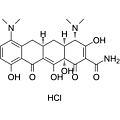
Minocycline hydrochloride is a broad-spectrum tetracycline antibiotic, acting by binding to the bacterial 30S ribosomal subunit and inhibiting protein synthesis.
Synonyms: RO5045337
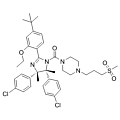
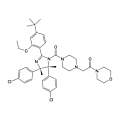
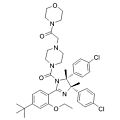
RG7112 is the first clinical small-molecule MDM2 inhibitor designed to occupy the p53-binding pocket of MDM2.
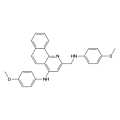
Synonyms: NSC 303580
inhibits p53 binding to mitochondria by reducing its affinity for antiapoptotic proteins Bcl-2 and Bcl-XL.
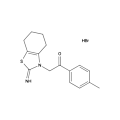
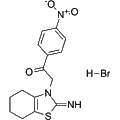
Pifithrin-α hydrobromide is a reversible inhibitor of p53-mediated apoptosis and p53-dependent gene transcription such as cyclin G, p21/waf1, and mdm2 expression.
NSC348884 is a nucleolar phosphoprotein that displays several biological activities in ribosome biogenesis, cell proliferation, cytoplasmic/nuclear shuttle transportation, nucleic acid binding, ribonucleic cleavage, and centrosome duplication. NSC 348884 is a putative inhibitor of nucleophosmin (NPM). NSC 348884 inhibits NMP oligomer formation, up-regulates p53 and induces apoptosis.
CP 31398 has been shown to act as a stabilizing agent for p53, and to promotes activity of p53 in cancer cell lines.
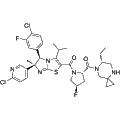
Synonyms: RG-7388
Idasanutlin is a potent and selective p53-MDM2 inhibitor.
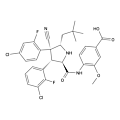
p53 and MDM2 proteins-interaction-inhibitor chiral is an inhibitor of the interaction between p53 and MDM2 proteins.
Synonyms: p53 inhibitor (racemic)
p53 and MDM2 proteins-interaction-inhibitor racemic is an inhibitor of the interaction between p53 and MDM2 proteins.
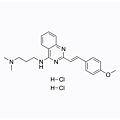
CP 31398 dihydrochloride, p53 stabilizing agent. Stabilizes the active conformation of p53 and promotes p53 activity in cancer cell lines with mutant or wild-type p53. Inhibits growth of small human tumor xenografts in vivo.
MIRA-1 restores wild-type conformation, function and DNA binding activity to mutant p53. Induces p53 transcriptional transactivation of p21, MDM2 and PUMA.
PhiKan 083, p53 stabilizing agent; preferentially binds mutated (Y220C) p53 over wild-type p53 at a site distinct from functional DNA/protein interaction regions.
Synonyms: CBL0137; Curaxin 137; CBLC137
CBL0137 hydrochloride activates p53 and inhibits NF-kB with EC50s of 0.37 μM and 0.47 μM in the cell-based p53 and NF-kB reporter assays, respectively. It also inhibits histone chaperone FACT (facilitates chromatin transcription complex).
CBL0137 is a FACT inhibitor that functionally inactivates the facilitates chromatin transcription complex (FACT), driving the effects on p53 and NF-κB and promoting cancer cell death.
BI-0252 is an orally active, selective MDM2-p53 inhibitor with an IC50 of 4 nM.
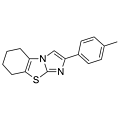
Synonyms: PFT-β
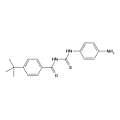
Pifithrin-β (PFT β) is a potent p53 inhibitor with an IC50 of 23 μM.
SDU-071 is a potent, orally active inhibitor targeting the BRD4-p53 interaction. It inhibits the proliferation of MDA-MB-231 cells with an IC₅₀ of 10.5 μM and induces cell cycle arrest and apoptosis.
p-nitro-Pifithrin-α is a potent inhibitor of the p53 tumor suppressor protein. This cell-permeable compound effectively suppresses p53-mediated TGF-β1 expression in HK-2 kidney cells and prevents the activation of caspase-3 induced by Zika virus strains. Additionally, p-nitro-Pifithrin-α demonstrates protective effects against steatosis and liver injury in high-fat diet models, positioning it as a valuable tool in the study of non-alcoholic fatty liver disease and p53-related pathways.
PAWI-2 is a p53 activator and Wnt inhibitor that targets β3-KRAS signaling independently of KRAS. This compound selectively inhibits the phosphorylation of TBK1, resulting in the activation of apoptotic pathways, evidenced by increased caspase-3/7 activity and PARP cleavage. Additionally, PAWI-2 facilitates the translocation of optineurin into the nucleus and induces G2/M cell cycle arrest. It effectively reverses cancer stemness and overcomes drug resistance in integrin β3 KRAS-dependent human pancreatic cancer stem cells, demonstrating significant tumor growth inhibition in orthotopic xenograft mouse models.
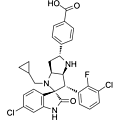
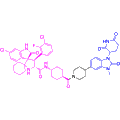
Synonyms: KT-253
Seldegamadlin is a selective p53 stabilizer and an MDM2 PROTAC degrader with a DC50 of 0.4 nM. It effectively inhibits the proliferation of RS4;11 cancer cells, demonstrating an IC50 of 0.3 nM, and induces cell cycle arrest at the G2/M phase while promoting apoptosis. By upregulating p53 activity, Seldegamadlin overcomes the p53-MDM2 feedback loop, making it a valuable tool for research in hematologic and solid tumors, including acute myeloid leukemia (AML) and acute lymphoblastic leukemia (ALL).
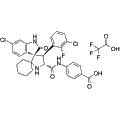
MI-1061 TFA is a potent inhibitor of the MDM2-p53 interaction, exhibiting an IC50 of 4.4 nM and a Ki of 0.16 nM. This orally bioavailable and chemically stable compound effectively activates p53, leading to apoptosis in SJSA-1 xenograft tumor tissues in murine models. MI-1061 TFA demonstrates significant anti-tumor activity, making it a valuable tool for cancer research focused on the modulation of the p53 signaling pathway.
DS-5272 is an orally active inhibitor of the p53-MDM2 interaction, demonstrating an IC50 of 20 nM. This compound effectively inhibits the proliferation of SJSA-1 cells (wildtype p53, IC50 = 0.17 μM) as well as DLD-1 cells (mutant p53). DS-5272 induces cell cycle arrest and promotes apoptosis in SJSA-1 cells, while also exhibiting antitumor efficacy in vivo in mouse models. This makes DS-5272 a valuable tool for research in cancer therapeutics targeting the p53 pathway.