
- Cat. No.
- A19143
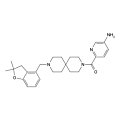
AZ084
AZ084 is a potent, selective, allosteric and oral active CCR8 antagonist, with a Ki of 0.9 nM. Has potential to treat asthma.
In stock
View Details
Search by product name, CAS, target or catalog number. Press Down Arrow to reach product suggestions, Tab to move between links, and Escape to close suggestions.
CC chemokine receptor (CCR) antagonists block G protein-coupled receptors that guide leukocyte migration. CCR2, a receptor for monocyte chemoattractant protein 1 (MCP-1), was cloned in 1994 as two splice variants. CCR5 was identified in 1996 as a fusion cofactor for macrophage-tropic human immunodeficiency virus type 1 (HIV-1). Maraviroc, described in 2005 as a selective small-molecule CCR5 inhibitor, blocks this route of viral entry. Other CCR5 antagonists include vicriviroc malate and aplaviroc, while INCB3344 and MK-0812 target CCR2. Cenicriviroc blocks both CCR2 and CCR5, and GSK2239633A is a CCR4 antagonist for studies of T cell trafficking.
AZ084 is a potent, selective, allosteric and oral active CCR8 antagonist, with a Ki of 0.9 nM. Has potential to treat asthma.
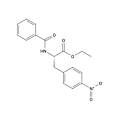
SB297006 is a CCR3 antagonist, which significantly inhibits proliferation and neurosphere formation in CCL11-treated neural progenitor cells.
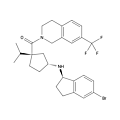
CCR2 antagonist 1 is a high-affinity and long-residence-time CCR2 antagonist, with a Ki of 2.4 nM.
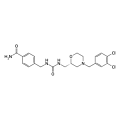
Synonyms: GW 994,GW-994; GW994
GW 766994 is a specific and oral chemokine receptor-3 (CCR3) antagonist, which has entered clinical trial for asthma and eosinophilic bronchitis.
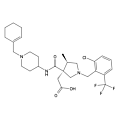
E6130 is an orally available and highly selective CX3CR1 modulator, that may be effective for treatment of inflammatory bowel disease.
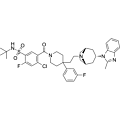
CCR5 antagonist 1 is a CCR5 antagonist which can inhibit HIV replication extracted from WO 2004054974 A2.
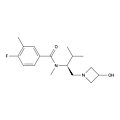
CCR2 antagonist 3 is a chemokine receptor 2 (CCR2) antagonist.
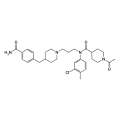
TAK-220 is a selective and orally bioavailable CCR5 antagonist.

CCR2-RA-[R] is an allosteric antagonist of the C-C chemokine receptor type 2 (CCR2) with an IC50 of 103 nM.
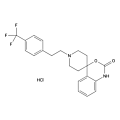
Synonyms: RS 102895
RS102895 hydrochloride is a potent CCR2 antagonist, with an IC50 of 360 nM, and shows no effect on CCR1.
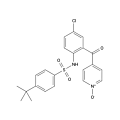
Synonyms: GSK-1605786; CCX282-B; Traficet-EN
Vercirnon (GSK-1605786) is an orally bioavailable, selective, and potent antagonist of CCR9, with an IC50 of 10 nM, used in the research of inflammatory bowel diseases.
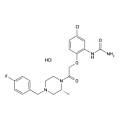
Synonyms: ZK-811752 hydrochloride; ZK811752; TAK 659
BX471 hydrochloride (ZK-811752 hydrochloride) is a potent, selective non-peptide CCR1 antagonist with Ki of 1 nM for human CCR1, and exhibits 250-fold selectivity for CCR1 over CCR2, CCR5 and CXCR4.
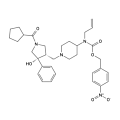
Synonyms: TD-0232
Nifeviroc is a CCR5 antagonist potentially for treatment of inflammatory responses to HIV type-1 infection
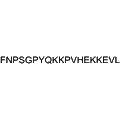
CKLF1-C19 is the C-terminal peptide of human chemokine-like factor 1 (CKLF1). CKLF1-C19 interacts with CCR4, and inhibits chemotaxis induced by both CKLF1 and CCL17. CKLF1-C19 can suppress allergic lung inflammation via inhibiting chemotaxis mediated by CCR3 and CCR4.
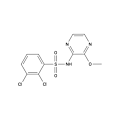
AZD2098 is a potent and selective CCR4 inhibitor with pIC₅₀ values of 7.8–8.0 across human, rat, mouse, and dog. It is commonly used in asthma research to study CCR4-mediated inflammatory pathways.
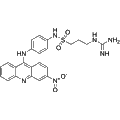
Synonyms: NSC 1
NSC177365 is a potent CcrM inhibitor that acts by competitively disrupting DNA binding. It demonstrates significant antibacterial activity, displaying IC50 values of 2.3 μM and 14.6 μM against C. crescentus and M. lincolnii, respectively. Furthermore, NSC177365 has potential applications in reversing neurodegenerative disorders and shows promise as an anticancer agent, making it a valuable tool for chemical research.
Out of stock
All 3 sizes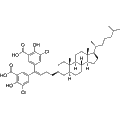
Synonyms: NSC 658586
Cosalane is a dual antagonist of the chemokine receptors CCR7 (IC50 = 2.43 μM) and CXCR2 (IC50 = 0.66 μM). This compound effectively inhibits HIV replication across a variety of strains, including HIV-1, HIV-2, Rauscher murine leukemia virus, as well as herpes simplex viruses HSV-1 and HSV-2, and human cytomegalovirus. Cosalane disrupts the interaction between gp120 and CD4, inhibiting signaling downstream of CCR7 in response to its ligands CCL19 and CCL21. Research applications include studies on HIV and the potential modulation of acute graft-versus-host disease in allogeneic hematopoietic stem cell transplantation.
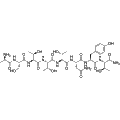
Synonyms: D-Ala-peptide T-amide; Adaptavir
DAPTA is a synthetic peptide that acts as a selective inhibitor of the CCR5 receptor. By blocking CCR5, DAPTA interferes with viral entry into host cells, exhibiting significant anti-HIV activity. This compound is valuable for research in virology and the development of therapeutic strategies against HIV.
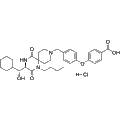
Synonyms: AK602 hydrochloride; GSK-873140 hydrochloride; GW-873140 hydrochloride
Aplaviroc hydrochloride is a potent CCR5 antagonist targeting the CCR5 co-receptor. It demonstrates biological activity with IC50 values ranging from 0.1 to 0.4 nM against various HIV-1 strains, including HIV-1Ba-L, HIV-1JRFL, and HIV-1MOKW. This compound is valuable for research applications focused on HIV entry inhibition and the development of antiviral therapies.
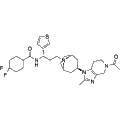
CCR5 antagonist 3 is a potent inhibitor of the CCR5 receptor, exhibiting an IC50 of 15.90 nM. This compound demonstrates broad-spectrum anti-HIV-1 activity, making it a valuable tool for research focused on HIV-1 infection mechanisms and therapeutic development. Its specificity for CCR5 enhances its potential utility in studying chemokine receptor modulation and viral entry inhibition in various biological contexts.
Out of stock
All 3 sizes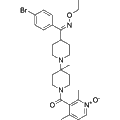
Synonyms: SCH-351125
Ancriviroc is a small molecule CCR5 antagonist that demonstrates potent antiviral activity against various HIV-1 isolates that utilize CCR5 as an entry coreceptor, with IC50 values ranging from 0.4 to 9 nM. This compound effectively inhibits the replication of R5-utilizing HIV-1 strains in the SCID-hu Thy/Liv mice model of HIV-1 infection. Ancriviroc is a valuable tool for research focused on HIV infection and the exploration of therapeutic strategies targeting CCR5.
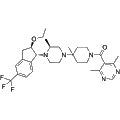
INCB9471 is a potent and selective CCR5 antagonist that serves as a critical resource for HIV-1 research. This orally active compound effectively inhibits CCR5-mediated entry of HIV-1 into host cells, demonstrating significant anti-HIV-1 activity. Its targeted mechanism of action makes INCB9471 a valuable tool for studying HIV pathogenesis and developing therapeutic strategies against HIV infection.
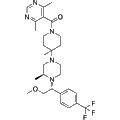
Synonyms: SCH 417690; SCH-D; MK-7690 free base
Vicriviroc is a potent CCR5 antagonist with an IC50 of 10 nM. It effectively inhibits the release of MIP-1α and intracellular calcium levels induced by the ligand RANTES, with IC50 values of 0.91 nM and 16 nM, respectively. Vicriviroc is primarily utilized in research related to human immunodeficiency virus type 1 (HIV-1) infection and holds potential for cancer studies.
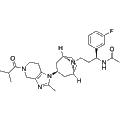
PF-232798 is an orally bioavailable antagonist of the CCR5 receptor, primarily known for its role in HIV entry into cells. By blocking CCR5, PF-232798 demonstrates efficacy in inhibiting HIV replication and offers potential applications in antiviral research. Its selective activity makes it a valuable tool for studying HIV pathogenesis and developing new therapeutic strategies against the virus.
Out of stock
All 3 sizes