CRFR

Corticotropin-releasing factor receptor (CRFR) antagonists act on key receptors of the stress response. The peptide corticotropin-releasing factor (CRF) was characterized in 1981 as a 41-residue hypothalamic peptide that stimulates corticotropin secretion. Expression cloning of a human CRF receptor, now called CRF1, followed in 1993, and a second subtype, CRF2, was identified later. Through the hypothalamic-pituitary-adrenal (HPA) axis, CRF1 signaling links stress to glucocorticoid release and anxiety-like behavior. Most compounds here are small-molecule CRF1 antagonists, including pexacerfont, verucerfont, R-121919 and CP 376395. The list also holds Corticotropin Releasing Factor, bovine, and tetracosactide, a corticotropin fragment that acts on melanocortin receptors.

2 Items

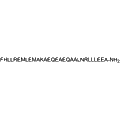
  • CRF(6-33)(human)
    Cat. No.
    A23440

    CRF(6-33)(human)

    CRF(6-33)(human) is a CRF binding protein (CRF-BP) ligand inhibitor. CRF(6-33)(human) competitively binds the CRF-BP but not the post-synaptic CRF receptors. CRF(6-33)(human) has anti-obesity effect.

    1 mg
    $80.00
    5 mg
    $255.00
    All 3 sizes
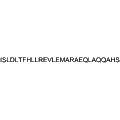
  • a-Helical Corticotropin Releasing Factor (12-41)
    Cat. No.
    A59750

    a-Helical Corticotropin Releasing Factor (12-41)

    a-Helical Corticotropin Releasing Factor (12-41) is an α-helical analogue of corticotropin-releasing factor (CRF) that acts as a CRF inhibitor. By mimicking the structure of natural CRF, this peptide effectively suppresses the secretion of adrenocorticotropic hormone (ACTH), providing valuable insights into stress response mechanisms. Its primary applications include studying the neuroendocrine regulation of stress and investigating potential therapeutic strategies for stress-related disorders.

    Out of stock

    All 3 sizes

2 Items

Added to your cart

View Cart Checkout

    Loading...