- Cat. No.
- A21643
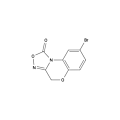
NS-2028
NS-2028 is a highly selective soluble Guanylyl Cyclase (sGC) inhibitor with IC50 values of 30 nM and 200 nM for basal and NO-stimulated enzyme activity.
Search by product name, CAS, target or catalog number. Press Down Arrow to reach product suggestions, Tab to move between links, and Escape to close suggestions.
Guanylate cyclase stimulators and activators act on the enzymes that make the second messenger cGMP. These enzymes convert guanosine triphosphate into cyclic guanosine monophosphate (cGMP). Soluble guanylate cyclase (sGC) is the main receptor for nitric oxide (NO), whereas membrane-bound guanylate cyclase C (GC-C) binds peptide ligands. In 1990 GC-C was identified as the receptor for the heat-stable enterotoxin of Escherichia coli. BAY 41-2272 was described in 2001 as acting on an NO-independent regulatory site of sGC. Riociguat, vericiguat and praliciguat are further sGC stimulators, and YC-1 is an earlier sGC activator. Linaclotide is a peptide GC-C agonist used in studies of intestinal fluid secretion.
NS-2028 is a highly selective soluble Guanylyl Cyclase (sGC) inhibitor with IC50 values of 30 nM and 200 nM for basal and NO-stimulated enzyme activity.
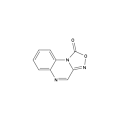
ODQ is a potent and selective soluble guanylyl cyclase (sGC, nitric oxide-activated enzyme) inhibitor. ODQ enhances the pro-apoptotic effects of Cisplatin in human mesothelioma cells.
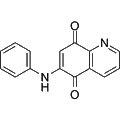
LY83583 is a selective inhibitor of soluble guanylate cyclase (sGC), effectively modulating the cGMP signaling pathway. This compound demonstrates significant biological activity by inhibiting kinase activity associated with tumor cell proliferation, particularly through the induction of the Cdk inhibitor p21. LY83583 is applicable for research in various cancer types, including colorectal cancer, breast cancer, and melanoma, as well as in studies related to cardiovascular disease.
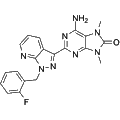
Guanylate cyclase-IN-1 is a potent inhibitor of guanylate cyclase, a crucial enzyme involved in the regulation of intracellular signaling pathways. This compound exhibits significant biological activity by modulating nitric oxide signaling, making it a valuable tool for the study of cardiovascular diseases. Its applications extend to investigating the physiological and pathological roles of guanylate cyclase in various biological processes.
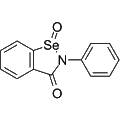
Ebselen oxide is a selenone analogue that serves as a potent inhibitor of diguanylate cyclases (DGCs). By covalently modifying DGCs, it disrupts c-di-GMP-receptor interactions and subsequently decreases DGC activity. Additionally, Ebselen oxide demonstrates antibacterial properties by inhibiting alginate production in Pseudomonas aeruginosa, with an IC50 of 14 μM. It also exhibits inhibitory activity against various histone deacetylases (HDAC1 to HDAC9), with IC50 values ranging from 0.2 to 4.7 μM, making it useful for research involving epigenetic regulation.
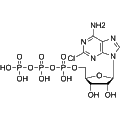
2-Chloro-ATP functions as a soluble guanylate cyclase inhibitor, impacting intracellular signaling pathways. This compound elevates intracellular calcium concentrations at low concentrations, utilizing a mechanism that does not rely on inositol phosphate production. It is valuable for studies investigating the role of guanylate cyclase in various physiological and pathological conditions. Researchers can utilize 2-Chloro-ATP to understand the modulation of calcium signaling in cellular processes.