
- Cat. No.
- A12491
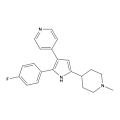
MBP146-78
MBP146-78 is a potent and selective inhibitor of cGMP dependent protein kinases.
In stock
View Details
Search by product name, CAS, target or catalog number. Press Down Arrow to reach product suggestions, Tab to move between links, and Escape to close suggestions.
PKG inhibitors and activators act on protein kinase G (PKG), a kinase switched on by cyclic nucleotides. A kinase activated by guanosine 3',5'-monophosphate (cGMP) was isolated and partially purified in 1970. Nitric oxide and natriuretic peptides raise cGMP, which binds the regulatory domain of PKG and releases its kinase activity. Mice lacking PKG type I showed defective regulation of vascular and intestinal smooth muscle in a 1998 study. KT 5823 and the cGMP analog Rp-8-Br-PET-cGMPS inhibit PKG, while Sp-8-pCPT-cGMPS activates it. MBP146-78 targets the PKG of apicomplexan parasites such as Toxoplasma. Several compounds, for example A-3 Hydrochloride, also inhibit the related protein kinase A (PKA).
MBP146-78 is a potent and selective inhibitor of cGMP dependent protein kinases.
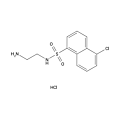
A-3 Hydrochloride is an inhibitor of PKA (cAMP-dependent protein kinase, Ki=4.3μM) and cGMP-dependent protein kinase, Ki=3.8μM, PKC (protein kinase C, Ki=47μM), casein kinase I and II, and MLCK (myosin light chain kinase) ( Ki=7.4μM).
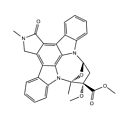
KT 5823 is a potent, selective inhibitor of cGMP-dependent protein kinase (PKG) (in vitro IC50 = 234 nM).
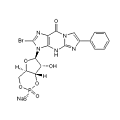
Rp-8-Br-PET-cGMPS is metabolically stable, competitive inhibitor of cGKI (Ki = 30 nM) and cGKII (cGMP-dependent protein kinase G) and blocks cGMP-gated retinal type ion channels (IC50 = 25 μM).
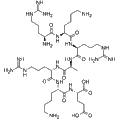
Synonyms: PKG Inhibitor
cGMP Dependent Kinase Inhibitor Peptid is a specific cGKI (cyclic GMP-dependent protein kinase) inhibitor. Data indicates that it does not block cyclic GMP-dependent protein kinase phosphorylation of intact histones and has been used to study Plasmodium falciparum.
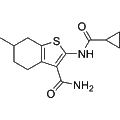
Protein kinase G inhibitor-1 is a selective inhibitor targeting protein kinase G (PKG) with an IC50 of 0.9 μM. This compound is utilized primarily in research related to mycobacterial infections, providing insights into the mechanisms of pathogenesis and potential therapeutic approaches. Its efficacy in inhibiting PKG activity makes it a valuable tool for exploring mycobacterial biology and developing novel treatments.
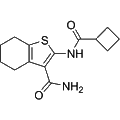
Protein kinase G inhibitor-2 is a selective inhibitor of mycobacterial protein kinase G, exhibiting an IC50 value of 3 μM. This compound is utilized in the investigation of mycobacterial infections and their associated signaling pathways. Its efficacy as a PKG inhibitor supports research into therapeutic strategies targeting mycobacterial diseases.
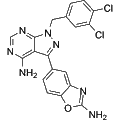
PI4Kβ/PKG-IN-2 is a potent dual inhibitor targeting Plasmodium phosphatidylinositol 4-kinase beta (PI4Kβ) and cGMP-dependent protein kinase (PKG). This compound demonstrates significant inhibitory activity against Plasmodium, making it a valuable tool for investigating malaria pathogenesis and potential therapeutic strategies. Its oral bioavailability further supports its use in preclinical studies aimed at understanding malaria biology.
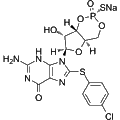
Rp-8-pCPT-cGMPS sodium is a selective inhibitor of cGMP-dependent protein kinase (cGK), functioning primarily through the modulation of cGMP signaling pathways. This compound also acts as an agonist for cyclic nucleotide-gated (CNG) channels in a voltage-dependent manner, making it valuable for studying the intricate roles of cyclic nucleotides in cellular processes. Its applications extend to research in cardiovascular physiology, neurobiology, and signal transduction mechanisms.
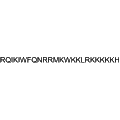
DT-3 is a selective inhibitor of protein kinase G Iα (PKG Iα), designed to impede the cGMP-PKG signaling pathway. This membrane-permeable peptide demonstrates significant pharmacological activity, making it valuable for research applications focused on cardiovascular function and signaling related diseases. DT-3 enables the investigation of the roles of PKG Iα in various cellular processes and helps elucidate its contributions to cardiovascular health and disease.
Out of stock
All 3 sizes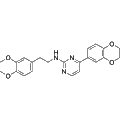
AP-C3 is a selective inhibitor of guanosine 3′,5′-cyclic monophosphate (cGMP)-dependent protein kinase II (cGKII), exhibiting a pIC50 of 6.3. This compound demonstrates limited inhibition of cGKII-dependent anion secretion, making it a valuable tool for studying cGKII signaling pathways. AP-C3 is applicable in research focused on cardiovascular and gastrointestinal functions mediated by cGKII.
Out of stock
All 3 sizes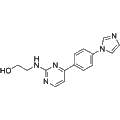
AP-C6 is a selective inhibitor of guanosine 3′,5′-cyclic monophosphate (cGMP)-dependent protein kinase II (cGKII), demonstrating a pIC50 of 6.5. This compound effectively inhibits human cGKII activity in a concentration-dependent manner in vitro. Additionally, AP-C6 enhances cAMP signaling through phosphodiesterase (PDE) inhibition, making it a valuable tool for research involving cGKII and related signaling pathways.
Out of stock
All 3 sizes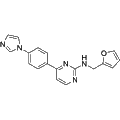
AP-C7 is a selective inhibitor of guanosine 3′,5′-cyclic monophosphate (cGMP)-dependent protein kinase II (cGKII), exhibiting a pIC50 value of 5.0. This compound demonstrates weak inhibition of cGKII-dependent anion secretion, making it a valuable tool for exploring the role of cGKII in cellular signaling pathways and its impact on various physiological processes. AP-C7 can be utilized in research focused on cardiovascular biology, gastrointestinal function, and related areas studying cGMP signaling mechanisms.
Out of stock
All 3 sizes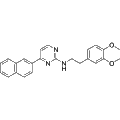
AP-C1 is a selective inhibitor of guanosine 3′,5′-cyclic monophosphate (cGMP)-dependent protein kinase II (cGKII), demonstrating a pIC50 of 6.5. This compound primarily attenuates cGKII activity while displaying minimal effects on cGKII-mediated anion secretion. AP-C1 is valuable for research applications focused on investigating the role of cGKII in cellular signaling and related physiological processes.
Out of stock
All 3 sizes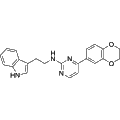
AP-C4 is a selective inhibitor of guanosine 3′,5′-cyclic monophosphate (cGMP)-dependent protein kinase II (cGKII), exhibiting a pIC50 value of 5.2. This compound demonstrates the ability to effectively inhibit cGKII without affecting cGKII-dependent anion secretion. AP-C4 is valuable for research examining the role of cGKII in various physiological and pathological processes, enabling further exploration of cGKII's functions in signaling pathways.
Out of stock
All 3 sizes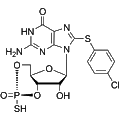
Rp-8-pCPT-cGMPS is a competitive inhibitor of cGMP-dependent protein kinase (PKG) with a Ki value of 0.5 μM. Its high lipid solubility facilitates cellular penetration, enabling effective inhibition of PKG activity within cells. This reagent is valuable for investigating the role and function of PKG in cellular processes, particularly in platelets.
Out of stock
All 3 sizes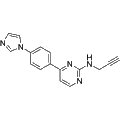
AP-C5 is a selective inhibitor of guanosine 3′,5′-cyclic monophosphate (cGMP)-dependent protein kinase II (cGKII), demonstrating a pIC50 of 7.2. This compound is useful for investigating the mechanisms underlying diarrheal diseases. Additionally, AP-C5 features an alkyne group that enables its application in click chemistry, allowing for copper-catalyzed azide-alkyne cycloaddition (CuAAc) with azide-containing molecules.