CRFR

Corticotropin-releasing factor receptor (CRFR) antagonists act on key receptors of the stress response. The peptide corticotropin-releasing factor (CRF) was characterized in 1981 as a 41-residue hypothalamic peptide that stimulates corticotropin secretion. Expression cloning of a human CRF receptor, now called CRF1, followed in 1993, and a second subtype, CRF2, was identified later. Through the hypothalamic-pituitary-adrenal (HPA) axis, CRF1 signaling links stress to glucocorticoid release and anxiety-like behavior. Most compounds here are small-molecule CRF1 antagonists, including pexacerfont, verucerfont, R-121919 and CP 376395. The list also holds Corticotropin Releasing Factor, bovine, and tetracosactide, a corticotropin fragment that acts on melanocortin receptors.

1 Item

  • Stresscopin (human)
    Cat. No.
    A59762

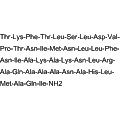
    Stresscopin (human)

    Stresscopin (human) is a selective ligand of type 2 corticotropin-releasing hormone (CRH) receptors, playing a critical role in the regulation of the body's stress response. This compound is integral for studying stress-related disorders, including anxiety and depression, by modulating the neuroendocrine response. Its specificity for CRHR2 makes it a valuable tool in understanding the physiological and pathological mechanisms underlying stress responses.

    Out of stock

    All 3 sizes

1 Item

Added to your cart

View Cart Checkout

    Loading...