- Cat. No.
- A22925
TRV055
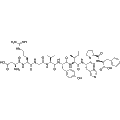
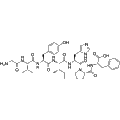
TRV055, a G-protein-biased agonist, is a Gq-biased ligand of the angiotensin II receptor type 1 (AT1R). TRV055 is efficacious in stimulating cellular Gq-mediated signaling.
Search by product name, CAS, target or catalog number. Press Down Arrow to reach product suggestions, Tab to move between links, and Escape to close suggestions.
Angiotensin receptor antagonists block the type 1 and type 2 receptors for the peptide hormone angiotensin II. The angiotensin II type 1 receptor (AT1) mediates vasoconstriction and aldosterone release within the renin-angiotensin-aldosterone system (RAAS). The angiotensin II type 2 receptor (AT2) belongs to a distinct class of seven-transmembrane receptors and is often described as opposing AT1 signaling. Both subtypes were cloned in the early 1990s, AT1 from vascular smooth muscle and AT2 by expression cloning. Most compounds here are nonpeptide AT1 antagonists of the sartan class, such as losartan potassium, candesartan and valsartan. PD 123319 ditrifluoroacetate is a selective AT2 antagonist used to separate the actions of the two subtypes.
TRV055, a G-protein-biased agonist, is a Gq-biased ligand of the angiotensin II receptor type 1 (AT1R). TRV055 is efficacious in stimulating cellular Gq-mediated signaling.
TRV056 is a Gq-biased ligand of the angiotensin II receptor type 1 (AT1R). TRV056 is efficacious in stimulating cellular Gq-mediated signaling. TRV056 can be used to develop the Gq-biased AT1R agonists.
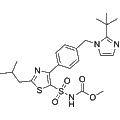
AT2R Antagonist 1 is a selective ligand targeting the angiotensin II AT2 receptor (AT2R) with a binding affinity characterized by a Ki value of 29 nM. This compound demonstrates significant inhibitory effects on various cytochrome P450 (CYP) enzymes involved in drug metabolism. Additionally, AT2R Antagonist 1 exhibits exceptional stability in liver microsomes derived from human, rat, and mouse sources, making it a valuable reagent for studies on cardiovascular and renal research applications.
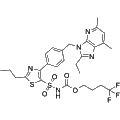
AT1R Antagonist 1 is a selective ligand targeting the angiotensin II type 1 receptor (AT1R). This compound demonstrates significant biological activity with an affinity of Ki 8.5 nM, making it an effective agent for research involving cardiovascular and hypertensive disorders. It is suitable for studies investigating the modulation of the renin-angiotensin system and exploring therapeutic pathways in related pathologies.
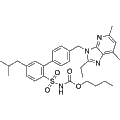
L-162782 is a high-affinity ligand for the angiotensin II type 1 (AT1) receptor, exhibiting IC50 values of 28.5 nM for rat and 24.6 nM for human wild-type AT1. This compound functions as a partial agonist with an EC50 of approximately 30 nM, while also acting as an insurmountable antagonist with an IC50 of 6.5 μM on rat AT1 receptors in COS-7 cells. L-162782 effectively inhibits Angiotensin II-mediated phosphatidylinositol turnover and is valuable for hypertension research applications.
RG 13647 is an AT2-selective ligand that serves as an analog of PD 123177. This compound demonstrates weak competition for [125I]angiotensin II binding, with an IC50 value of 100 μM. RG 13647 is primarily utilized in cardiovascular disease research, facilitating investigations into the role of angiotensin II receptors in related pathophysiological conditions.
Out of stock
All 3 sizes