GPR

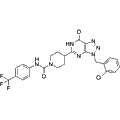
GPR agonists and antagonists act on numbered G protein-coupled receptors (GPRs), many first described as orphans. Several of these receptors sense nutrients and metabolites, which links them to glucose and lipid metabolism research. GPR40, also called free fatty acid receptor 1 (FFAR1), was shown in 2003 to be activated by medium- and long-chain fatty acids. On pancreatic beta cells, GPR40 mediates fatty acid enhancement of glucose-stimulated insulin secretion. GPR119 was deorphanized in 2006 as a receptor for the lipid amide oleoylethanolamide. Fasiglifam is a GPR40 agonist and MBX-2982 a GPR119 agonist. TC-G-1008 activates the zinc-sensing receptor GPR39, and MK-6892 is an agonist of GPR109A.

13 Items

  • Succinate calcium
    Cat. No.
    A32020

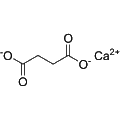
    Succinate calcium

    Succinate calcium primarily targets the G protein-coupled receptor GPR91 and serves as a significant intermediate in the citric acid cycle. This compound is known to enhance the amplitude of calcium transients in cardiac muscle cells while also accelerating their decay rate. Additionally, succinate calcium has been implicated in inducing myocardial apoptosis, making it valuable for research into cardiac physiology and pathology.

    Out of stock

    All 3 sizes
  • Tocrifluor 1117
    Cat. No.
    A59377

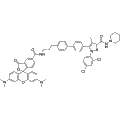
    Tocrifluor 1117

    Synonyms: T1117

    Tocrifluor 1117 is a selective fluorescent ligand targeting the GPR55 receptor. This compound serves as a valuable tool in research for visualizing the cellular distribution of cannabinoid receptors, including GPR55, in live tissues. With excitation and emission maxima at 543 nm and 590 nm, respectively, Tocrifluor 1117 enhances the understanding of cannabinoid receptor localization and function in various biological contexts.

    0.1 mg
    $1,105.00
    All 1 sizes
  • (±)-Pinocembrin
    Cat. No.
    A60346

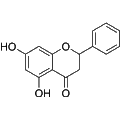
    (±)-Pinocembrin ((±)-5,7-Dihydroxyflavanone, NSC 43318)

    Synonyms: (±)-5,7-Dihydroxyflavanone; NSC 43318

    (±)-Pinocembrin, a GPR120 ligand, is a natural flavonoid known for its significant biological activity in promoting wound healing. It has demonstrated efficacy in modulating cellular responses in the HaCaT cell line, making it a valuable reagent for research in regenerative medicine and skin biology. Investigating its effects can provide insights into therapeutic strategies for enhancing tissue repair and inflammation resolution.

    1 mg
    $30.00
    5 mg
    $65.00
    All 7 sizes
  • PEN (human)
    Cat. No.
    A60393

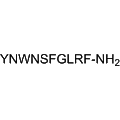
    PEN (human)

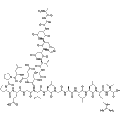
    PEN (human) is an endogenous ligand of the GPR83 receptor, primarily found in the hypothalamus. This neuropeptide is derived from the proprotein ProSAAS and plays a crucial role in various biological processes, including neuroendocrine regulation and stress responses. Research applications include the investigation of GPR83 signaling pathways and the exploration of its potential roles in metabolic disorders and neuropsychiatric conditions.

    1 mg
    $120.00
    5 mg
    $330.00
    All 3 sizes
  • PEN (rat)
    Cat. No.
    A60396

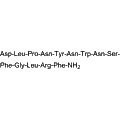
    PEN (rat)

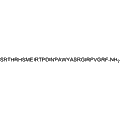
    PEN (rat) is a potent endogenous ligand for the GPR83 receptor, primarily identified in the hypothalamic region. This neuropeptide, derived from the proprotein ProSAAS, plays a critical role in neuroendocrine regulation and appetite control. It is valuable for research focusing on metabolic disorders and neuropeptide signaling pathways.

    1 mg
    $50.00
    5 mg
    $125.00
    All 3 sizes
  • Kisspeptin-54(human)
    Cat. No.
    A60670

    Kisspeptin-54(human)

    Synonyms: Metastin(human)

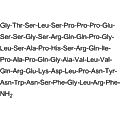
    Kisspeptin-54 (human) is an endogenous ligand for the GPR54 receptor, also known as KISS1. It exhibits high binding affinity, with Ki values of 1.81 nM for rat GPR54 and 1.45 nM for human GPR54. This peptide plays a crucial role in inhibiting tumor metastasis and promoting the secretion of gonadotropins, such as luteinizing hormone (LH), as well as testosterone. It is valuable in research applications related to reproductive biology and cancer metastasis.

    0.1 mg
    $270.00
    0.5 mg
    $920.00
    All 3 sizes
  • Prolactin Releasing Peptide (1-31), human
    Cat. No.
    A60682

    Prolactin Releasing Peptide (1-31), human

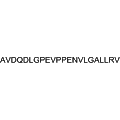
    Prolactin Releasing Peptide (1-31), human is a potent ligand for the GPR10 receptor, facilitating the release of prolactin. This peptide exhibits high affinity binding, with Ki values of 1.03 nM for human GPR10 and 0.33 nM for rat GPR10. It is a valuable tool for investigating the hypothalamo-pituitary axis and studying prolactin-related physiological processes.

    0.5 mg
    $175.00
    1 mg
    $290.00
    All 3 sizes
  • L-α-lysophosphatidylinositol (Soy) sodium
    Cat. No.
    A60822

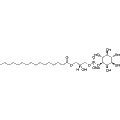
    L-α-lysophosphatidylinositol (Soy) sodium

    L-α-lysophosphatidylinositol (Soy) sodium is a potent endogenous ligand for the GPR55 receptor. As a lysophospholipid and endocannabinoid neurotransmitter, it plays a crucial role in various signaling pathways. It is primarily utilized in research applications focusing on cannabinoid receptor modulation, cell signaling processes, and neurobiology studies.

    1 mg
    $360.00
    All 1 sizes
  • Kisspeptin-10, human
    Cat. No.
    A60966

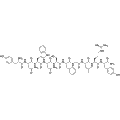
    Kisspeptin-10, human

    Kisspeptin-10, human is a potent ligand for the GPR54 receptor, playing a significant role in multiple biological processes. It functions as an inhibitor of angiogenesis and a tumor metastasis suppressor. The Kisspeptin-10/GPR54 signaling pathway is also crucial in embryonic kidney development and promotes osteoblast differentiation through NFATc4-mediated BMP2 expression. This makes Kisspeptin-10 a valuable reagent for research in developmental biology and cancer metastasis.

    0.5 mg
    $30.00
    1 mg
    $60.00
    All 4 sizes
  • Kisspeptin-14 human
    Cat. No.
    A60969

    Kisspeptin-14 human

    Kisspeptin-14 human is a peptide hormone that serves as an endogenous ligand for the G protein-coupled receptor, GPR54. It plays a crucial role in reproductive function and has been shown to activate various intracellular signaling pathways upon binding to KISS1R. This compound is instrumental in research focused on reproductive development and the mechanisms underlying tumor metastasis. Kisspeptin-14 human exhibits receptor binding efficiency and potency comparable to full-length kisspeptin, making it a valuable tool in beta-cell and endocrine research.

    1 mg
    $30.00
    5 mg
    $65.00
    All 6 sizes
  • Kisspeptin-10 (mouse, rat)
    Cat. No.
    A60970

    Kisspeptin-10 (mouse, rat)

    Kisspeptin-10 (mouse, rat) is a specific ligand for the GPR54 receptor, primarily influencing reproductive functions. This peptide demonstrates significant vasoconstrictive properties and acts as an inhibitor of angiogenesis. Additionally, Kisspeptin-10 has been shown to mitigate Methotrexate-induced reproductive toxicity, suggesting its potential role as an antioxidant in various research applications.

    1 mg
    $25.00
    5 mg
    $130.00
    All 6 sizes
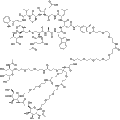
  • tri(GalNAc-PEG2)-PEG4-cyclo(Ac-DCAW-{Arg(3F-Ph)-PEG2}-LGELVWCT) (Cys2-Cys12)
    Cat. No.
    A64130

    tri(GalNAc-PEG2)-PEG4-cyclo(Ac-DCAW-{Arg(3F-Ph)-PEG2}-LGELVWCT) (Cys2-Cys12)

    tri(GalNAc-PEG2)-PEG4-cyclo(Ac-DCAW-{Arg(3F-Ph)-PEG2}-LGELVWCT) (Cys2-Cys12) is a potent ligand for the asialoglycoprotein receptor (ASGPR), facilitating targeted delivery to lysosomes. This compound is specifically designed for applications in lysosome-targeting chimera (LYTAC) research, offering enhanced cellular uptake and improved therapeutic efficacy. Its unique structure enables effective receptor recognition and binding, making it a valuable tool for studying ASGPR-mediated pathways.

    0.5 mg
    $505.00
    1 mg
    $800.00
    All 4 sizes
  • ASN06917370
    Cat. No.
    A77558

    ASN06917370

    ASN06917370 is a potent ligand for the GPR17 receptor, which plays a critical role in the signaling pathways associated with neurodegenerative diseases. With an EC50 of 268 pM in [35S]GTPyS assays, it facilitates insights into GPR17-related biological processes. This compound is valuable for research applications focused on neurobiology and the pharmacological modulation of neurodegeneration.

    1 mg
    $120.00
    5 mg
    $265.00
    All 6 sizes

13 Items

Added to your cart

View Cart Checkout

    Loading...