- Cat. No.
- A17082
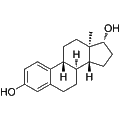
α-Estradiol
Synonyms: alpha-Estradiol; 17α-Estradiol; Alfatradiol; 17-epi Estradiol; NSC 20293
α-Estradiol is an endogenous estrogen receptor ligand (Ki values are 0.2 and 1.2 nM for ERα and ERβ receptors respectively).
Search by product name, CAS, target or catalog number. Press Down Arrow to reach product suggestions, Tab to move between links, and Escape to close suggestions.
Estrogen receptor (ER) antagonists and modulators act on ERα and ERβ, ligand-activated nuclear transcription factors. Cloning of human ERα complementary DNA in 1986 revealed homology with the v-erb-A oncogene product. A second receptor, ERβ, was cloned from rat prostate and ovary in 1996. Crystal structures from 1997 showed that agonists and the antagonist raloxifene place the ligand-binding domain in different conformations. Ligands here include Tamoxifen Citrate and its active metabolite (E/Z)-4-hydroxy Tamoxifen, both used in ER signaling studies. Fulvestrant is an ER antagonist that also promotes receptor degradation. GSK5182 instead targets estrogen-related receptor gamma (ERRγ), an orphan receptor that does not bind estrogens.
Synonyms: alpha-Estradiol; 17α-Estradiol; Alfatradiol; 17-epi Estradiol; NSC 20293
α-Estradiol is an endogenous estrogen receptor ligand (Ki values are 0.2 and 1.2 nM for ERα and ERβ receptors respectively).
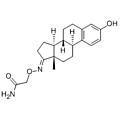
Synonyms: ERα ligand 1
Estrone-N-O-C1-amido (ERα ligand 1) is an Estrone-based estrogen ligand, which targets estrogen receptor α (ERα). Estrone-N-O-C1-amido (ERα ligand 1) binds to cIAP1 ligand Bestatin via a linker to form SNIPER.
(-)-(S)-Equol is a high affinity ligand for estrogen receptor β with a Ki of 0.73 nM.
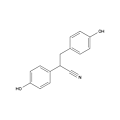
Synonyms: Diarylpropionitrile
DPN (Diarylpropionitrile) is a non-steroidal estrogen receptor β(ER β) selective ligand.
PROTAC ERα Degrader-1 is a bifunctional molecule composed of an estrogen receptor-alpha (ERα) ligand, a linker, and an E3 ubiquitin ligase-recruiting moiety. Derived from compound P1 in patent WO2017201449A1, it functions as a targeted protein degrader that promotes ubiquitination and subsequent proteasomal degradation of ERα. PROTAC ERα Degrader-1 represents a novel approach for modulating estrogen receptor signaling in hormone-dependent cancers.
SR12418 is a synthetic ligand that specifically targets REV-ERBα and REV-ERBβ, exhibiting IC50 values of 68 nM and 119 nM, respectively. This compound is valuable for studying the role of REV-ERBs in various biological processes and is particularly applicable in research related to experimental autoimmune encephalomyelitis (EAE) and colitis. Researchers can leverage SR12418 to investigate its potential therapeutic effects and the underlying mechanisms involved in these inflammatory conditions.
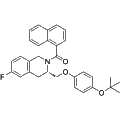
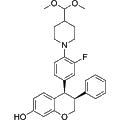
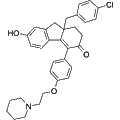
ER ligand-8 is a potent ligand for the estrogen receptor (ER), playing a crucial role in estrogen signaling pathways. It is utilized in the synthesis of the PROTAC molecule ERD-1233, which facilitates targeted protein degradation. This compound is valuable in studies focusing on hormone-responsive cancers and provides insights into estrogen receptor modulation and its associated therapeutic implications.
Out of stock
All 3 sizes
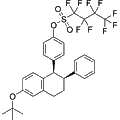
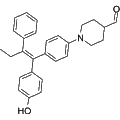
ER Ligand-5 is a selective ligand for the estrogen receptor (ER), facilitating the development of protein degraders. It serves as a critical component in the synthesis of PROTAC ERα Degrader-10, enabling targeted degradation of estrogen receptors. This compound is valuable in research applications focused on hormone signaling pathways and targeted protein knockdown strategies.
Out of stock
All 3 sizes
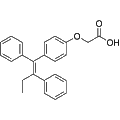
ER Ligand-6 is a ligand specifically targeting estrogen receptors (ER). It is utilized in the development of PROTAC-based degradation systems, such as PROTAC ER Degrader-14, facilitating the controlled degradation of ER proteins. This compound exhibits key biological activity in modulating estrogen receptor signaling pathways and is of particular interest in research focused on hormone-dependent cancers and cellular responses to estrogen.
Out of stock
All 3 sizes
ERα ligand 4 is a high-affinity ligand targeting estrogen receptor alpha (ERα). It serves as a crucial component in the synthesis of PROTACs, including the compound NEP168, which facilitates targeted protein degradation. This compound is valuable for studying ERα-mediated signaling pathways and advancing research in cancer biology and hormone-related diseases.
Out of stock
All 3 sizes
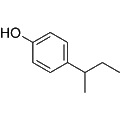
Synonyms: 4-sec-BP
4-sec-Butylphenol is an androgen receptor ligand, exhibiting a binding affinity with a pIC50 value of 4.07. Additionally, it acts as an estrogen receptor agonist, contributing to its significant biological activity. This compound is commonly detected in industrial effluents and production water from oil and gas extraction, as well as in samples from river water, making it relevant for environmental research and toxicology studies.
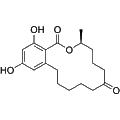
Zearalanone is a reductive metabolite of Zearalenone, primarily functioning as a serum albumin binder. This compound demonstrates the ability to bind effectively to serum albumin across various species, thereby influencing pharmacokinetics. Additionally, Zearalanone enhances the binding affinity of Warfarin to serum albumin, making it a valuable tool for research applications in drug metabolism and pharmacodynamics.
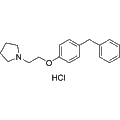
PBPE hydrochloride is a selective ligand for the anti-estrogen binding site (AEBS), exhibiting a binding affinity (Ki) of 8.79 nM. As a derivative of tamoxifen, this compound is useful in studying estrogen receptor signaling pathways and their role in various biological processes, including cancer research. PBPE hydrochloride serves as a valuable tool for investigating the mechanisms of estrogen receptor modulation and its therapeutic implications.
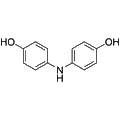
4,4'-Iminodiphenol is a selective estrogen receptor ligand that acts on the estrogen receptor signaling pathways. This compound is primarily utilized in research applications aimed at understanding estrogen-mediated biological processes and receptor interactions. Its structural characteristics may provide insights into the design of novel therapeutics targeting estrogen receptors.
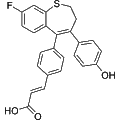
CHEMBL4224880 is a selective binder of estrogen receptor-alpha (ER-α), which plays a critical role in mediating estrogen signaling pathways. This compound exhibits biological activity that can influence gene expression and cellular processes associated with hormonal regulation. It is applicable in research focused on understanding hormone-driven diseases, such as breast cancer, and for the development of therapeutics targeting estrogen-related pathways.
Out of stock
All 3 sizes
CMP8 is a selective ligand for the estrogen receptor, specifically targeting the mutant estrogen receptor ligand binding domain (ERLBD). This compound demonstrates potent biological activity with IC50 values of 29 nM for MGERα, 41 nM for MGRERα, 1100 nM for human ERα, and 2200 nM for human ERβ. CMP8 is valuable for research applications focused on estrogen receptor modulation and its role in cancer biology.
Synonyms: ent-β-Estradiol; ent-17β-Estradiol; ent-17β-Oestradiol
Ent-Estradiol is a selective ligand for the estrogen receptors, specifically targeting both ERα and ERβ. As the enantiomer of 17β-Estradiol, it exhibits minimal estrogenic activity, making it valuable for studies that require the modulation of estrogen receptors without significant hormonal effects. Ent-Estradiol demonstrates varying inhibitory concentrations with IC50 values of 24.9 nM, 9.59 nM, and 8.17 nM for human, rat, and mouse ERβ, respectively, and 151 nM, 246 nM, and 268 nM for ERα across the same species. This compound is instrumental in researching menopausal physiological changes and receptor-specific mechanisms.
Out of stock
All 3 sizes
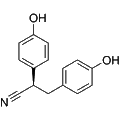
(R)-DPN is a selective ligand for estrogen receptor beta (ERβ), exhibiting an EC50 of 0.8 nM for ERβ and significantly higher affinity compared to ERα, with an EC50 of 2.9 nM. This compound demonstrates notable cytotoxic effects in HEC-1 and U2OS cell lines, with EC50 values of 286 nM and 205 nM, respectively. (R)-DPN is invaluable for research in hormonal regulation, cancer biology, and the exploration of ERβ signaling pathways.
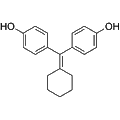
4,4'-(Cyclohexylidenemethylene)diphenol is a symmetric cyclic nonsteroidal estrogen that serves as a selective ligand for estrogen receptors ERα and ERβ. This compound exhibits a high binding affinity, making it valuable in research focused on estrogen-related pathways and hormonal signal transduction. Its unique properties enable investigations into various biological processes, including cancer biology, reproductive health, and endocrine function.
Out of stock
All 3 sizes
ER ligand-10 is a dual ligand for estrogen receptors ERα and ERβ, exhibiting weak estrogenic activity. This compound is primarily utilized in research focused on understanding the biological roles of estrogen receptors in various physiological and pathological contexts. Its ability to selectively interact with both ER subtypes makes it a valuable tool for investigating receptor-mediated signaling pathways and their implications in diseases such as breast cancer and osteoporosis.