- Cat. No.
- A15935
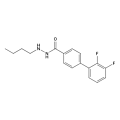
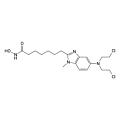
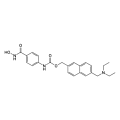
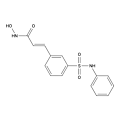
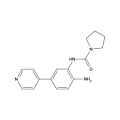
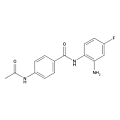
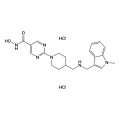
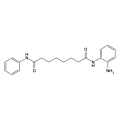
BML-210
Synonyms: CAY10433
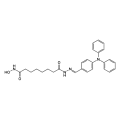
BML-210 is HDAC inhibitor. BML-210 induces growth inhibition and apoptosis and regulates HDAC and DAPC complex expression levels in cervical cancer cells.
Search by product name, CAS, target or catalog number. Press Down Arrow to reach product suggestions, Tab to move between links, and Escape to close suggestions.
Synonyms: CAY10433
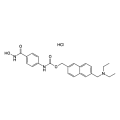
BML-210 is HDAC inhibitor. BML-210 induces growth inhibition and apoptosis and regulates HDAC and DAPC complex expression levels in cervical cancer cells.
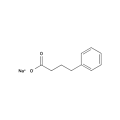
Synonyms: Sodium 4-phenylbutyrate; TriButyrate
Sodium phenylbutyrate is an inhibitor of HDAC and endoplasmic reticulum (ER) stress, used in cancer and infection research.
SR-4370 is an HDAC inhibitor. SR-4370 exhibited IC50 values of 0.5 μM, 0.1 μM and 0.06 μM towards HDAC1, HDAC2 and HDAC3, resp.
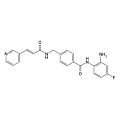
Synonyms: HBI-8000; HBI8000 Chidamide; CS-055; Chidamide
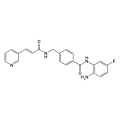
Tucidinostat is a potent and orally bioavailable HDAC enzymes class I (HDAC1/2/3) and class IIb (HDAC10) inhibitor, with IC50s of 95, 160, 67 and 78 nM, less active on HDAC8 and HDAC11 (IC50s, 733 nM, 432 nM, respectively), and shows no effect on HDAC4/5/6/7/9.
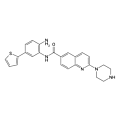
SKLB-23bb is a potent and selective inhibitor for HDAC6 with an IC50 of 17 nM and shows 25-fold and 200-fold selectivity relative to HDAC1 (IC50=422 nM) and HDAC8 (IC50=3398 nM), respectively.
Synonyms: EDOS101
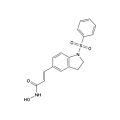
EDO-S101 is a pan HDAC inhibitor; inhibits HDAC1, HDAC2 and HDAC3 with IC50 values of 9, 9 and 25 nM, respectively.
CM-675 is a dual phosphodiesterase 5 (PDE5) and class I histone deacetylases-selective inhibitor, with IC50 values of 114 nM and 673 nM for PDE5 and HDAC1, respectively. CM-675 has potential to treat Alzheimer’s disease.
Synonyms: MPT-0E028
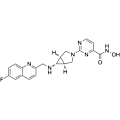
MPT0E028 is an orally active and selective HDAC inhibitor with IC50s of 53.0 nM, 106.2 nM, 29.5 nM for HDAC1, HDAC2 and HDAC6, respectively.
ACY-957 is an orally active and selective inhibitor of HDAC1 and HDAC2, with IC50s of 7 nM, 18 nM, and 1300 nM against HDAC1/2/3, respectively, and shows no inhibition on HDAC4/5/6/7/8/9.
Synonyms: Metacept-3
Oxamflatin (Metacept-3) is a potent HDAC inhibitor with an IC50 of 15.7 nM.
WT-161 is a potent and selective HDAC6 inhibitor with an IC50 of 0.40 nM.
NKL 22 is a HDAC inhibitor. The value of IC 50 is 78 uM NKL 22 increase frataxin protein concentrations NKL 22 inhibitors increase FXN mRNA in FRDA lymphocytes. HDAC inhibitors act directly on FXN.
Synonyms: 4SC-202
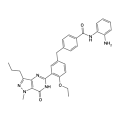
Domatinostat tosylate (4SC-202) is a selective class I HDAC inhibitor with IC50 of 1.20 μM, 1.12 μM, and 0.57 μM for HDAC1, HDAC2, and HDAC3, respectively. It also displays inhibitory activity against Lysine specific demethylase 1 (LSD1).
Givinostat (ITF-2357) is a HDAC inhibitor with an IC50 of 198 and 157 nM for HDAC1 and HDAC3, respectively.
Synonyms: Chidamide impurity
HDAC-IN-7 (Chidamide impurity) is an impurity of Chidamide. Chidamide is a potent and orally bioavailable HDAC enzymes class I (HDAC1/2/3) and class IIb (HDAC10) inhibitor.
Synonyms: ITF-2357 hydrochloride; ITF2357
Givinostat hydrochloride (ITF-2357 hydrochloride) is a HDAC inhibitor with an IC50 of 198 and 157 nM for HDAC1 and HDAC3, respectively.
Synonyms: CHR-3996
Nanatinostat (CHR-3996) is a potent, class I selective and orally active histone deacetylase (HDAC) inhibitor with an IC50 of 8 nM.
Synonyms: PXD101; PX105684
Belinostat (PXD101; PX105684) is a potent HDAC inhibitor with an IC50 of 27 nM in HeLa cell extracts.
BRD6688 is a selective inhibitor of HDAC2 that acts by enhancing the learning and memory processes.
BRD3308 is a highly selective HDAC3 inhibitor with an IC50 of 54 nM.
Synonyms: JNJ-26481585 dihydrochloride
Quisinostat dihydrochloride (JNJ-26481585 dihydrochloride) is an orally available, potent pan-HDAC inhibitor with IC50s of 0.11 nM, 0.33 nM, 0.64 nM, 0.46 nM, and 0.37 nM for HDAC1, HDAC2, HDAC4, HDAC10 and HDAC11, respectively. Quisinostat dihydrochloride has a broad spectrum antitumoral activity.
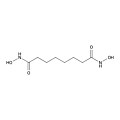
Synonyms: Suberohydroxamic acid; SBHA
Suberoyl bis-hydroxamic acid (Suberohydroxamic acid; SBHA) is a competitive and cell-permeable HDAC1 and HDAC3 inhibitor with ID50 values of 0.25 μM and 0.30 μM, respectively.
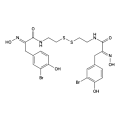
Psammaplin A, a marine-derived metabolite, is a potent inhibitor of HDAC1 (IC50: 45 nM), DNA methyltransferases (IC50: 18.6 nM), and aminopeptidase N (IC50: 18 μM). It also suppresses DNA topoisomerase and farnesyl protein transferase activities. As a PPARγ activator, Psammaplin A induces apoptosis and exhibits antitumor, anti-inflammatory, and anti-angiogenic properties. Additionally, it demonstrates antibacterial activity against Gram-positive bacteria by inhibiting DNA synthesis and DNA
Synonyms: Snail/HDAC-IN-1
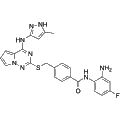
CYD19 is a potent dual-target inhibitor that simultaneously disrupts Snail and HDAC1 activity. It exhibits an IC₅₀ of 0.405 μM against HDAC1 and binds Snail with a K\_d of 0.18 μM. In HCT-116 colorectal cancer cells, CYD19 increases histone H4 acetylation and downregulates Snail protein expression, leading to the induction of apoptosis. This dual mechanism positions CYD19 as a promising therapeutic candidate for targeting epithelial–mesenchymal transition (EMT) and epigenetic dysregulation in cancer.
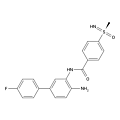
TNG260 is a selective and orally bioavailable inhibitor of histone deacetylase 1 (HDAC1) and the CoREST transcriptional corepressor complex. It exhibits approximately 10-fold selectivity for HDAC1 over HDAC3 and 500-fold selectivity for the CoREST complex compared to other HDAC-containing complexes such as NuRD and Sin3. TNG260 modulates the tumor immune microenvironment by reducing immunosuppressive neutrophil infiltration, enhancing effector T cell recruitment, and reversing anti-PD-1 resistance associated with STK11 mutations through inhibition of the CoREST–HDAC1 axis. In preclinical models, TNG260 induces durable tumor regression when combined with α-PD-1 therapy in MC38 tumor-bearing mice harboring STK11 mutations, while demonstrating reduced hematologic toxicity compared to non-selective HDAC inhibitors.