- Cat. No.
- A14865
Gap 26
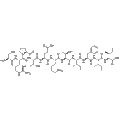
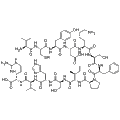
Gap 26 is a connexin mimetic peptide, corresponding to residues 63-75 of connexin 43, which is a gap junction blocker.
Search by product name, CAS, target or catalog number. Press Down Arrow to reach product suggestions, Tab to move between links, and Escape to close suggestions.
Gap junction protein tools act on connexin channels that link the cytoplasm of adjacent cells. A gap junction channel forms when two hemichannels, called connexons, dock across the narrow gap between adjacent plasma membranes. Each connexon is a ring of six connexin subunits, and the pore passes ions and small metabolites. Gap junctions couple cardiac myocytes, neurons, astrocytes and many epithelial cells. Gap 26 and Gap 27 are peptides matching extracellular loop sequences of connexin 43 (Cx43) that block channels and hemichannels. Rotigaptide and its dipeptide analog GAP-134 increase Cx43-mediated coupling, and tonabersat is a gap junction modulator. 10Panx is a mimetic peptide inhibitor of pannexin 1, a related large-pore channel.
Gap 26 is a connexin mimetic peptide, corresponding to residues 63-75 of connexin 43, which is a gap junction blocker.
Gap 27 is a peptide derived from connexin 43 that is a selective gap junction blocker.
Synonyms: Danegaptide; ZP1609
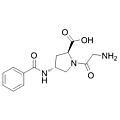
GAP-134 , a small modified dipeptide, has been identified as a potent and selective second generation gap junction modifier with oral bioavailability.
Out of stock
All 3 sizes
Synonyms: SB-220453
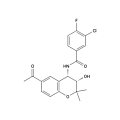
Tonabersat is a novel benzopyran derivative that blocks the cortical spreading depression proposed to be associated with migraine attacks.
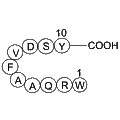
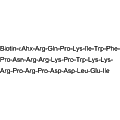
10Panx, Panx-1 mimetic inhibitory peptide, is a blocker of pannexin-1 gap junctions.
Scrambled 10Panx, Panx-1 mimetic inhibitory peptide, is a blocker of pannexin-1 gap junctions.
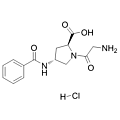
Synonyms: Danegaptide Hydrochloride; ZP1609 Hydrochloride
GAP-134 Hydrochloride, a small modified dipeptide, has been identified as a potent and selective second generation gap junction modifier with oral bioavailability.
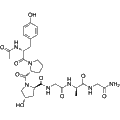
Synonyms: ZP123
Rotigaptide (ZP123) is a novel and specific modulator of connexin 43 (Cx43) that prevents the uncoupling of Cx43-mediated gap junction communication and restores intercellular connectivity under acute metabolic stress. As a potent and stable antiarrhythmic peptide (AAP), Rotigaptide shows strong potential for the investigation of cardiac arrhythmias, particularly atrial fibrillation.
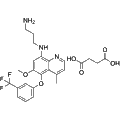
PQ-1 succinate is a potent gap junction inhibitor that effectively reduces dye transfer activity in retinal neurosensory R28 cells. This compound is also shown to inhibit CoCl2-induced ischemic apoptosis in retinal cells, making it a valuable tool for research into gap junction-mediated pathways and potential treatments for ischemic retinal injury. Its applications extend to studying cellular communication and neuroprotection in various models of retinal dysfunction.
Zifogaptide is a modulator of gap junction protein channels, primarily targeting connexins. This compound has demonstrated the ability to influence intercellular communication, thereby affecting cellular signaling pathways. Zifogaptide is valuable for research applications focused on studying the role of gap junctions in various physiological and pathological processes, including tissue homeostasis and disease states.