- Cat. No.
- A13286
Monocrotaline
Synonyms: Crotaline; MCT; NSC 28693
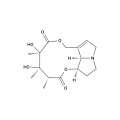
Monocrotaline is a natural 11-membered macrocyclic pyrrolizidine alkaloid used in an animal model of pulmonary hypertension.
Search by product name, CAS, target or catalog number. Press Down Arrow to reach product suggestions, Tab to move between links, and Escape to close suggestions.
OCT inhibitors support research on organic cation transporters and cellular uptake. Organic cation transporters belong to the solute carrier SLC22 family and participate in the handling of positively charged molecules. OCT1 is associated mainly with hepatic uptake, while OCT2 contributes to renal uptake. Hydrastine and Ikarisoside B are listed here as OCT1 inhibitors. The category also contains compounds associated with the Oct4 transcription factor, a separate target; those entries should be distinguished from organic cation transporter reagents.
Synonyms: Crotaline; MCT; NSC 28693
Monocrotaline is a natural 11-membered macrocyclic pyrrolizidine alkaloid used in an animal model of pulmonary hypertension.
Synonyms: (-)-β-Hydrastine; (1R,9S)-β-Hydrastine
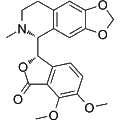
Hydrastine ((-)-β-Hydrastine; (1R,9S)-β-Hydrastine) selectively inhibits the organic cation transporter OCT1, with an IC50 value of 6.6 μM. This compound also acts as a competitive inhibitor of tyrosine hydroxylase, reducing dopamine biosynthesis with an IC50 of 20.7 μM in PC12 cells. Hydrastine is particularly relevant for research into Parkinson's disease, as it may induce neuronal toxicity through mitochondrial dysfunction and has the potential to exacerbate apoptosis when used in conjunction with L-DOPA.
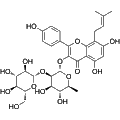
Ikarisoside B is a selective inhibitor of Organic Cation Transporter 1 (OCT1), exhibiting an IC50 value of 11.18 μM. This compound demonstrates a significant selectivity over OCT2, with an IC50 of 56.54 μM. Ikarisoside B is valuable for studies exploring metabolic diseases and the role of OCT1 in pharmacokinetics and drug interactions.
Out of stock
All 3 sizes