Proton Pump

Proton pump inhibitors block the gastric hydrogen/potassium pump (H+/K+-ATPase) that acidifies the stomach. In 1981 substituted benzimidazoles were shown to inhibit gastric acid secretion by blocking this enzyme. These compounds are prodrugs that accumulate in the acidic secretory canaliculi and convert to reactive sulfenamides. The activated species bind cysteine residues of the pump covalently, which stops proton export until new enzyme is made. Benzimidazole inhibitors here include omeprazole, its S-enantiomer esomeprazole magnesium, lansoprazole and pantoprazole. Tenatoprazole is an imidazopyridine analog with a longer plasma half-life. The category also lists M2 ion channel blocker, a compound acting on the influenza A virus M2 proton channel.

Items 76-87 of 87

  • SKF96067
    Cat. No.
    A68378

    SKF96067

    SKF96067 is a reversible inhibitor of the gastric H+/K+-ATPase, primarily targeting proton pumps involved in gastric acid secretion. This compound demonstrates significant biological activity in reducing gastric acid production, making it useful in research related to gastrointestinal diseases and acid-related disorders. Its modulation of proton pump activity aids in elucidating mechanisms of acid secretion regulation and the potential therapeutic effects on related pathologies.

    1 mg
    $235.00
    5 mg
    $590.00
    All 6 sizes
  • 2-(Trifluoromethyl)cinnamic acid
    Cat. No.
    A68379

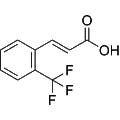
    2-(Trifluoromethyl)cinnamic acid

    2-(Trifluoromethyl)cinnamic acid is a cinnamic acid derivative that acts as an inhibitor of the proton pump (H+/K+-ATPase), leading to a reduction in gastric acid secretion. This compound has demonstrated biological activity in improving delayed gastric emptying and is valuable for research on gastric pathologies, including acute gastritis and gastric ulcers. Its unique properties make it an important reagent for studies investigating gastric health and related disorders.

    5 g
    $25.00
    10 g
    $40.00
    All 3 sizes
  • Nepaprazole
    Cat. No.
    A68381

    Nepaprazole

    Synonyms: rel-TY-11345 free base

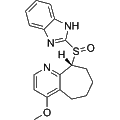
    Nepaprazole is a proton pump inhibitor that targets H+/K+-ATPase activity, significantly reducing gastric acid secretion. It demonstrates inhibitory effects in isolated rabbit gastric mucosal microsomes with IC50 values of 5.8 μM and 9.9 μM at pH 6.0 and pH 7.4, respectively. This compound is primarily utilized in research related to peptic ulcer diseases, providing insights into gastric acid regulation and potential therapeutic interventions.

    25 mg
    $1,655.00
    50 mg
    $2,115.00
    All 3 sizes
  • Tenatoprazole sodium
    Cat. No.
    A68382

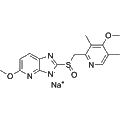
    Tenatoprazole sodium

    Synonyms: TU-199 sodium

    Tenatoprazole sodium is a potent proton pump inhibitor that specifically targets the hog gastric H+/K+-ATPase, exhibiting an IC50 of 6.2 μM. This compound effectively decreases gastric acid secretion, making it valuable for research in gastrointestinal disorders and related therapeutic applications. Its mechanism of action positions it as a useful tool for studying the regulation of gastric acidity and the underlying pathways involved in acid-related diseases.

    25 mg
    $1,275.00
    50 mg
    $1,625.00
    All 3 sizes
  • S3337
    Cat. No.
    A68383

    S3337

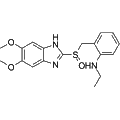
    S3337 is a potent inhibitor of H+, K+-ATPase, a key enzyme responsible for regulating gastric acid secretion. By targeting this proton pump, S3337 effectively reduces gastric acid production, making it valuable for research into acid-related disorders. Its primary applications include studies on gastritis, peptic ulcers, and gastroesophageal reflux disease (GERD).

    25 mg
    $1,275.00
    50 mg
    $1,625.00
    All 3 sizes
  • Lansoprazole N-oxide
    Cat. No.
    A70788

    Lansoprazole N-oxide

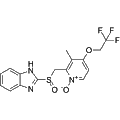
    Lansoprazole N-oxide is the overoxidized by-product derived from the synthesis of the proton pump inhibitor Lansoprazole. This compound is of interest for studies related to gastrointestinal disorders, including duodenal and gastric ulcers, reflux esophagitis, and Zollinger–Ellison syndrome. Researchers may utilize Lansoprazole N-oxide to deepen the understanding of proton pump inhibition and its implications in these conditions.

    1 mg
    $20.00
    5 mg
    $85.00
    All 6 sizes
  • Lansoprazole sulfone N-Oxide
    Cat. No.
    A70804

    Lansoprazole sulfone N-Oxide

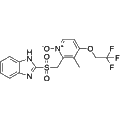
    Lansoprazole sulfone N-Oxide is an overoxidized by-product generated during the synthesis of the proton pump inhibitor Lansoprazole. This compound is relevant for research into gastrointestinal conditions, such as duodenal and gastric ulcers, reflux esophagitis, and Zollinger–Ellison syndrome. Its study may provide insights into the metabolic pathways and potential therapeutic implications related to proton pump inhibition.

    5 mg
    $265.00
    10 mg
    $435.00
    All 4 sizes
  • 2,6-Diphenylpyridine
    Cat. No.
    A89504

    2,6-Diphenylpyridine

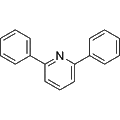
    2,6-Diphenylpyridine serves as a proton acceptor and a tridentate [C^N^C] dianionic ligand. This compound facilitates efficient proton transfer at the interface of two immiscible electrolyte solutions. Its ability to form mononuclear and binuclear complexes with gold(III) enhances its utility in studies of electrochemical ion transfer kinetics and organometallic chemistry. 2,6-Diphenylpyridine is valuable for research applications involving coordination chemistry and catalytic processes.

    200 mg
    $20.00
    1 g
    $25.00
    All 7 sizes
  • DMNB
    Cat. No.
    A98050

    DMNB

    Synonyms: 6-Nitroveratraldehyde

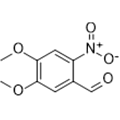
    DMNB (6-Nitroveratraldehyde) functions as a photolabile proton donor, releasing acidic species upon excitation at a wavelength of 405 nm. It is employed in the synthesis of no-carrier-added 6-[18F]fluoro-L-DOPA (6-FDOPA) and is useful for preparing o-nitroaryl-bis(5-methylfur-2-yl)methanes and alpha-asarone. Additionally, DMNB is relevant in studies involving the non-homologous end joining (NHEJ) pathway for DNA double-strand break repair and is applicable in PET imaging of the dopaminergic system.

    200 mg
    $25.00
    10 g
    $30.00
    All 3 sizes
  • Pantoprazole N-oxide
    Cat. No.
    B10788

    Pantoprazole N-oxide

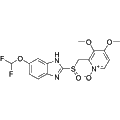
    Pantoprazole N-oxide is a known impurity associated with the synthesis of Pantoprazole, a proton pump inhibitor (PPI) utilized in the treatment of conditions linked to excessive gastric acid, including gastric ulcers and gastroesophageal reflux disease (GERD). This compound is valuable for analytical research and quality control processes, aiding in the characterization and assessment of Pantoprazole formulations. Its presence in pharmaceutical development highlights the importance of monitoring impurities to ensure product safety and efficacy.

    5 mg
    $30.00
    10 mg
    $45.00
    All 5 sizes
  • Pantoprazole-d4
    Cat. No.
    B15353

    Pantoprazole-d4

    Synonyms: BY1023-d4; SKF96022-d4

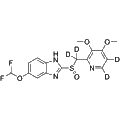
    Pantoprazole-d4 is a deuterated derivative of Pantoprazole, a potent proton pump inhibitor that targets the H+/K+-ATPase enzyme with an IC50 of 6.8 μM. This stable isotope is utilized primarily in pharmacokinetic studies and metabolic research to enhance the accuracy of drug absorption and distribution analysis. Pantoprazole exhibits anti-secretory and anti-ulcer properties, while its combination with Doxorubicin has been shown to significantly increase tumor growth delay, underscoring its potential utility in cancer research.

    Out of stock

    All 3 sizes
  • Azeloprazole
    Cat. No.
    B20120

    Azeloprazole

    Azeloprazole is a proton pump inhibitor that targets the H+,K+-ATPase enzyme, effectively reducing gastric acid secretion. It has demonstrated significant efficacy in preclinical models, including a dog's gastric fistula, where it outperformed esomeprazole in terms of duration of action. This compound is useful in studying acid-related diseases and exploring mechanisms of gastric acid regulation.

    25 mg
    $1,275.00
    50 mg
    $1,625.00
    All 3 sizes

Items 76-87 of 87

Added to your cart

View Cart Checkout

    Loading...