CRFR

Corticotropin-releasing factor receptor (CRFR) antagonists act on key receptors of the stress response. The peptide corticotropin-releasing factor (CRF) was characterized in 1981 as a 41-residue hypothalamic peptide that stimulates corticotropin secretion. Expression cloning of a human CRF receptor, now called CRF1, followed in 1993, and a second subtype, CRF2, was identified later. Through the hypothalamic-pituitary-adrenal (HPA) axis, CRF1 signaling links stress to glucocorticoid release and anxiety-like behavior. Most compounds here are small-molecule CRF1 antagonists, including pexacerfont, verucerfont, R-121919 and CP 376395. The list also holds Corticotropin Releasing Factor, bovine, and tetracosactide, a corticotropin fragment that acts on melanocortin receptors.

1 Item

  • Corticotropin-releasing factor (human)
    Cat. No.
    A59729

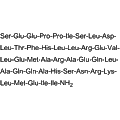
    Corticotropin-releasing factor (human)

    Synonyms: Human CRF; Human corticotropin-releasing factor

    Corticotropin-releasing factor (human) acts as a modulator of corticotropin-releasing factor receptors (CRFR). It plays a crucial role in the hypothalamic-pituitary-adrenal (HPA) axis by stimulating the synthesis and secretion of adrenocorticotropin (ACTH) in the anterior pituitary. This reagent is essential for research in stress response, neuroendocrine regulation, and related pathophysiological conditions. Its applications extend to studies in anxiety, depression, and other mood disorders, providing insight into the molecular mechanisms of HPA axis regulation.

    0.2 mg
    $25.00
    1 mg
    $130.00
    All 4 sizes

1 Item

Added to your cart

View Cart Checkout

    Loading...