
- Cat. No.
- A19292
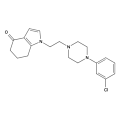
NEO 376
Synonyms: SPI-376
NEO 376 is a selective modulator of 5-HT1 receptor, GABA receptor and dopamine receptor, with anti-psychotic actively.
In stock
View Details
Search by product name, CAS, target or catalog number. Press Down Arrow to reach product suggestions, Tab to move between links, and Escape to close suggestions.
Dopamine receptor agonists and antagonists act on the five G protein-coupled receptors that respond to dopamine. The receptors form two groups, with D1 and D5 in the D1-like class and D2, D3 and D4 in the D2-like class. D1-like receptors stimulate adenylyl cyclase, whereas D2-like receptors inhibit it and lower cyclic adenosine monophosphate (cAMP) levels. Dopamine signaling controls movement, reward, motivation and hormone release, and is studied in Parkinson's disease and psychiatric research. Ligands here include the agonist rotigotine HCl, the D2 antagonists L-741626 and domperidone, and the D3-preferring ligand BP897.
Synonyms: SPI-376
NEO 376 is a selective modulator of 5-HT1 receptor, GABA receptor and dopamine receptor, with anti-psychotic actively.
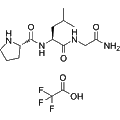
Synonyms: Pro-Leu-Gly-NH2 TFA; Melanostatin TFA
MIF-1 TFA (Melanostatin), an endogenous brain peptide, is a potent dopamine receptor allosteric modulator. MIF-1 TFA inhibits melanin formation. MIF-1 TFA blocks the effects of opioid receptor activation to modulate the analgesic effects. MIF-1 TFA accesses from the blood to the CNS by directly crossing the blood-brain barrier (BBB).
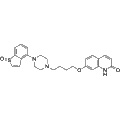
Synonyms: DM-3411
Brexpiprazole S-oxide is the primary metabolite of the atypical antipsychotic Brexpiprazole, functioning as a serotonin and dopamine receptor modulator. It exhibits partial agonism at the human 5-HT1A receptor and antagonism at the 5-HT2A receptor, with affinities (Ki) of 0.12 nM and 0.47 nM, respectively, and a potent partial agonist effect at the dopamine receptor (Ki = 0.3 nM). This compound is utilized in research focused on neuropharmacology, psychopharmacology, and the modulation of serotonergic and dopaminergic signaling pathways.
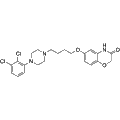
Synonyms: RP5063
Brilaroxazine is a potent multimodal modulator targeting dopamine (DA) and serotonin (5-HT) receptors. It acts as a partial agonist at DA D2, D3, and D4 receptors, and 5-HT1A (Ki=1.5 nM) and 5-HT2A (Ki=2.5 nM) receptors, while exhibiting antagonist properties at 5-HT2B (Ki=0.19 nM) and 5-HT7 (Ki=2.7 nM) receptors. As an atypical antipsychotic, Brilaroxazine demonstrates promise in enhancing cognitive function in various neuropsychiatric and neurological conditions in vivo.
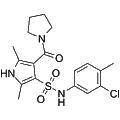
MLS6357, a D3 dopamine receptor (D3R)-selective positive allosteric modulator and antagonist, demonstrates significant antagonist activity in D3R-mediated assays, including BRET-based β-arrestin recruitment and Go-BRET assays, with IC50 values of 13 μM, 14 μM, and 17 μM respectively. It shows selectivity for D3R, with no notable activity on other dopamine receptor subtypes (D1R, D2R, D4R, D5R) at concentrations above 100 μM. MLS6357 serves as a valuable tool for investigating neuropsychiatric disorders, particularly in the context of substance use disorders.
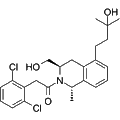
LY3154207 is a highly selective positive allosteric modulator (PAM) of the human dopamine D1 receptor, demonstrating potent activity with an EC50 of 3 nM. This compound has been designed for oral bioavailability and exhibits minimal allosteric agonist activity. Its primary applications include studies of dopaminergic signaling and potential therapeutic interventions in neurological disorders related to dopamine dysregulation.
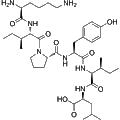
Synonyms: Neuromedin N (rat, mouse, porcine, canine)
Neuromedin N is a potent dopamine D2 receptor modulator that enhances agonist binding in rat neostriatal membranes. This compound plays a significant role in the investigation of dopaminergic signaling pathways and their implications in neurobiology. Neuromedin N's ability to influence dopamine receptor activity makes it valuable for research into neuropsychiatric disorders and related therapeutic strategies.
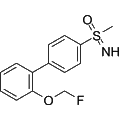
UCM-1306 is a potent allosteric modulator of the human dopamine D1 receptor, exhibiting oral bioactivity. This compound enhances the maximal effect of endogenous dopamine at both human and murine D1 receptors, making it a valuable tool in Parkinson’s disease research. UCM-1306 is useful for investigating motor symptoms and for addressing cognitive impairments often associated with prolonged Parkinson’s disease.
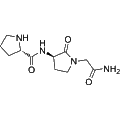
PAOPA is an allosteric modulator of the dopamine D2 receptor, derived from the analog of L-proline-L-leucine-glycine amide (PLG) peptide. This compound demonstrates significant potential in mitigating behavioral abnormalities in rodent models of schizophrenia. PAOPA enhances the receptor's affinity and promotes its binding to agonists, making it a valuable tool for research focused on neuropsychiatric disorders.
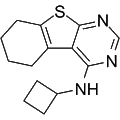
Dopamine D2 receptor antagonist-1 is a negative allosteric modulator of the dopamine D2 receptor (D2R) that exhibits sub-micromolar affinity. This compound is utilized in research studying dopaminergic signaling pathways and provides insights into neurological disorders associated with D2R dysfunction. Its role in modulating receptor activity makes it a valuable tool for exploring pharmacological interventions in the central nervous system.
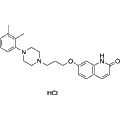
OPC 4392 hydrochloride is a modulator of dopamine receptors, acting as an agonist at presynaptic receptors while antagonizing postsynaptic D2 receptors. This compound has demonstrated the ability to reverse dopamine accumulation induced by Reserpine and inhibit stereotypic and climbing behaviors triggered by Apomorphine in mouse models. It serves as a valuable tool for investigating dopamine-related pathways and behaviors in neurological research.
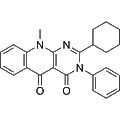
MLS1082 is a pyrimidone-derived positive allosteric modulator targeting the D1-like dopamine receptors. It exhibits an EC50 of 123 nM for enhancing dopamine-stimulated G protein signaling. This compound is valuable for research applications focused on dopamine receptor pharmacology and the modulation of neurotransmitter systems.
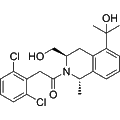
DETQ is an allosteric potentiator of the dopamine D1 receptor, enhancing receptor activity through a unique binding site. In HEK293 cells expressing the human D1 receptor, DETQ significantly increases cyclic AMP levels with an EC50 of 5.8 nM and a binding affinity (Kb) of 26 nM. The compound exhibits approximately 30-fold reduced potency at rodent D1 receptors and shows no activity against the human D5 receptor. This specificity makes DETQ a valuable tool for research involving dopamine signaling pathways and their implications in neurobiology.
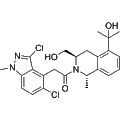
Synonyms: Glovadalen
Glovadalenum is a positive allosteric modulator of the dopamine D1 receptor. This compound enhances dopamine receptor signaling, making it valuable for research in neuropharmacology and neurodegenerative diseases. Its modulation of dopaminergic pathways offers potential insights into the treatment of conditions such as schizophrenia and Parkinson's disease.
Out of stock
All 3 sizes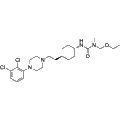
Raxlaprazine etomoxil is a small molecule compound that functions as a dopamine D2 and D3 receptor modulator. This compound shows high affinity for human recombinant D2L receptors, with an inhibition constant (Ki) of 1.95 nM, and effectively inhibits forskolin-stimulated cAMP accumulation with a half maximal effective concentration (EC50) of 3.72 nM. Raxlaprazine etomoxil is valuable for research focused on mental illnesses and neurological disorders.
Out of stock
All 3 sizes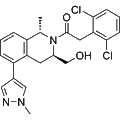
LY3154885 is an orally active positive allosteric modulator (PAM) targeting the dopamine D1 receptor. This compound enhances receptor activity, facilitating increased dopaminergic signaling. Its favorable drug-drug interaction profile makes it a valuable tool for research into dopamine-related pathways and potential therapeutic applications in neuropsychiatric disorders.
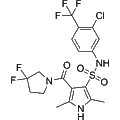
Dopamine D3 receptor antagonist-3 is a selective positive allosteric modulator-antagonist targeting the D3 dopamine receptor (D3R) that effectively penetrates the blood-brain barrier. It demonstrates robust antagonist activity in D3R-mediated β-arrestin recruitment assays, exhibiting an IC50 of 2.5 μM and a Kd of 0.49 μM, and in D3R-mediated Go-BRET assays, with an IC50 of 0.34 μM. This reagent is suitable for investigating neuropsychiatric disorders, including substance use disorder, providing valuable insights into D3R's role in these conditions.
Out of stock
All 3 sizes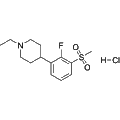
Synonyms: ACR-325 hydrochloride
Ordopidine hydrochloride is a modulator of dopamine receptors that demonstrates an ED50 of 68 μmol/kg for increasing DOPAC levels in the rat striatum. This compound is valuable in research applications focused on neurological disorders and dopamine-related signaling pathways. Its ability to influence dopamine metabolism makes it a useful tool for exploring the role of dopamine in various physiological and pathological conditions.
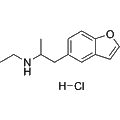
5-EAPB hydrochloride is a benzofuran derivative that acts primarily as a serotonin and dopamine receptor modulator. This compound is known for its psychoactive properties and has been used in neurological research to explore the mechanisms of mood regulation and cognitive function. Its ability to enhance serotonergic transmission makes it a valuable tool for studying various neuropharmacological applications.
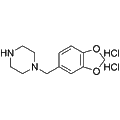
MDBP hydrochloride is a piperazine derivative that acts as a central nervous system modulator. It demonstrates significant biological activity by influencing serotonin and dopamine receptors, making it a valuable tool for neuroscience research. This compound is useful for investigating psychiatric disorders and exploring the pharmacological effects of piperazine analogs.
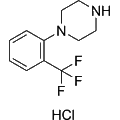
1-(2-Trifluoromethylphenyl)piperazine hydrochloride is a piperazine derivative that functions as a receptor modulator. This compound demonstrates significant biological activity in neurological research and is often utilized in studies related to central nervous system disorders. It serves as a valuable tool for investigating neurotransmitter pathways and receptor interactions in various biological systems.
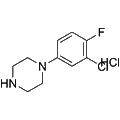
1-(3-Chloro-4-fluorophenyl)piperazine hydrochloride is a piperazine derivative that acts as a potent and selective modulator of various neurotransmitter systems. This compound is primarily utilized in neuroscience research to investigate its effects on serotonin and dopamine receptors, contributing to the understanding of mood disorders and psychotropic drug action. Its unique chemical structure makes it valuable for studies related to pharmacology and medicinal chemistry.
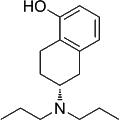
Synonyms: (R)-5-Hydroxy-DPAT
(R)-5-OH-DPAT is a selective modulator of the dopamine D2 receptor, functioning as a weak antagonist. This compound has been shown to influence dopaminergic signaling and modulate behaviors related to sexual activity, particularly in male rats. Its role in research explores the complex interactions within dopaminergic pathways and may contribute to studies on neuropsychiatric disorders and sexual behavior modulation.
Out of stock
All 3 sizes