
- Cat. No.
- A13781
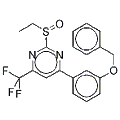
BETP
BETP is a selective positive allosteric modulator and partial agonist of the glucagon-like peptide 1 (GLP-1) receptor.
In stock
View Details
Search by product name, CAS, target or catalog number. Press Down Arrow to reach product suggestions, Tab to move between links, and Escape to close suggestions.
GLP-1 receptor agonists and modulators act on the receptor for glucagon-like peptide 1 (GLP-1), an incretin hormone. Intestinal L cells release GLP-1 after a meal, and the hormone enhances glucose-dependent insulin secretion from pancreatic beta cells. The receptor, a class B G protein-coupled receptor, was cloned from beta cells by expression cloning in 1992. Peptide agonists in this category include liraglutide and lixisenatide, while tirzepatide also acts at the glucose-dependent insulinotropic polypeptide (GIP) receptor. BETP is a small-molecule ligand that binds the GLP-1 receptor outside the peptide site. The set also includes dipeptidyl peptidase 4 (DPP-4) inhibitors such as linagliptin, which slow the breakdown of endogenous GLP-1.
BETP is a selective positive allosteric modulator and partial agonist of the glucagon-like peptide 1 (GLP-1) receptor.
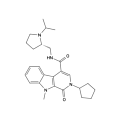
VU0453379 is a CNS-penetrant glucagon-like peptide 1 receptor (GLP-1R) positive allosteric modulator (PAM) with an EC50 of 1.3 μM.
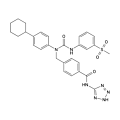
NNC0640 is a negative allosteric modulator of glucagon-like peptide-1 receptor (GLP-1R).
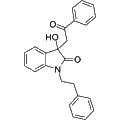
GLP-1R modulator C5 is an allosteric modulator that enhances the binding of GLP-1 to the GLP-1 receptor (GLP-1R) by interacting with a transmembrane site. It exhibits a half-maximal effective concentration (EC50) of 1.59 ± 0.53 μM. This compound is primarily utilized in research focused on diabetes and metabolic disorders, providing valuable insights into GLP-1R signaling pathways and potential therapeutic applications.
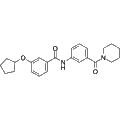
GLP-1R modulator L7-028 is an allosteric modulator that enhances the binding of GLP-1 to the GLP-1 receptor (GLP-1R) through a transmembrane site, with an EC50 of 11.01 ± 2.73 μM. This compound is valuable for investigating GLP-1R signaling pathways and its implications in metabolic disorders. Research applications include studies on glucose homeostasis and potential therapeutic strategies for type 2 diabetes and obesity.
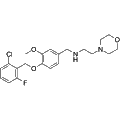
GLP-1R modulator C16 functions as an allosteric modulator by enhancing the binding affinity of GLP-1 to the GLP-1 receptor (GLP-1R) through a transmembrane site, exhibiting an EC50 of 8.43 ± 3.82 μM. This compound is significant for research on glucose homeostasis and diabetes, enabling studies on GLP-1R signaling pathways and therapeutic applications for metabolic disorders. Its modulation potential aids in understanding GLP-1R pharmacology and its implications in drug development.
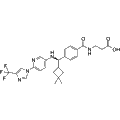
GPCR modulator-1 is a negative allosteric modulator of the glucagon-like peptide-1 receptor (GLP-1R). This compound demonstrates key biological activity by modulating receptor signaling, making it valuable for investigating the role of GLP-1R in type 2 diabetes research. GPCR modulator-1 can facilitate studies aimed at understanding metabolic processes and potential therapeutic interventions for diabetes-related complications.
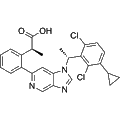
(S,R)-LSN3318839 is a stereoisomer of LSN3318839, functioning as a positive allosteric modulator of the glucagon-like peptide-1 receptor (GLP-1R). This compound enhances insulin secretion and exhibits hypoglycemic effects, making it a valuable reagent for research into diabetes and metabolic disorders. Its oral bioactivity positions it as a promising candidate for studies focused on glucose homeostasis andtherapeutic interventions.
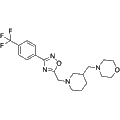
V-0219 is an orally active positive allosteric modulator of the glucagon-like peptide-1 receptor (GLP-1R). This compound enhances GLP-1R signaling, making it a valuable tool for studying therapeutic strategies in obesity-associated diabetes and related metabolic disorders. Its mechanism of action offers potential insights into the modulation of glucose homeostasis and appetite regulation.
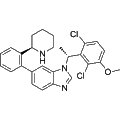
LSN3160440 is an allosteric modulator of the GLP-1 receptor (GLP-1R) that enhances protein-protein interactions, effectively functioning as a molecular glue. By stabilizing the binding of inactive GLP-1 (9-36) NH2 to GLP-1R, it facilitates receptor activation and downstream signaling. This compound is valuable in studying metabolic disorders and diabetes-related research, providing insights into GLP-1R modulation and its therapeutic potential.
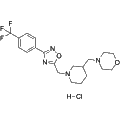
V-0219 hydrochloride is a positive allosteric modulator (PAM) of the glucagon-like peptide-1 receptor (GLP-1R). This compound has demonstrated oral bioactivity and is pertinent in the study of obesity-associated diabetes. Its ability to enhance GLP-1R signaling makes it a valuable tool for research into metabolic disorders and therapeutic interventions targeting glucose homeostasis.
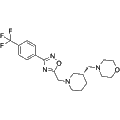
(S)-V-0219 is a selective positive allosteric modulator (PAM) of the glucagon-like peptide-1 receptor (GLP-1R). It induces calcium flux in HEK293 cells expressing human GLP-1R, enhancing receptor activity. In vivo studies demonstrate that (S)-V-0219 is orally bioavailable, effectively reducing hyperglycemia in murine models while also suppressing feeding behavior in fasting conditions. This compound presents valuable applications in diabetes research and appetite regulation studies.
Out of stock
All 3 sizes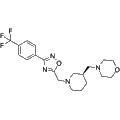
(R)-V-0219 is a positive allosteric modulator of the GLP-1 receptor (GLP-1R), functioning through enhanced receptor activation. It promotes calcium flux in human embryonic kidney (HEK) cells expressing hGLP-1R, indicating its role in metabolic regulation. This compound is particularly relevant for research focused on type 2 diabetes and obesity, allowing scientists to explore the therapeutic potentials of GLP-1R modulation.
Out of stock
All 3 sizes
GLP-1R agonist 39 is a potent positive allosteric modulator of the GLP-1 receptor. This compound enhances the activity of the GLP-1 receptor, making it valuable for studies related to obesity and type 2 diabetes. Its application in research enables the exploration of therapeutic strategies aimed at metabolic disorders.