Prostanoid Receptors

Prostanoid receptor agonists and antagonists act on the G protein-coupled receptors for prostaglandins and thromboxane. Prostanoids are lipid mediators formed from arachidonic acid by cyclooxygenase enzymes. Under the 1994 classification by the International Union of Pharmacology (IUPHAR), each receptor is named after its preferred natural ligand. The receptors for prostaglandin D2 (DP), E2 (EP), F2α (FP), prostacyclin (IP) and thromboxane A2 (TP) follow this scheme. Prostaglandin E2 (PGE2) acts on four subtypes, EP1 to EP4, which couple to different G proteins. Natural agonists in this category include PGE2 and dinoprost, also called prostaglandin F2α. Antagonists include laropiprant at the DP1 receptor, ONO-AE3-208 at EP4 and CAY10471 Racemate at DP2, the second receptor for prostaglandin D2.

5 Items

  • 8-Iso prostaglandin E2 isopropyl ester
    Cat. No.
    A63157

    8-Iso prostaglandin E2 isopropyl ester

    8-Iso Prostaglandin E2 isopropyl ester is a derivative of 8-iso Prostaglandin E2, designed to enhance lipophilicity compared to its free acid counterpart. This compound exhibits significant biological activity, primarily functioning as a modulator of various signaling pathways involved in inflammation and cellular responses. It is commonly utilized in research applications to investigate the roles of prostaglandins in physiological and pathological processes.

    0.1 mg
    $140.00
    1 mg
    $1,135.00
    All 2 sizes
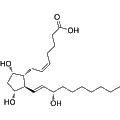
  • 20-ethyl Prostaglandin F2α
    Cat. No.
    A63253

    20-ethyl Prostaglandin F2α

    Synonyms: ICI 74205; 20-ethyl PGF2α

    20-ethyl Prostaglandin F2α is a synthetic analog of Prostaglandin F2α, functioning as a potent modulator of the prostaglandin pathway. It exhibits key biological activities, including contraction of smooth muscle and regulation of vascular tone. This compound is widely used in research applications related to reproductive biology, cardiovascular studies, and inflammation.

    1 mg
    $115.00
    All 1 sizes
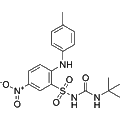
  • BM-573
    Cat. No.
    A63356

    BM-573

    BM-573 is an orally active dual thromboxane A₂ (TXA₂) modulator that functions through specific inhibition of thromboxane synthase (TxAS) and antagonism of thromboxane receptors (TP). With an IC50 of 1.3 nM, it effectively inhibits platelet aggregation induced by arachidonic acid or TXA₂ analogues without affecting cyclooxygenase enzymes (COX-1/COX-2), thus preserving other prostaglandin syntheses. BM-573 also demonstrates a significant inhibitory effect on U-46619-induced contractions in rat gastric fundus smooth muscle. This compound is valuable for research applications in atherosclerosis, myocardial infarction, pulmonary hypertension, and shock.

    25 mg
    $1,275.00
    50 mg
    $1,625.00
    All 3 sizes
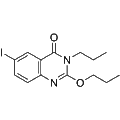
  • Proquinazid
    Cat. No.
    A63361

    Proquinazid

    Proquinazid is a Bcl-2 and PCNA modulator that acts as an oxidative stress inducer. It is known to induce genotoxic effects and promote apoptosis by influencing the balance of pro-apoptotic and anti-apoptotic proteins. This compound is utilized in research applications focusing on cellular responses to DNA damage and apoptosis mechanisms.

    Out of stock

    All 3 sizes
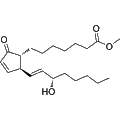
  • Prostaglandin A1 methyl ester
    Cat. No.
    A63371

    Prostaglandin A1 methyl ester

    Synonyms: PGA1 methyl ester

    Prostaglandin A1 methyl ester is a cyclopentenone analog that functions primarily as a modulator of inflammatory processes. It exhibits significant biological activity as an inducer of apoptosis and a potent anti-inflammatory agent. This compound is widely used in research applications focused on inflammation, cancer biology, and the study of prostaglandin pathways.

    Out of stock

    All 3 sizes

5 Items

Added to your cart

View Cart Checkout

    Loading...