- Cat. No.
- A18379
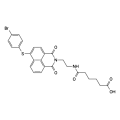
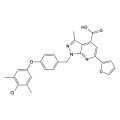
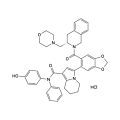
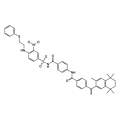
Mcl1-IN-12
Mcl1-IN-12 (Compound F) is a selective Mcl-1 inhibitor, less potent at Bcl-2, with Kis of 0.29 and 3.1 μM, respectively. Anti-tumor activity.
Search by product name, CAS, target or catalog number. Press Down Arrow to reach product suggestions, Tab to move between links, and Escape to close suggestions.
Bcl-2 family inhibitors act on B-cell lymphoma 2 (Bcl-2) proteins that control the mitochondrial pathway of apoptosis. In 1988 Bcl-2 was shown to promote survival of hematopoietic cells and to cooperate with c-myc in immortalizing pre-B cells. Antiapoptotic members such as Bcl-2, B-cell lymphoma-extra large (Bcl-xL) and myeloid cell leukemia 1 (Mcl-1) restrain proapoptotic partners such as Bcl-2-associated X protein (Bax). Small molecules that mimic Bcl-2 homology 3 (BH3) domains occupy their binding groove and release these partners. ABT-737, reported in 2005, and navitoclax inhibit Bcl-2, Bcl-xL and Bcl-w. Venetoclax, first described in 2013 as ABT-199, is selective for Bcl-2, while A-1155463 prefers Bcl-xL. BAM 7 works in the opposite direction by activating Bax directly.
Mcl1-IN-12 (Compound F) is a selective Mcl-1 inhibitor, less potent at Bcl-2, with Kis of 0.29 and 3.1 μM, respectively. Anti-tumor activity.
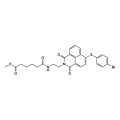
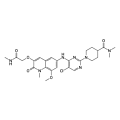
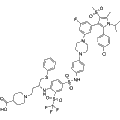
MCL-1/BCL-2-IN-4 (Compound 7) is a potent and selective Mcl-1 and Bcl-2 dual inhibitor.
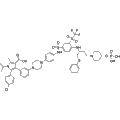
MCL-1/BCL-2-IN-3 (Compound 2) is a potent and selective Mcl-1 and Bcl-2 dual inhibitor with IC50s of 5.95 and 4.78 μM, respectively.
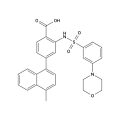
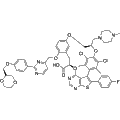
Mcl1-IN-4 is an inhibitor of Mcl1 with an IC50 of 0.2 μM.
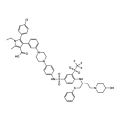
BM 957 is a potent Bcl-2 and Bcl-xL inhibitor, with Kis of 1.2,
Mcl1-IN-3 is an inhibitor of Mcl1 extracted from patent WO2015153959A2, compound example 57; has an IC50 and Ki of 0.67 and 0.13 μM, respectively.
BI-3812 is potent and efficacious BCL6 inhibitor, inhibiting the BTB domain of BCL6, with an IC50 of ??3 nM; BI-3812 has antitumor activity.
Synonyms: AZD 5991
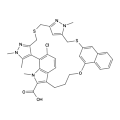
AZD-5991 Racemate is the racemate of AZD-5991. AZD-5991 Racemate is a Mcl-1 inhibitor with an IC50 of
Synonyms: AZD5991
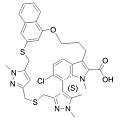
AZD-5991 S-enantiomer is the less active enantiomer of AZD-5991. AZD-5991 S-enantiomer is a Mcl-1 inhibitor with an IC50 of 6.3 μM in FRET assay and a Kd of 0.98 μM in surface plasmon resonance (SPR) assay.
Synonyms: BLC201 (hydrochloride); BLC 201; S 55746
S55746 hydrochloride (BLC201 hydrochloride) is a potent, orally active and selective BCL-2 inhibitor, with a Ki of 1.3 nM and a Kd of 3.9 nM.
Synonyms: APG-1252-M1
BM-1244 is a selective inhibitor of Bcl-xL and Bcl-2, exhibiting Ki values of 134 nM and 450 nM, respectively. This compound induces apoptosis and suppresses tumor growth through the release of cytochrome C and Smac from mitochondria, leading to caspase-3 activation and PARP cleavage. BM-1244 has demonstrated synergistic effects with chemotherapy in vivo, making it a valuable research tool for studying colorectal cancer, acute myeloid leukemia, and gastric cancer.
UBX1325 is a selective Bcl-xL inhibitor that facilitates apoptosis in senescent cells. This compound is a significant tool for investigating age-related biological processes and is particularly relevant in research on age-related eye diseases, including diabetic macular edema (DME), age-related macular degeneration (AMD), and diabetic retinopathy (DR). Its potent pro-apoptotic activity makes UBX1325 valuable for studies focused on anti-aging interventions and associated cellular mechanisms.
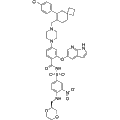
ABBV-467 is a highly selective MCL-1 inhibitor with a Ki value of less than 0.01 nM. This compound effectively induces apoptosis and promotes cancer cell death, demonstrating significant potential in inhibiting tumor growth. It is particularly relevant for research applications in hematological malignancies, including multiple myeloma.
Synonyms: APG-1252
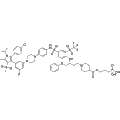
Pelcitoclax is a potent inhibitor of Bcl-2 and Bcl-xl, designed to induce apoptosis in cancer cells. Its primary mechanism involves disrupting the anti-apoptotic activity of these proteins, leading to increased cell death in malignant tissues. Pelcitoclax is utilized in research to explore therapeutic strategies against various malignancies and to study apoptotic pathways in cellular models.
Synonyms: APG-2575; Bcl-2/Bcl-xl inhibitor 1
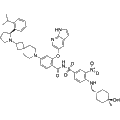
Lisaftoclax is a potent inhibitor of the anti-apoptotic proteins Bcl-2 and Bcl-xl. With IC50 values of 2 nM for Bcl-2 and 5.9 nM for Bcl-xl, Lisaftoclax demonstrates significant anti-tumor activity. This compound is primarily utilized in research focused on cancer therapy, particularly in studies exploring mechanisms of apoptosis and the role of Bcl-2 family proteins in tumor survival.
Synonyms: BGB 11417
Sonrotoclax is a potent, orally bioavailable inhibitor of the Bcl-2 protein, which plays a crucial role in apoptosis regulation. This compound exhibits significant cytotoxic effects against various lymphoma and leukemia cell lines, making it a valuable tool for cancer research. Its ability to disrupt Bcl-2-mediated survival signals provides a basis for investigating therapeutic strategies in hematological malignancies.
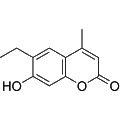
6-Ethyl-7-hydroxy-4-methyl-2H-chromen-2-one functions as a selective Mcl-1 inhibitor, exhibiting a Ki value of 5.47 μM and an IC50 of 30.88 μM. This compound is relevant for studies focused on apoptosis regulation in cancer research, providing insights into therapeutic strategies targeting Mcl-1 mediated pathways. It may facilitate investigations into the mechanisms of cell survival and death, contributing to the development of novel anticancer therapies.